

When the PM CARES Fund was launched in March 2020, it was presented as a lifeline during the COVID‑19 crisis. But over time, questions about transparency, accountability, and misuse have turned it into one of the most controversial funds in India’s recent history. Critics argue that billions were siphoned off under the guise of emergency relief, leaving taxpayers and citizens in the dark.
The PM CARES Fund, created in March 2020 to address emergencies like COVID‑19, collected about ₹13,000 crore in its first three years and was promoted as eligible for CSR contributions, with ministers urging donations.
However, transparency concerns have persisted: the government has argued that the fund is not a “public authority” under the RTI Act, making it exempt from disclosure; the Prime Minister’s Office has told the Lok Sabha Secretariat that parliamentary questions about it are inadmissible since it relies on voluntary contributions rather than the Consolidated Fund of India; and while audits are reportedly conducted by private firms, their reports have not been made public, fueling criticism about accountability and oversight.
1. Lack of Transparency
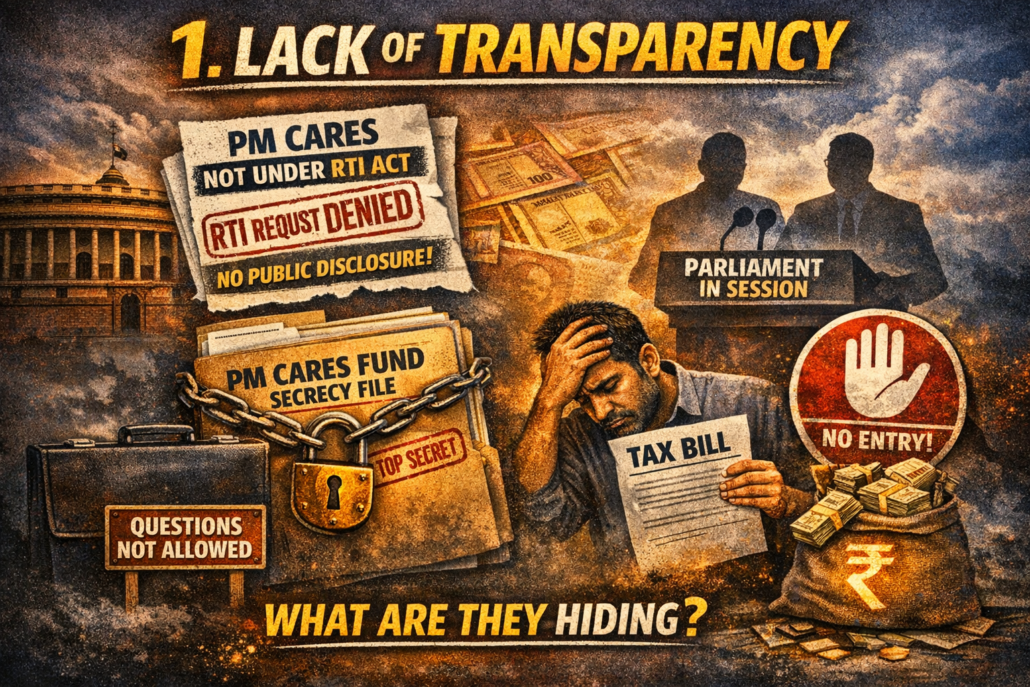
The government declared PM CARES outside the purview of the Right to Information Act (RTI), meaning citizens cannot demand details of donors or expenditures. Parliamentary questions about the fund were ruled inadmissible, effectively shielding it from scrutiny. This secrecy has fueled suspicions of misuse.
The PM CARES Fund, set up in March 2020, has faced sustained criticism for its opacity. The government has consistently argued that the fund is not a “public authority” under the RTI Act, meaning it is not obliged to disclose details to citizens.
In February 2026, the Prime Minister’s Office (PMO) communicated to the Lok Sabha Secretariat that questions about PM CARES, PMNRF, and the National Defence Fund are “not admissible” in Parliament, citing their voluntary nature and independence from the Consolidated Fund of India.
This move sparked outrage among transparency activists and opposition parties, who argue that funds promoted by constitutional office-holders should be subject to parliamentary scrutiny. Critics also highlight that audit reports of PM CARES fund have not been made public, with audits reportedly conducted by private firms rather than the Comptroller and Auditor General (CAG). Activists like Anjali Bharadwaj have questioned why Parliament is barred from oversight, warning that such restrictions undermine democratic accountability.
Opposition leaders have compared the opacity of PM CARES fund to the secrecy surrounding electoral bonds, framing it as part of a broader trend of shielding financial flows from public scrutiny.
These concerns have been widely reported in outlets such as Frontline, The Federal, and Telegraph India, all of which emphasize that the fund’s lack of transparency raises serious questions about governance and accountability in India’s emergency relief mechanisms.
2. Duplication of Relief Mechanisms
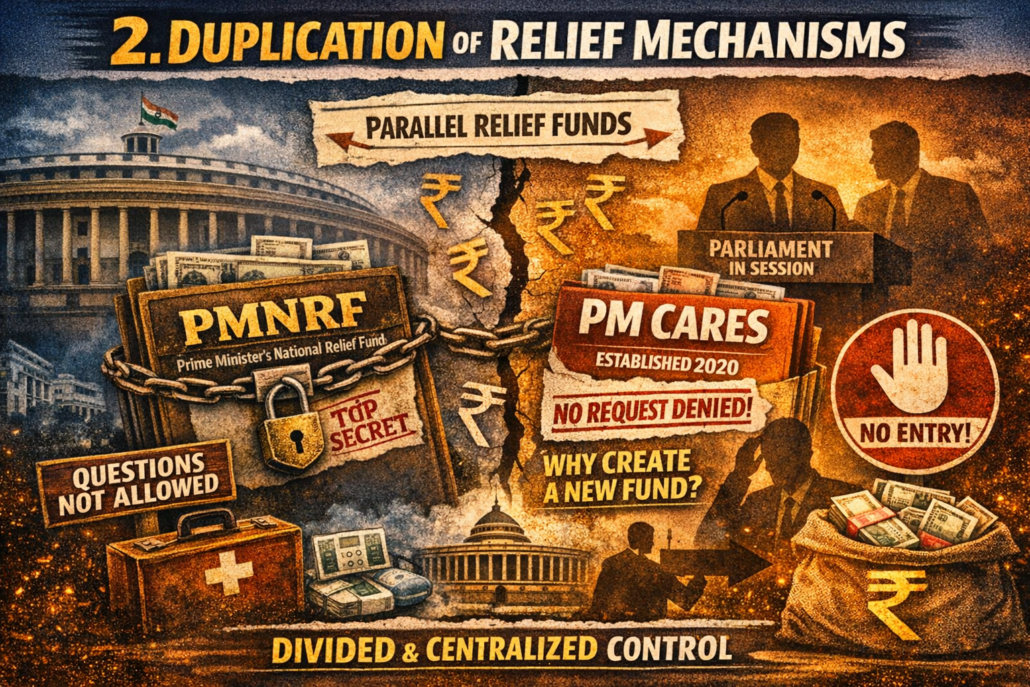
India already had the Prime Minister’s National Relief Fund (PMNRF), established in 1948. Many questioned why a new fund was needed. Analysts argue PM CARES was designed to centralize control under the PMO, bypassing established relief channels.
One of the major criticisms of the PM CARES Fund is that it duplicates existing relief mechanisms, raising questions about the need for a separate trust. India already had the Prime Minister’s National Relief Fund (PMNRF), established in 1948, which serves a similar purpose of providing financial assistance during emergencies and disasters.
Critics argue that instead of creating PM CARES fund in 2020, the government could have strengthened PMNRF, which is subject to established oversight and has a long track record of disbursing aid. The creation of PM CARES fund, therefore, led to confusion and overlap, with two parallel funds soliciting donations for disaster relief.
Transparency activists and opposition leaders have pointed out that this duplication not only fragments accountability but also allows the government to bypass existing scrutiny mechanisms tied to PMNRF. Reports in The Hindu and Indian Express highlight that the lack of clarity on why PM CARES fund was necessary has fueled suspicion that the new fund was designed to operate with fewer checks and balances, thereby undermining trust in India’s relief architecture.
3. Corporate CSR Loopholes
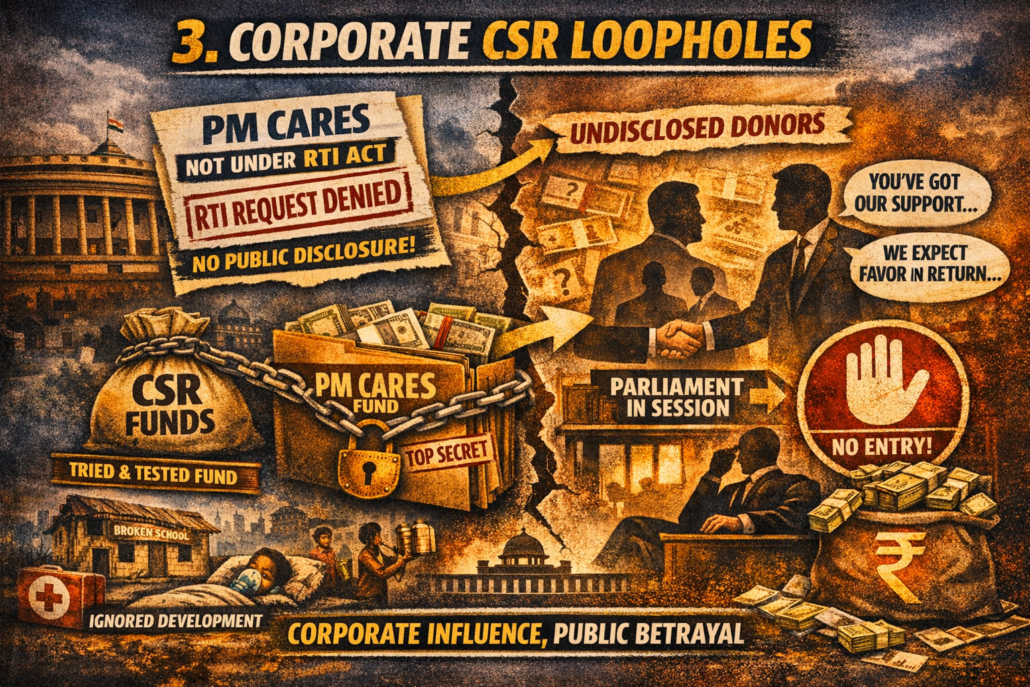
A major criticism of the PM CARES Fund is its eligibility to receive Corporate Social Responsibility (CSR) contributions, which critics argue created a loophole that diverted resources away from grassroots development projects.
Under India’s CSR framework, companies are mandated to spend a portion of their profits on social welfare initiatives such as education, healthcare, and rural development. By allowing donations to the PM CARES fund to qualify as CSR spending, corporations could fulfill their legal obligations simply by contributing to a central trust with opaque usage, rather than investing directly in community‑level projects.
Transparency concerns deepened because the donor lists remain undisclosed, making it impossible to track which companies contributed and whether donations were linked to expectations of political favor. Analysts writing in The Hindu and Frontline have noted that this arrangement effectively centralized CSR flows into a fund shielded from RTI scrutiny and parliamentary oversight, undermining the original intent of CSR laws to empower local development.
This loophole, critics argue, not only weakened grassroots accountability but also blurred the line between voluntary philanthropy and regulatory compliance.
Donations to PM CARES were allowed to count as Corporate Social Responsibility (CSR) spending. This diverted funds away from grassroots development projects into a trust with opaque usage. Critics allege that companies donated for political favor, especially since donor lists remain undisclosed.
4. Alleged Misuse of Funds
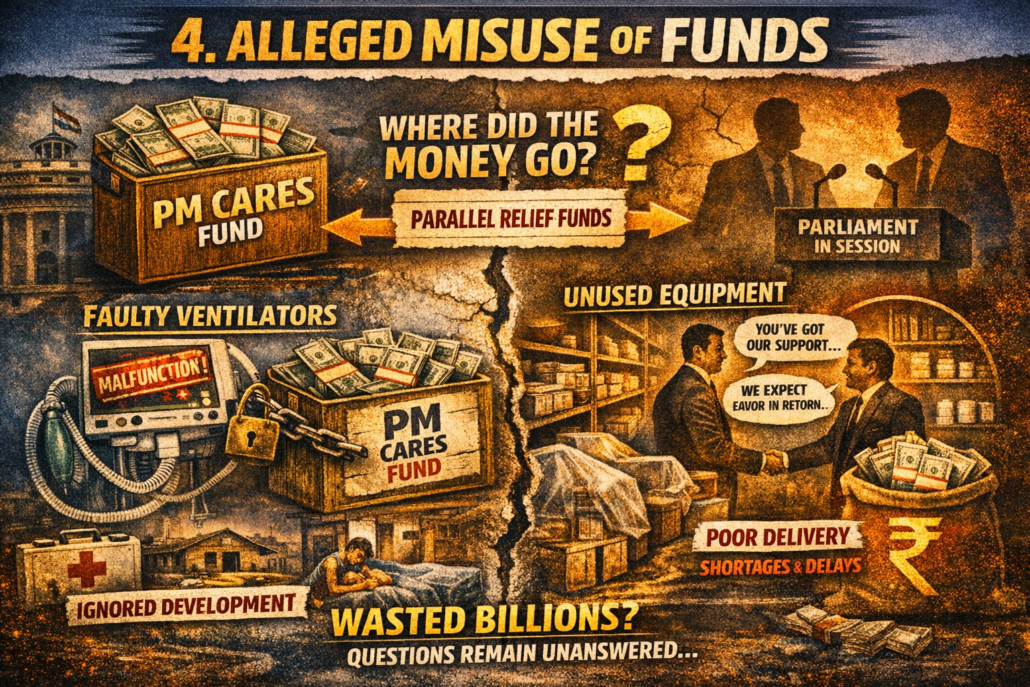
Another area of concern surrounding the PM CARES Fund is the alleged misuse and ineffective deployment of resources. While billions of rupees were collected, reports suggest that allocations and disbursements were not clearly documented, leaving citizens uncertain about how the money was spent.
A prominent example was the procurement of ventilators through PM CARES, which several states later reported as faulty, under‑utilized, or lying unused in hospitals due to technical issues and lack of trained staff.
Investigations by outlets such as The Hindu and Indian Express highlighted that procurement processes lacked transparency, with limited disclosure on vendor selection, pricing, and quality checks.
Critics argue that this undermines the very purpose of the fund, which was to provide rapid and effective relief during the COVID‑19 crisis. The absence of publicly available audit reports further compounds these concerns, raising questions about whether PM CARES resources were deployed efficiently or whether political and administrative discretion overshadowed accountability.
Reports suggest that billions were collected, but allocations were unclear. For example, ventilators purchased through PM CARES were later found faulty or unused in several states. This raised questions about procurement transparency and whether funds were effectively deployed.
5. Impact on Taxpayers
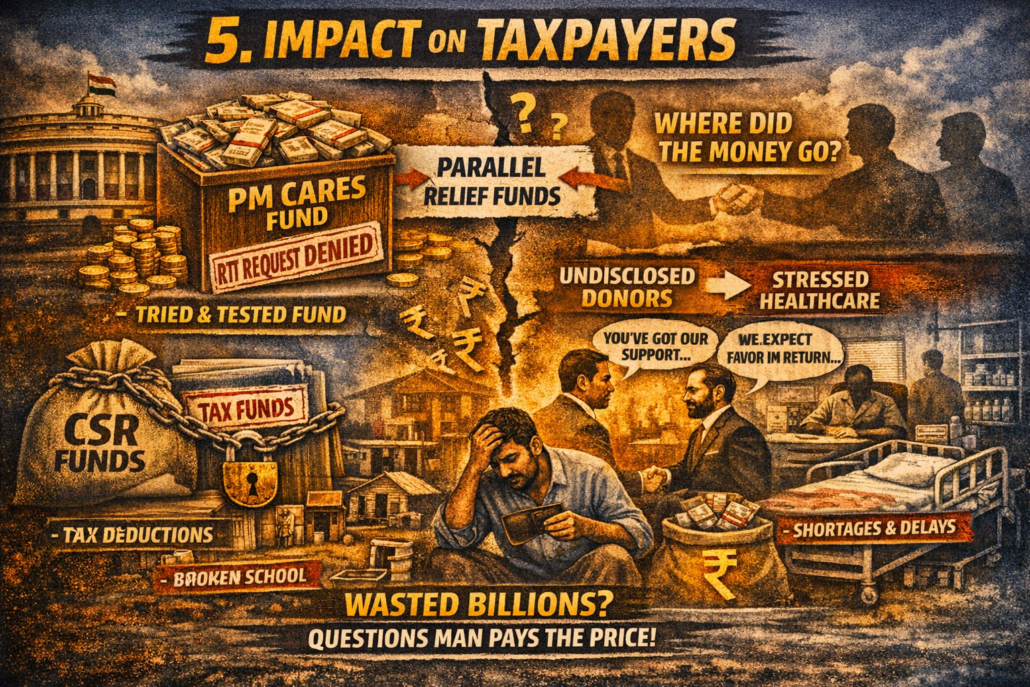
While donations were voluntary, the taxpayer indirectly bore the burden:
- Corporate donations were tax‑deductible, reducing government revenue.
- CSR obligations were redirected, weakening local development initiatives.
- Opportunity costs meant state health systems received less direct support.
In effect, taxpayers lost out on both accountability and grassroots benefits.
Although donations to the PM CARES Fund were technically voluntary, critics argue that taxpayers indirectly bore the burden in several ways. First, corporate donations were made tax‑deductible, which reduced overall government revenue and shifted the fiscal load back onto the public.
Second, by allowing contributions to PM CARES to qualify as CSR obligations, companies redirected funds away from grassroots development initiatives such as education, sanitation, and rural health projects, weakening local impact.
Finally, the opportunity costs of channeling vast sums into a trust with opaque usage meant that state health systems and public hospitals received less direct support during the pandemic, despite being in urgent need of resources.
Analysts writing in The Hindu and Frontline have emphasized that this indirect burden on taxpayers highlights how the fund’s structure centralized relief while diminishing decentralized welfare spending, raising questions about fairness and accountability in India’s emergency financing.
🗣️ Political & Civil Society Reactions
- Opposition Parties: Alleged PM CARES was engineered to give the Prime Minister unchecked financial control.
- Civil Rights Groups: Called for judicial review, arguing exclusion from RTI undermines democracy.
- Media Investigations: Outlets like The Wire, Frontline, and The Hindu highlighted how secrecy erodes public trust.
📊 Comparison: PM CARES vs PMNRF
| Feature | PM CARES | PMNRF |
|---|---|---|
| Launch Year | 2020 | 1948 |
| Oversight | Not under RTI, no parliamentary scrutiny | Subject to RTI, audited |
| Donor Disclosure | Not public | Publicly available |
| CSR Eligibility | Yes | No |
| Control | PM + select ministers | Broader administrative oversight |
🔍 Conclusion
The PM CARES Fund may not have been legally declared a scam, but its opacity, donor secrecy, and bypassing of existing relief mechanisms have left a lasting dent in public trust. For Indian taxpayers, the concern is not direct taxation but the diversion of corporate CSR funds and public donations into a trust shielded from accountability.
Transparency is the cornerstone of democracy. Without it, even well‑intentioned initiatives risk being perceived as scams.