


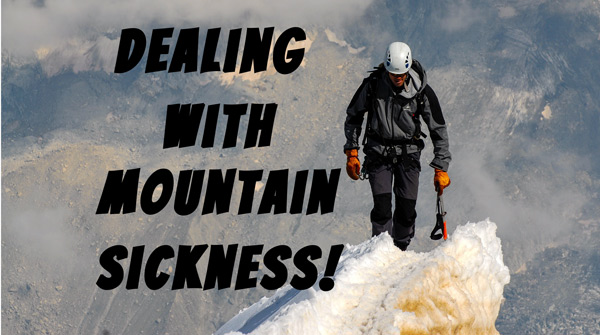
Welcome to another article on my Ladakh tour guide. In this article, I would explain from travellers perspective about mountain sickness. What is AMS? How to deal with it. Do’s and don’ts and common myth about mountain sickness. Leh district is situated at an altitude that ranges between 3000 to 5486 meters. On the contrary to popular belief that everyone suffers AMS, actually there are very few. Often people with active lifestyle won’t have this issue.
However, let’s talk about the tourist who actually suffers from AMS. There are different altitude-related disorders like Acute mountain sickness, High Altitude Cerebral Edema (HACE), High Altitude Pulmonary Edema (HAPE), and conditions of Hyper-coagulation. High altitude sickness can happen to anybody. Most noteworthy to people traveling above 8000 ft (2440 meters). Proper medical precautions should be taken to counteract these. If you follow simple rules, this will not happen to you.
Hey, check out my YouTube channel with all my Ladakh videos.
Why does Mountain Sickness happen?
Low pressure & rarefied air in Leh results in low barometric pressure of the ambient air. As a result of this lungs are able to pump less oxygen in the body. Tourists encountering sudden altitude bump is more susceptible to mountain sickness. This is the reason I do not prefer taking a flight to Leh. I prefer road trips to mountain places.
This way your body has plenty of time to adapt to altitude change and combat mountain sickness. Going to the mountain is not a race so give your body time to acclimatize. If somehow to get mountain sickness then get yourself treated and take precautions. Furthermore, if precautions are not taken then acute mountain sickness can further escalate to HAPE and HACE and can lead to possible fatality.
Symptoms of High Altitude Sickness
- Headache which I encountered at Khadungla Pass
- Nausea and Vomiting
- Fever and weakness with loss of sleep and appetite
- Disorientation, dizziness and loss of co-ordination
- Memory loss and features related to the psychotic imbalance
- Coughing and spitting blood with sputum and with lips, nails and tongue turning blue.
Do’s & Don’ts in High Altitude Mountain Sickness
First, let’s take a look at the “Do’s”
1. Follow this procedure to Acclimatize
- Always remember the rate of acclimatization is different for different people. It depends on the lifestyle they have.
- Once you arrive at high altitude, take rest for a day. If you are going to sumits then It is advisable to take a complete 24 hours rest before climbs.
- Do not smoke or consume alcohol. This is a big NO!
- Carry Diamox with you, this is a common drug for speeding up acclimatization. However, before taking this consult your doctor. Even if you take Diamox, do not take it more than 250 mg. On the contrary, there is no substitute for natural acclimatization.
- I would also recommend exercising a little every day.
2. Plan Your Trip – This way there is less chance of getting acute mountain sickness
- I always prefer to reach Leh from Srinagar and not from Manali. In other words, the altitude increase is gradual from Srinagar and not from Manali.
- When you reach Leh try to be in the city for a day and then make plans for Khardungla, Nubra Valley and Pangong TSO or Moriri TSO.
- Older folks are advised to consult their doctors before going to the places above.
3. Take Proper Diet
- Drink lots of warm water. If you were to ask me to quantify it, at least 5 litres a day. Take more oral fluids like juices to avoid dehydration.
- I also recommend taking a diet which is rich in carbohydrates.
4. Proper Clothing
- Clothing should be comfortable. In addition to being comfortable clothes should be windproof, well insulated and waterproof. Bikers are advised to wear biker jacket with all three layers inside.
- Carry spare socks, gloves and a pair of shoes with you. I did this mistake and did not carry an extra pair of shoes. Had to ride in wet shoes.
- Use dark snow goggles when in snow areas. If you do not wear dark glasses your eyes are going to hurt looking at the ice around. This can also cause partial blindness.
- Change clothes periodically, especially if they are wet. Gloves, socks and shoes are to be immediately changed if they get wet.
Now let’s take a look at the “Don’ts”
- Avoid any kind of stressful exercise in the first 24 hours of reaching high altitude places. Basically just avoid exertion.
- Do not skip meals
- Try not to bunk at places above 13000 ft during the night. Rules of the mountain say that you climb high and rest low.
- Do not stay at high altitude passes for a long time. Like I spent 15 minutes at Khardungla and 15 minutes around in Changla.
- Weat protective clothes do not get exposed to high wind velocity for long. This is the reason why I like biker jackets.
- Do not take sleeping pills or any drug prescribed. If it is mandatory please consult your doctor.
- Please do not disregard any signs of mountain sickness. It can Acute mountain sickness, High Altitude Cerebral Edema or High Altitude Pulmonary Edema. You never know!
What to do in case of Mountain Sickness?
- Consult a doctor immediately.
- In case if the doctor is not available, there are plenty of oxygen points at every tourist spot. Administer oxygen from cylinders.
- Immediately descend to a lower altitude, this will help you a lot.
- Follow the army rule. Never leave anyone behind. In no condition do not leave the affected person behind. Help each other in the mountains. Good deed comes back.
Mentioning Emergency Contact Numbers for Leh below.
- Sonam Norbu Memorial Hospital: 01982-252014/253629 (They help with the emergency cases)
- Office of chief medical officer Leh: 01982-252012
- 24 hours emergency number: 102, 01982-253629
Summing Up
Mountain sickness like Acute mountain sickness, High Altitude Pulmonary Edema (HAPE) & High Altitude Cerebral Edema (HACE) can happen to anyone. This sickness can happen at any time. The idea is to be safe, do not panic, follow proper procedures and take precautions as suggested above.