


When it comes to building an impressive upper body, few combinations are as effective as a back and biceps workout. These muscle groups complement each other naturally; your biceps assist in pulling movements while your back provides the foundation of strength and posture. Training them together not only saves time but also ensures balanced development. In this article, we’ll explore seven proven routines, the science behind them, and how you can apply principles like progressive overload and compound exercises to achieve sustainable muscle growth.
Progressive overload is the systematic, gradual increase of stress placed on the musculoskeletal system during exercise to enhance muscle growth, strength, and endurance.
Compound Exercises: The big 5 lifts — deadlift, bench press, squat, shoulder press, and pull-up — are widely considered the best compound exercises because they have been shown to maximise muscle growth, build strength, and improve functional fitness.
Muscle Growth: To make muscles grow faster, optimise for high-volume training (10-20+ weekly sets per muscle), train near failure, and prioritise exercises that challenge muscles in a stretched position
Check out the shoulder and leg workout.
Back and Biceps Workout Together?
The back is one of the largest muscle groups in the body, consisting of the lats, traps, rhomboids, and erector spinae. Meanwhile, the biceps are smaller but play a crucial role in pulling movements. Pairing them in a single session makes sense because: Look at the image below to understand better about these muscles.

- Most back exercises (like rows and pull-ups) already recruit the biceps.
- Training them together enhances efficiency and recovery.
- It allows for a focused strength training approach without overtraining.
7 Proven Back and Biceps Workout Routines
1. Pull-Up Superset with Barbell Curl
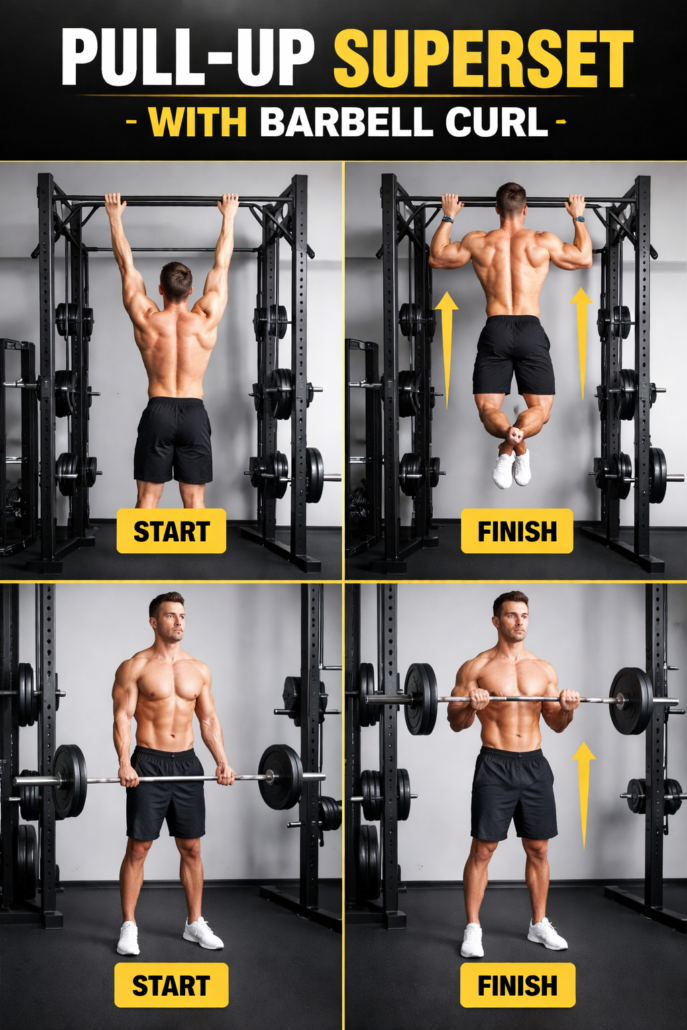
- Pull-Ups (4 sets of 8–12 reps)
- Barbell Curl (4 sets of 10–12 reps)
Pull-ups are a classic compound exercise that target the lats, traps, and biceps. Supersetting them with curls ensures maximum pump and hypertrophy.
2. Deadlift and Hammer Curl Combo
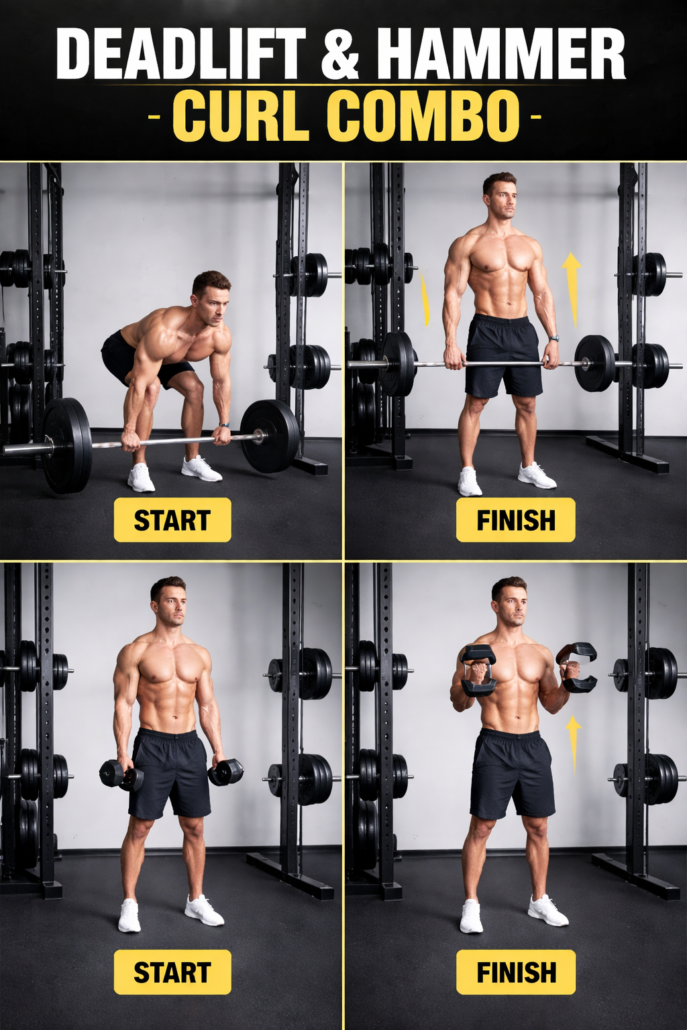
- Deadlift (4 sets of 6–8 reps)
- Hammer Curl (3 sets of 12 reps)
Deadlifts build overall strength and thickness in the back. Pairing them with hammer curls emphasises the brachialis, adding width to your arms.
3. Bent-Over Row with Concentration Curl
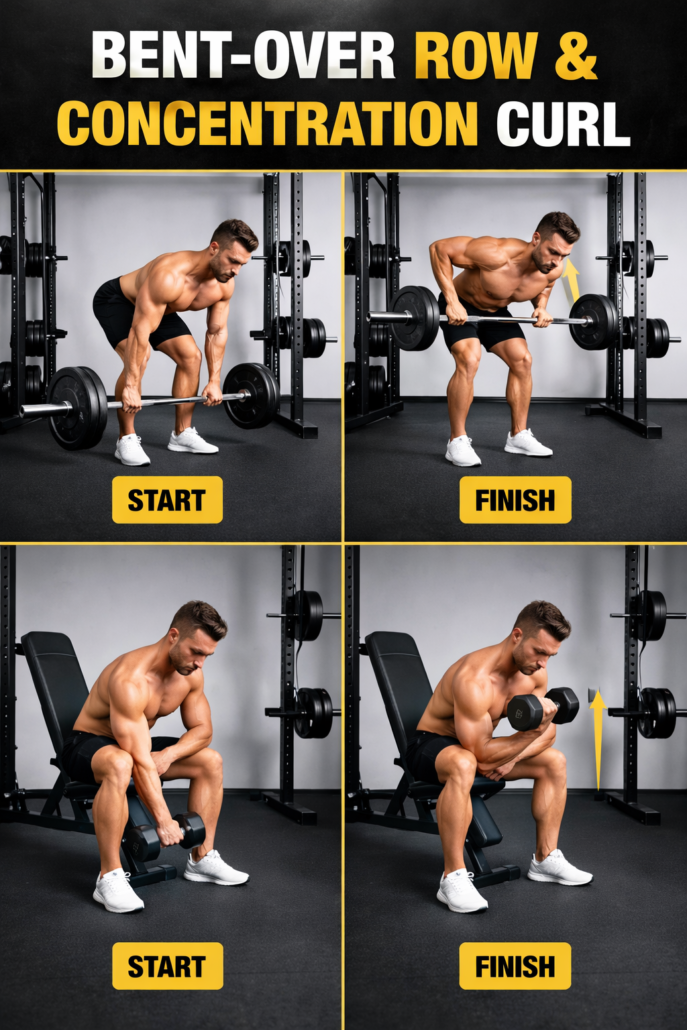
- Bent-Over Barbell Row (4 sets of 8–10 reps)
- Concentration Curl (3 sets of 12 reps)
Rows are essential for back thickness, while concentration curls isolate the biceps for peak contraction.
4. Lat Pulldown and Incline Dumbbell Curl
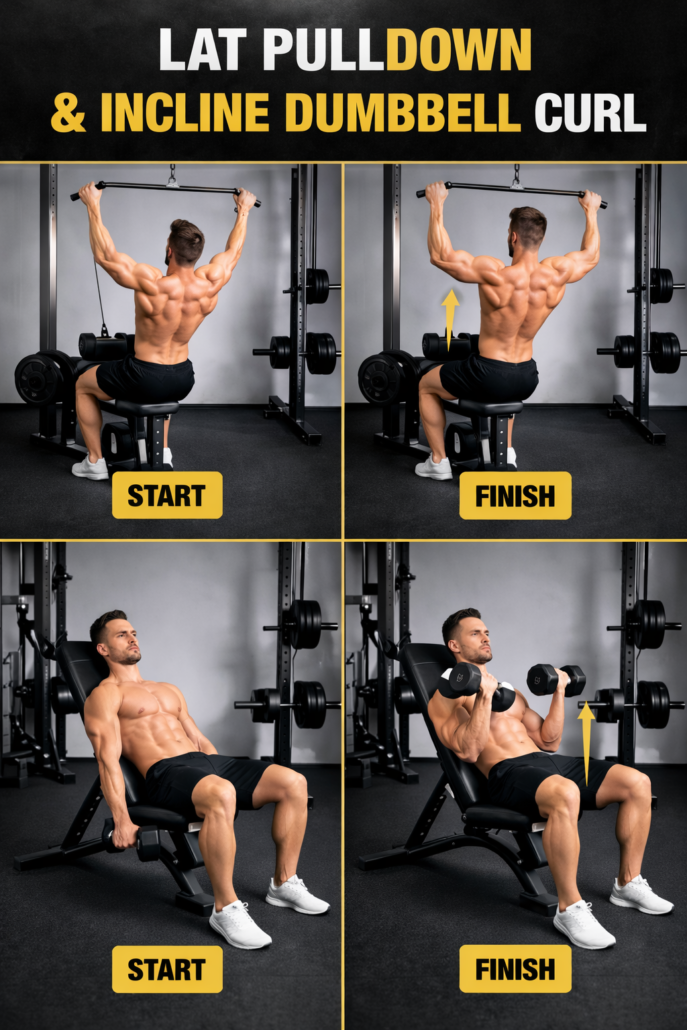
- Lat Pulldown (4 sets of 10–12 reps)
- Incline Dumbbell Curl (3 sets of 12 reps)
Lat pulldowns mimic pull-ups but allow for controlled progressive overload. Incline curls stretch the biceps under tension, stimulating growth.
5. T-Bar Row and Preacher Curl
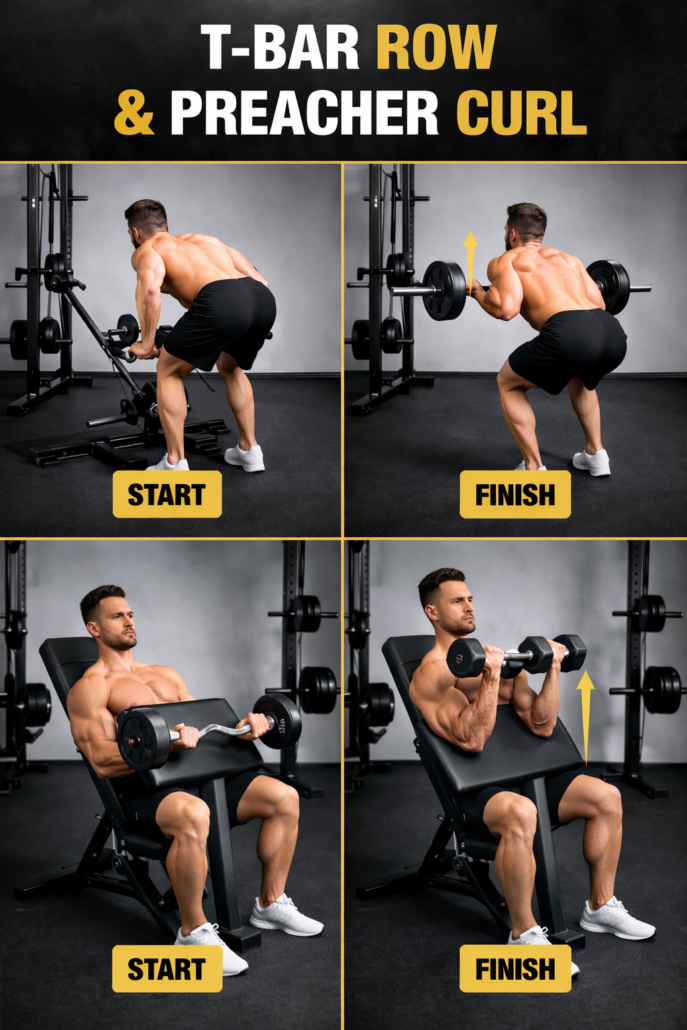
- T-Bar Row (4 sets of 8–10 reps)
- Preacher Curl (3 sets of 12 reps)
T-Bar rows hit the mid-back and traps, while preacher curls eliminate momentum, isolating the biceps fully.
6. Seated Cable Row and Zottman Curl
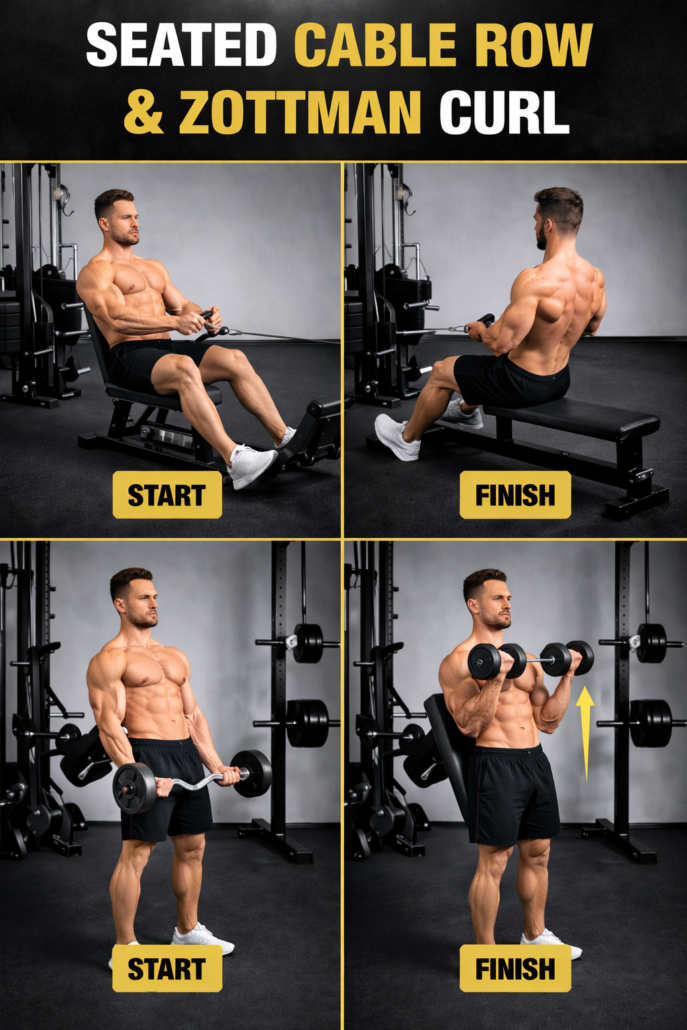
- Seated Cable Row (4 sets of 10–12 reps)
- Zottman Curl (3 sets of 12 reps)
Cable rows provide constant tension on the back, while Zottman curls combine supination and pronation for complete biceps development.
7. Chin-Up and Barbell Shrug Finisher

- Chin-Ups (3 sets to failure)
- Barbell Shrugs (3 sets of 15 reps)
Chin-ups emphasise biceps more than pull-ups, while shrugs strengthen traps, rounding out your upper body.
Key Principles for Success
1. Progressive Overload
To achieve consistent muscle growth, gradually increase the weight, reps, or intensity. Without progressive overload, your body adapts and plateaus.
2. Compound Exercises First
Start your routine with heavy compound lifts like deadlifts, rows, and pull-ups. These recruit multiple muscles, maximising efficiency.
3. Isolation for Finishing Touches
After compound lifts, use isolation movements like curls to target the biceps directly.
4. Recovery and Nutrition
Muscles grow outside the gym. Ensure proper sleep, protein intake, and rest days to optimize results.
Sample Weekly Split
- Day 1: Chest & Triceps
- Day 2: Back & Biceps Workout
- Day 3: Rest
- Day 4: Legs & Shoulders
- Day 5: Back & Biceps (variation)
- Day 6: Cardio/Active Recovery
- Day 7: Rest
This split ensures balanced training while giving your back and biceps enough frequency for growth.
Conclusion
A well-structured back and biceps workout is the cornerstone of upper body strength and aesthetics. By combining compound exercises, applying progressive overload, and maintaining consistent strength training, you’ll unlock new levels of muscle growth. Whether you’re a beginner or advanced lifter, these seven routines provide a roadmap to sculpting a powerful physique.