

For years, WhatsApp has marketed itself as the gold standard of secure messaging, boasting WhatsApp end-to-end encryption as its flagship privacy feature. The promise is simple: only you and the person you’re chatting with can read the messages. Not even WhatsApp itself can access them. Read More tech Articles.
But recent lawsuits, expert analyses, and privacy watchdog reports have raised serious doubts. Is WhatsApp end-to-end encryption truly unbreakable, or is it a carefully crafted illusion? Let’s dive into the 5 shocking truths about WhatsApp end-to-end encryption that every user should know.
1. WhatsApp End-to-End Encryption Isn’t the Whole Story
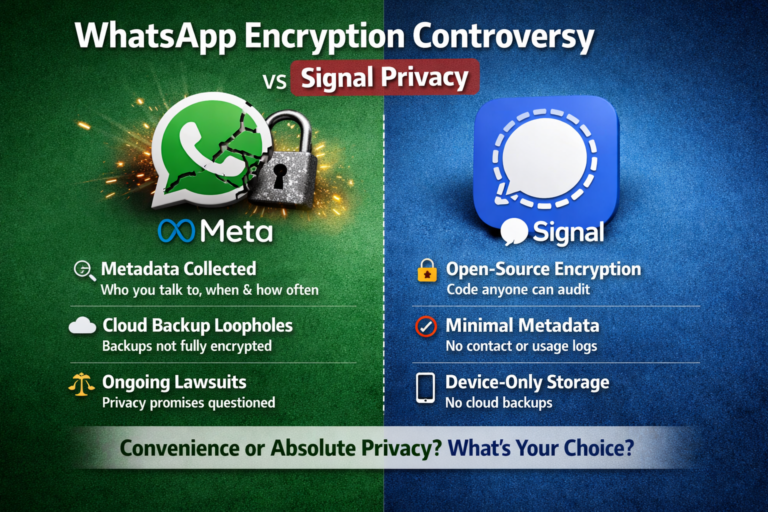
While WhatsApp does use the Signal Protocol to encrypt messages, encryption only protects the content in transit. What remains exposed is metadata, who you talk to, when, how often, and even your device details.
This metadata is incredibly valuable. It can paint a detailed picture of your social life, habits, and even location patterns. So while your words may be hidden, your digital footprint is not.
2. Lawsuits Claims Encryption May Be Misleading
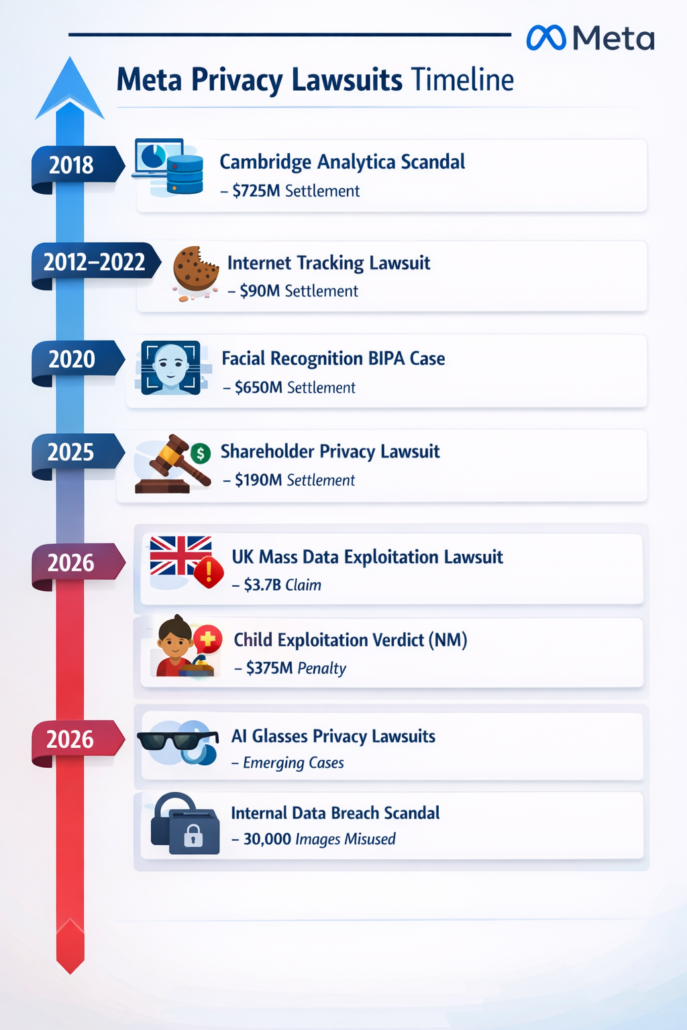
In early 2026, a class action lawsuit was filed in California, accusing Meta (WhatsApp’s parent company) of misleading users about the strength of its encryption. Plaintiffs argue that employees could access private communications or that encryption was not applied consistently across all features.
Although the case is ongoing, it highlights a critical issue: marketing claims vs. technical reality. WhatsApp’s promise of “absolute privacy” may not hold up under scrutiny.
3. Metadata Is Publicly Accessible to Meta
Even if your messages are encrypted, WhatsApp still collects and stores metadata. This includes:
- Your phone number and contacts
- Timestamps of conversations
- Group memberships
- Device information
This data is not encrypted and is often shared with Meta’s broader ecosystem for advertising and analytics. In other words, your private chats may be invisible, but your activity patterns are not.
4. Encryption Doesn’t Cover Backups
One of the biggest loopholes in WhatsApp’s encryption system is cloud backups. If you back up chats to Google Drive or iCloud, those backups are not protected by WhatsApp’s end-to-end encryption.
This means law enforcement, hackers, or even the cloud provider could potentially access your chat history. Unless you disable backups or use WhatsApp’s newer encrypted backup option, your privacy is at risk.
5. Alternatives Offer More Transparency
Unlike WhatsApp, apps like Signal are open-source, meaning their encryption methods can be independently verified. Signal also minimises metadata collection, offering a more transparent and privacy-first approach.
Telegram, while popular, does not enable end-to-end encryption by default for group chats, making it less secure than Signal but still more transparent than WhatsApp in certain aspects.
WhatsApp vs. Signal vs. Telegram (Quick Comparison)
| Feature | Signal | Telegram | |
|---|---|---|---|
| End-to-End Encryption | Yes (Signal Protocol) | Yes (Signal Protocol) | Only in Secret Chats |
| Metadata Collection | Extensive | Minimal | Moderate |
| Cloud Backups | Not encrypted by default | No backups | Cloud-based, not fully encrypted |
| Transparency | Closed-source | Open-source | Partially open-source |
Why This Matters – WhatsApp end-to-end encryption
The illusion of privacy can be more dangerous than no privacy at all. Users who believe their chats are fully secure may share sensitive information without realising the risks.
The lawsuits against Meta are not just about technical flaws — they’re about trust. If a platform claims to protect your privacy but quietly collects metadata or leaves loopholes in backups, users deserve to know.
Practical Steps to Protect Yourself – WhatsApp end-to-end encryption
If you’re concerned about WhatsApp’s encryption, here are actionable steps:
- Disable cloud backups to prevent unencrypted storage.
- Limit sensitive conversations on WhatsApp; use Signal for maximum privacy.
- Regularly review privacy settings in WhatsApp’s dashboard.
- Stay updated on ongoing lawsuits and regulatory changes.
How Signal Messaging App Differs
If privacy is your priority, Signal offers a stronger case:
- Open-source encryption (auditable by anyone).
- Minimal metadata collection (Signal deliberately avoids storing who you talk to or when).
- No cloud backups — your chats stay on your device.
Signal’s transparency and design philosophy make it a more trustworthy option for those who want true confidentiality.
The Takeaway – Signal Messaging App
WhatsApp end-to-end encryption is not a scam — but it’s not the bulletproof privacy shield many assume. The difference lies in implementation and transparency.
👉 If you value convenience and global reach, WhatsApp works. 👉 If you value uncompromising privacy, Signal is the better choice.
Conclusion – WhatsApp end-to-end encryption
WhatsApp end-to-end encryption is not a scam outright — but it’s far from perfect. Between metadata exposure, backup loopholes, and lawsuits questioning its integrity, users must rethink how secure their digital conversations really are.
The bottom line: don’t confuse encryption with absolute privacy. If true confidentiality matters to you, explore alternatives like Signal, and always stay informed about the evolving landscape of digital security.