

Home Blog

Cycling vs. Running: Which Burns Fat Better for Busy Professionals?

Busy professionals often struggle to balance demanding schedules with fitness goals. The question arises: Cycling vs. Running — which burns fat better? Both are excellent cardio workouts, but their impact on fat loss, time efficiency, and sustainability differs. Let’s break down the science and practicality behind each to help you choose the best workout for your lifestyle. Check out these wearables.

🔥 Fat Burning Potential – Cycling vs. Running

  • Running: High-intensity by nature, running burns more calories per minute compared to cycling. A 30-minute run can torch 300–450 calories depending on speed and body weight.
  • Cycling: While cycling generally burns fewer calories per minute, it allows longer sessions with less strain on joints. A 45-minute moderate ride can burn 400–600 calories.

Verdict: Running wins in calorie burn per minute, but cycling can match or exceed total burn if you ride longer.

⏱️ Time Efficiency for Professionals

  • Running: Requires minimal preparation — just lace up and go. Perfect for professionals with tight schedules.
  • Cycling: Needs equipment and sometimes travel to safe routes. However, stationary bikes at home or the gym make cycling more accessible.

Verdict: Running is more time-efficient, but cycling can be equally convenient with indoor options.

🦵 Impact on Joints and Recovery

  • Running: High-impact, which can stress knees, ankles, and hips. Recovery time may be longer, especially for beginners or those with joint issues.
  • Cycling: Low-impact, making it safer for long-term sustainability. Professionals who sit all day benefit from cycling’s posture correction and muscle engagement.

Verdict: Cycling is gentler on the body, ideal for professionals who want consistency without injury risk.

💪 Muscle Engagement – Cycling vs. Running

  • Running: Primarily works lower body muscles but also engages core for stability.
  • Cycling: Targets quads, hamstrings, calves, and glutes more intensely. Builds strength while burning fat.

Verdict: Cycling offers better muscle toning alongside fat burning.

🧠 Mental Health Benefits

  • Running: Known for the “runner’s high,” releasing endorphins that reduce stress and boost focus.
  • Cycling: Provides similar benefits, especially outdoors, where scenery adds relaxation.

Verdict: Both improve mental health, but running’s quick endorphin release may be more effective for stress relief in short sessions.

📈 Sustainability and Lifestyle Fit

  • Running: Easier to start but harder to sustain due to impact and injury risk.
  • Cycling: More sustainable for long-term fat loss, especially when combined with commuting or leisure rides.

Verdict: Cycling is more adaptable for busy professionals aiming for consistency.

⚖️ The Final Showdown – Cycling vs. Running

  • Running: Best for quick calorie burn in short timeframes.
  • Cycling: Best for sustainable fat loss, joint health, and overall lifestyle integration.

Answer: For busy professionals, cycling often proves better for long-term fat burning because it’s sustainable, low-impact, and easier to fit into daily routines. Running is excellent for short bursts of calorie burn, but cycling wins the fat-loss battle when consistency is key.

Practical Tips for Busy Professionals

  1. Mix Both: Alternate cycling and running to maximize fat burn and reduce monotony.
  2. Use Indoor Options: Stationary bikes or treadmills save commuting time.
  3. Short Intervals: High-intensity interval training (HIIT) in either workout boosts fat burning.
  4. Schedule Smartly: Early mornings or lunch breaks are ideal for quick sessions.
  5. Track Progress: Use apps or smartwatches to monitor calories and fat loss.

Conclusion – Cycling vs. Running

Cycling and running are both powerful fat-burning workouts, but for busy professionals, cycling edges ahead due to sustainability, joint safety, and lifestyle fit. Running remains a strong option for those who want maximum calorie burn in minimal time. The best approach? Combine both strategically to achieve lasting fat loss while keeping workouts enjoyable and practical.

💼 The Bottom Line for Working Professionals

In 2026, fitness technology isn’t just about counting steps—it’s about optimizing health through automation and personalization. Modern wearables and apps like Fitbit Sense 3, Apple Watch Ultra 2, and WHOOP Strap 5.0 now combine AI-driven coaching, stress and recovery tracking, and nutrition insights to help professionals train smarter, not harder. These tools analyze your daily patterns—sleep, stress, and activity—and adapt your workouts automatically, ensuring you get maximum results in minimal time.

🚀 Why It Matters for Busy Professionals

  • Efficiency: AI-powered fitness apps adjust routines based on fatigue and recovery, saving time and preventing burnout.
  • Integration: Devices sync with smart homes and calendars, turning workouts into seamless parts of your day.
  • Accountability: Social features and global fitness communities keep motivation high even when work gets hectic.
  • Holistic Health: Beyond physical fitness, wearables now monitor mental well-being, sleep quality, and nutrition—critical for sustained productivity.

🧠 Key Takeaway

For professionals juggling demanding careers, fitness apps and wearables in 2026 act as personal trainers, wellness advisors, and health monitors rolled into one. They remove guesswork, automate progress tracking, and deliver actionable insights—helping you maintain balance, energy, and long-term health without sacrificing work performance.

In short, the future of fitness for busy professionals is data-driven, adaptive, and deeply integrated into everyday life, ensuring that staying fit is no longer a separate task—it’s part of your lifestyle.

5 Shocking Truths About WhatsApp End-to-End Encryption

For years, WhatsApp has marketed itself as the gold standard of secure messaging, boasting WhatsApp end-to-end encryption as its flagship privacy feature. The promise is simple: only you and the person you’re chatting with can read the messages. Not even WhatsApp itself can access them. Read More tech Articles.

But recent lawsuits, expert analyses, and privacy watchdog reports have raised serious doubts. Is WhatsApp end-to-end encryption truly unbreakable, or is it a carefully crafted illusion? Let’s dive into the 5 shocking truths about WhatsApp end-to-end encryption that every user should know.

1. WhatsApp End-to-End Encryption Isn’t the Whole Story

While WhatsApp does use the Signal Protocol to encrypt messages, encryption only protects the content in transit. What remains exposed is metadata, who you talk to, when, how often, and even your device details.

This metadata is incredibly valuable. It can paint a detailed picture of your social life, habits, and even location patterns. So while your words may be hidden, your digital footprint is not.

2. Lawsuits Claims Encryption May Be Misleading

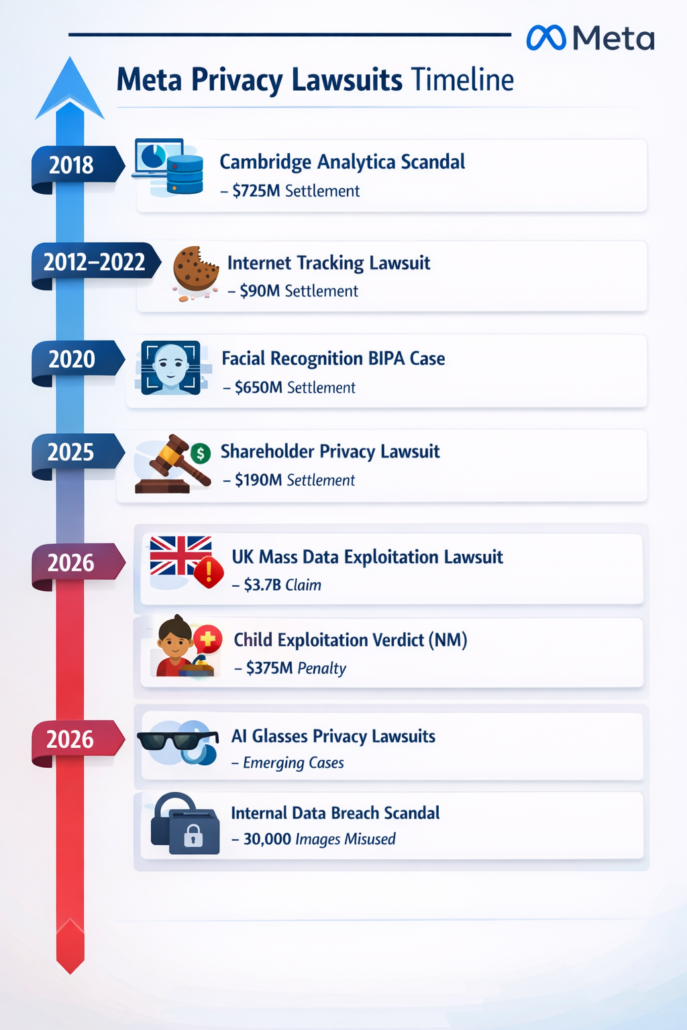
In early 2026, a class action lawsuit was filed in California, accusing Meta (WhatsApp’s parent company) of misleading users about the strength of its encryption. Plaintiffs argue that employees could access private communications or that encryption was not applied consistently across all features.

Although the case is ongoing, it highlights a critical issue: marketing claims vs. technical reality. WhatsApp’s promise of “absolute privacy” may not hold up under scrutiny.

Meta Lawsuits Claims

3. Metadata Is Publicly Accessible to Meta

Even if your messages are encrypted, WhatsApp still collects and stores metadata. This includes:

  • Your phone number and contacts
  • Timestamps of conversations
  • Group memberships
  • Device information

This data is not encrypted and is often shared with Meta’s broader ecosystem for advertising and analytics. In other words, your private chats may be invisible, but your activity patterns are not.

4. Encryption Doesn’t Cover Backups

One of the biggest loopholes in WhatsApp’s encryption system is cloud backups. If you back up chats to Google Drive or iCloud, those backups are not protected by WhatsApp’s end-to-end encryption.

This means law enforcement, hackers, or even the cloud provider could potentially access your chat history. Unless you disable backups or use WhatsApp’s newer encrypted backup option, your privacy is at risk.

5. Alternatives Offer More Transparency

Unlike WhatsApp, apps like Signal are open-source, meaning their encryption methods can be independently verified. Signal also minimises metadata collection, offering a more transparent and privacy-first approach.

Telegram, while popular, does not enable end-to-end encryption by default for group chats, making it less secure than Signal but still more transparent than WhatsApp in certain aspects.

WhatsApp vs. Signal vs. Telegram (Quick Comparison)

FeatureWhatsAppSignalTelegram
End-to-End EncryptionYes (Signal Protocol)Yes (Signal Protocol)Only in Secret Chats
Metadata CollectionExtensiveMinimalModerate
Cloud BackupsNot encrypted by defaultNo backupsCloud-based, not fully encrypted
TransparencyClosed-sourceOpen-sourcePartially open-source

Why This Matters – WhatsApp end-to-end encryption

The illusion of privacy can be more dangerous than no privacy at all. Users who believe their chats are fully secure may share sensitive information without realising the risks.

The lawsuits against Meta are not just about technical flaws — they’re about trust. If a platform claims to protect your privacy but quietly collects metadata or leaves loopholes in backups, users deserve to know.

Practical Steps to Protect Yourself – WhatsApp end-to-end encryption

If you’re concerned about WhatsApp’s encryption, here are actionable steps:

  • Disable cloud backups to prevent unencrypted storage.
  • Limit sensitive conversations on WhatsApp; use Signal for maximum privacy.
  • Regularly review privacy settings in WhatsApp’s dashboard.
  • Stay updated on ongoing lawsuits and regulatory changes.

How Signal Messaging App Differs

If privacy is your priority, Signal offers a stronger case:

  • Open-source encryption (auditable by anyone).
  • Minimal metadata collection (Signal deliberately avoids storing who you talk to or when).
  • No cloud backups — your chats stay on your device.

Signal’s transparency and design philosophy make it a more trustworthy option for those who want true confidentiality.

The Takeaway – Signal Messaging App

WhatsApp end-to-end encryption is not a scam — but it’s not the bulletproof privacy shield many assume. The difference lies in implementation and transparency.

👉 If you value convenience and global reach, WhatsApp works. 👉 If you value uncompromising privacy, Signal is the better choice.

Conclusion – WhatsApp end-to-end encryption

WhatsApp end-to-end encryption is not a scam outright — but it’s far from perfect. Between metadata exposure, backup loopholes, and lawsuits questioning its integrity, users must rethink how secure their digital conversations really are.

The bottom line: don’t confuse encryption with absolute privacy. If true confidentiality matters to you, explore alternatives like Signal, and always stay informed about the evolving landscape of digital security.

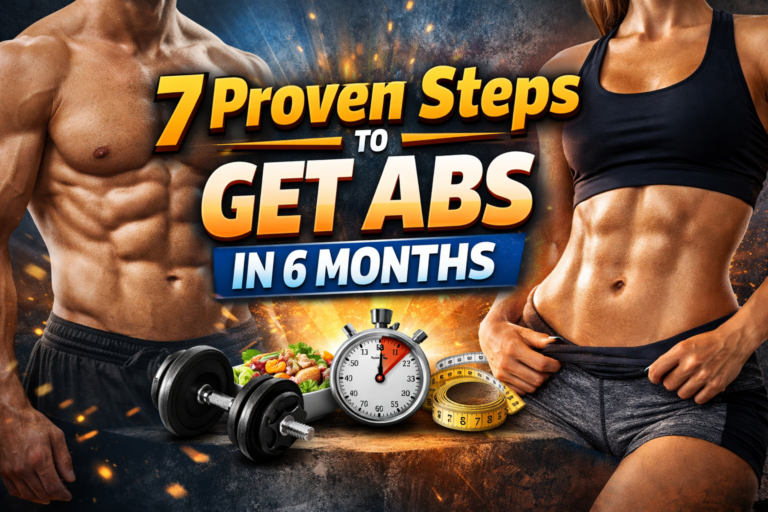
7 Proven Steps to Get Abs in 6 Months

Get Abs in 6 Months is not just a fitness goal; it’s a lifestyle transformation. Achieving visible abs requires more than crunches; it’s about combining smart training, disciplined nutrition, and consistent habits. In this article, we’ll break down 7 proven steps that will help you strengthen your core, shed fat, and reveal those abs within half a year. Check out fitness wearables to track your performance.

🧠 Build Core Strength First – Core workout

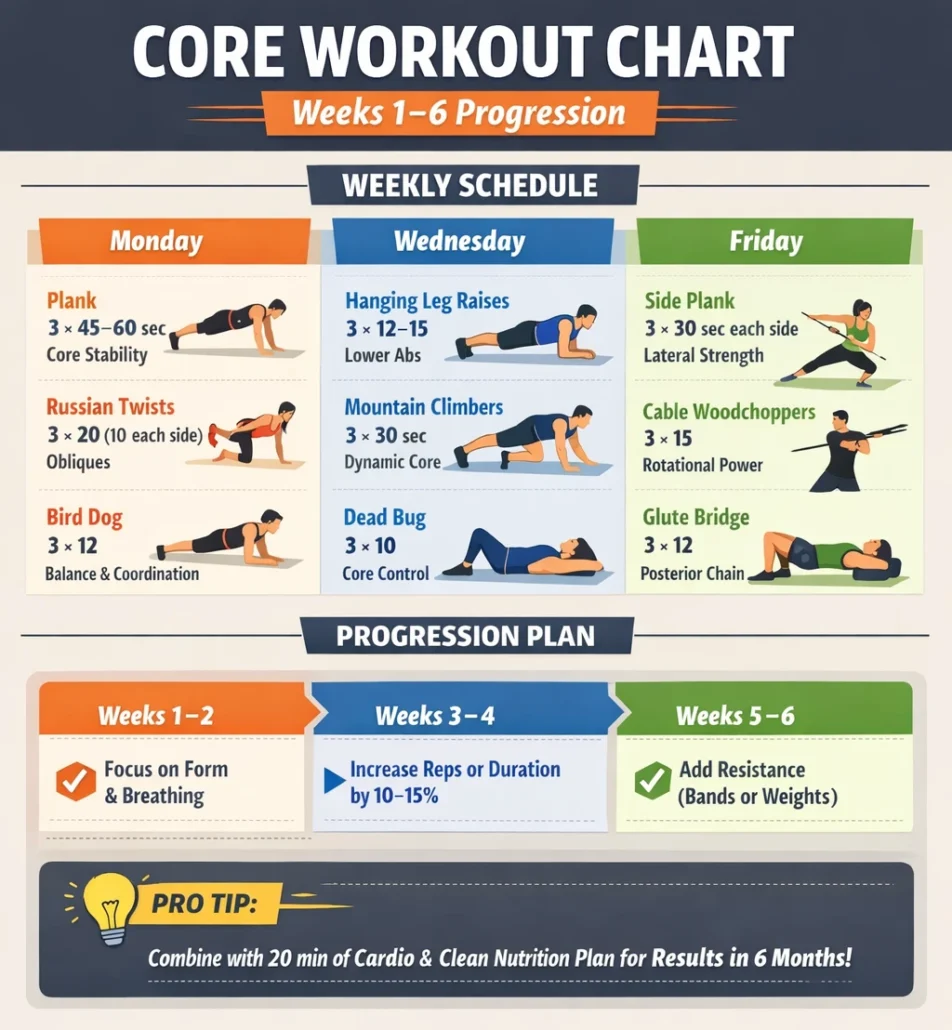
Your core is the powerhouse of your body; it stabilises every movement, improves posture, and protects your spine. Building a strong core isn’t just about visible abs; it’s about functional strength that enhances balance and performance. This can be done by doing a core workout.

Core workout

🔹 Core workout Exercises to Get Abs

  1. Plank (Standard & Side Plank) – Hold for 30–60 seconds. Engages the entire core and improves endurance.
  2. Hanging Leg Raises – Lift legs slowly to 90°, focusing on controlled movement. Excellent for lower abs.
  3. Russian Twists – Sit with knees bent, lean back slightly, and twist side to side. Builds oblique strength.
  4. Mountain Climbers – A dynamic move that combines cardio and core activation.
  5. Dead Bug – Lie on your back, extend opposite arm and leg, keeping your lower back pressed to the floor. Great for stability.
  6. Bird Dog – From a tabletop position, extend opposite arm and leg. Improves balance and coordination.
  7. Cable Woodchoppers – Use a cable machine or resistance band to simulate rotational power.

💡 Pro Tip: Perform 3–4 of these Core workouts, 3 times per week. Focus on form and controlled breathing, quality beats quantity.

Checkout these Yoga Mats for core exercises.

2. Prioritize Fat Loss to get abs

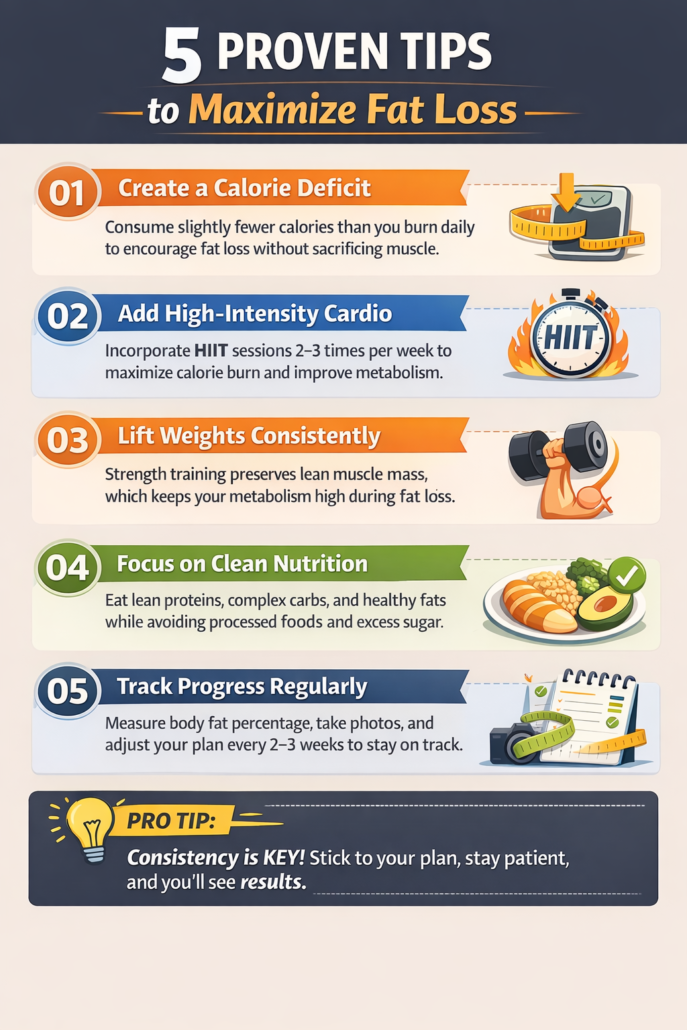
To prioritize fat loss to get abs, you need to focus on reducing overall body fat while maintaining muscle mass. Abs are revealed when body fat drops to a lean level, typically below 15% for men and 20% for women. This requires a combination of smart nutrition, consistent cardio, and strength training.

Fat Loss to get abs

Here’s a simple, actionable breakdown:

  • Create a calorie deficitConsume slightly fewer calories than you burn daily to encourage fat loss without sacrificing muscle.
  • Add high-intensity cardioIncorporate HIIT sessions 2–3 times per week to maximize calorie burn and improve metabolism.
  • Lift weights consistentlyStrength training preserves lean muscle mass, which keeps your metabolism high during fat loss.
  • Focus on clean nutritionEat lean proteins, complex carbs, and healthy fats while avoiding processed foods and excess sugar.
  • Track progress regularlyMeasure body fat percentage, take photos, and adjust your plan every 2–3 weeks to stay on track.

💡 Pro Tip: Fat loss is 70% nutrition and 30% training. Even the best workouts won’t reveal abs if your diet isn’t aligned with your goals.

3. Follow a Structured Workout Routine to Get Abs

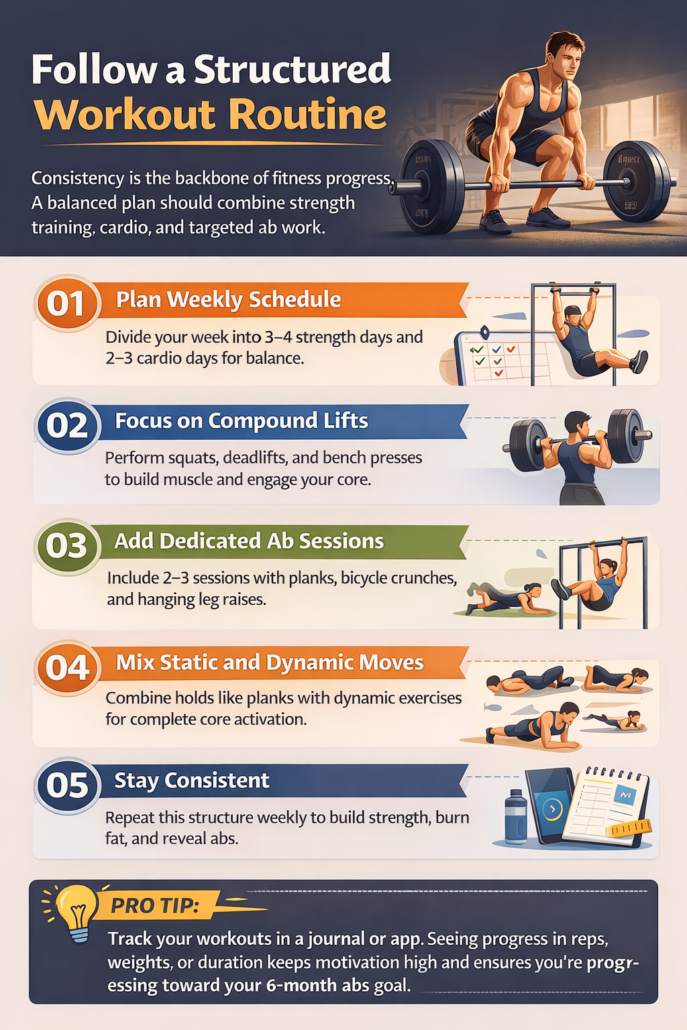
Consistency is the backbone of fitness progress. A balanced plan should combine strength training, cardio, and targeted ab work. Strength training builds muscle and boosts metabolism, while cardio accelerates fat loss. Compound lifts like squats, deadlifts, and bench presses engage multiple muscle groups, including your core, making them highly efficient. Adding 2–3 dedicated ab sessions weekly ensures your core gets both static endurance (planks) and dynamic activation (bicycle crunches).

Structured Workout Routine
  • Plan weekly scheduleDivide your week into 3–4 strength days and 2–3 cardio days for balance.
  • Focus on compound liftsPerform squats, deadlifts, and bench presses to build muscle and engage your core.
  • Add dedicated ab sessionsInclude 2–3 sessions with planks, bicycle crunches, and hanging leg raises.
  • Mix static and dynamic movesCombine holds like planks with dynamic exercises for complete core activation.
  • Stay consistentRepeat this structure weekly to build strength, burn fat, and reveal abs.

💡 Pro Tip: Track your workouts in a journal or app. Seeing progress in reps, weights, or duration keeps motivation high and ensures you’re progressing toward your 6‑month abs goa

4. Stick to a Clean Nutrition Plan

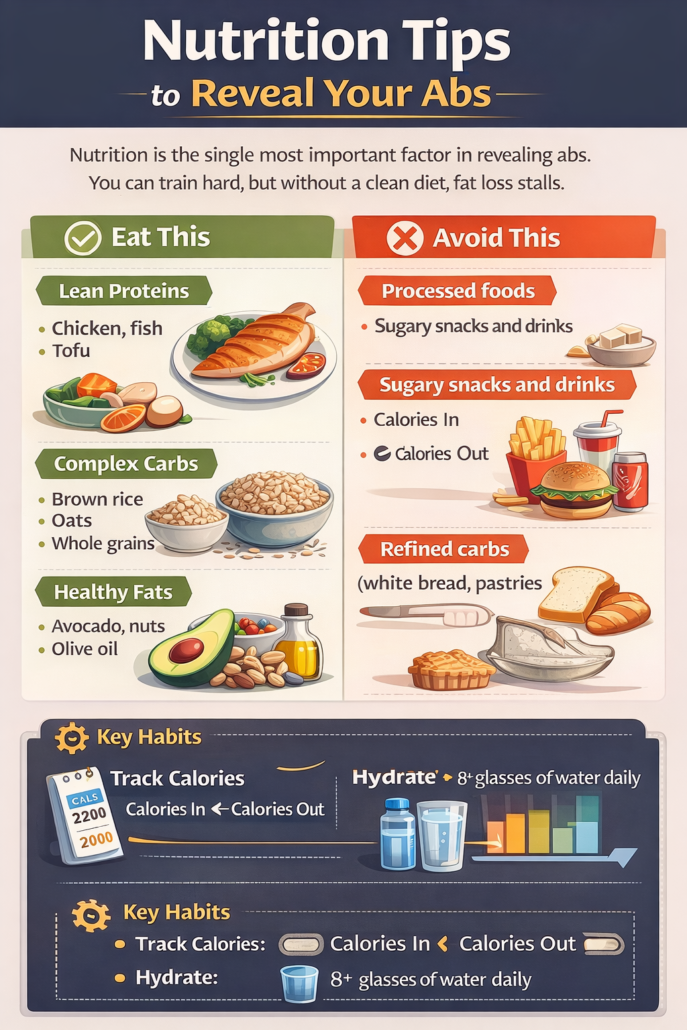
Nutrition is the single most important factor in revealing abs. You can train hard, but without a clean diet, fat loss stalls. The key is to reduce processed foods, refined sugar, and excess carbs while focusing on nutrient‑dense options. Lean proteins like chicken, fish, and tofu repair muscles and keep you full. Complex carbs such as oats and brown rice provide sustained energy, while healthy fats from avocado and nuts support hormone balance. Tracking calories ensures you stay in a slight deficit, and hydration keeps digestion smooth while reducing bloating.

Clean Nutrition Plan

✅ Eat This

  • Lean Proteins: Chicken, fish, tofu
  • Complex Carbs: Brown rice, oats, whole grains
  • Healthy Fats: Avocado, nuts, olive oil

❌ Avoid This

  • Processed foods
  • Sugary snacks and drinks
  • Refined carbs (white bread, pastries)

⚙️ Key Habits

Hydrate: 8+ glasses of water daily

Track calories: Calories In < Calories Out

5. Track Progress and Stay Accountable

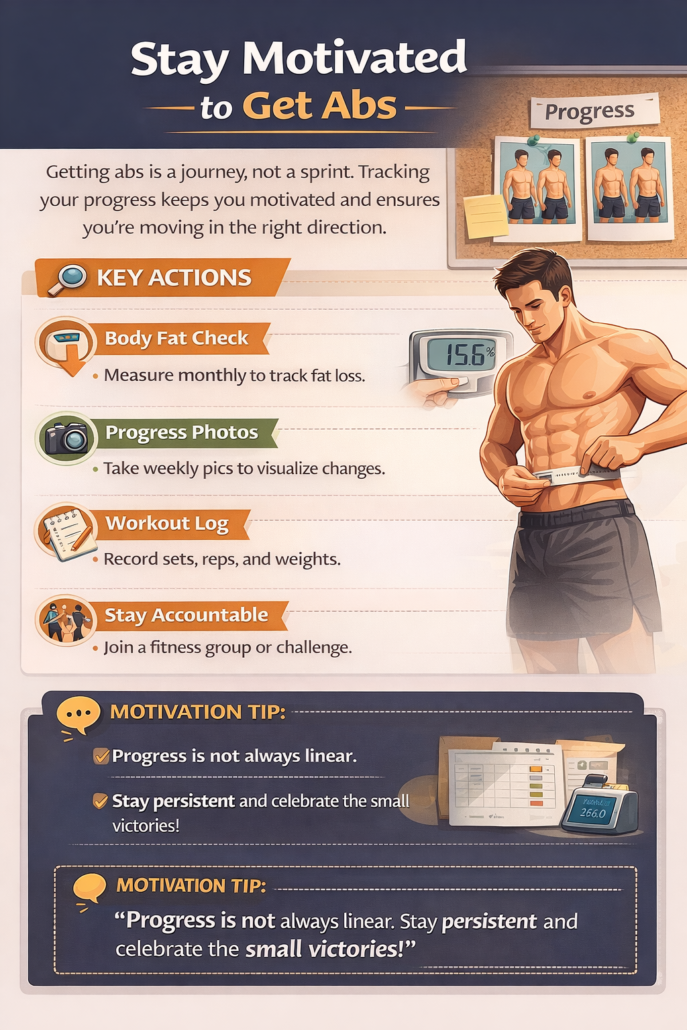
Getting abs is a journey, not a sprint. Tracking your progress keeps you motivated and ensures you’re moving in the right direction. Measure your body fat percentage monthly to see real changes beyond the scale. Take weekly progress photos — they’ll remind you how far you’ve come. Log your workouts to monitor strength gains and consistency. Surround yourself with accountability partners or join a fitness community; shared goals amplify commitment. Remember, progress isn’t always linear, persistence and small wins lead to transformation.

Track Progress and Stay Accountable

🔍 Key Actions

  • Body Fat Check: Measure monthly to track fat loss.
  • Progress Photos: Take weekly pics to visualize changes.
  • Workout Log: Record sets, reps, and weights.
  • Stay Accountable: Join a fitness group or challenge.

💬 Motivation Tip

“Progress is not always linear. Stay persistent and celebrate the small victories!”

6. Rest and Recovery Matter

Muscles grow and repair during rest, not during workouts. Recovery is the foundation of sustainable progress. Aim for 7–8 hours of quality sleep each night to optimize hormone balance, muscle repair, and mental clarity. Overtraining can lead to fatigue, injury, and burnout, so plan rest days strategically.

Incorporate active recovery — yoga, stretching, or light walks — to improve flexibility and circulation. Hydration and balanced nutrition also play a vital role in recovery. Remember, rest isn’t a break from progress; it’s what makes progress possible.

🧘 Key Recovery Tips

  • Sleep 7–8 hours daily for optimal recovery.
  • Schedule 1–2 rest days per week.
  • Include yoga or stretching sessions.
  • Stay hydrated and eat nutrient‑dense foods.
  • Listen to your body — recovery is personal.

💬 Motivation Quote: “Rest & Recover Today • Get Stronger Tomorrow!”

7. Stay Motivated with a Clear Goal

Motivation fuels consistency, but discipline sustains transformation. Visualize your 6‑month journey — imagine the stronger, leaner version of yourself you’re working toward. Set clear, measurable goals like holding a plank for 3 minutes or reducing body fat by 2%. These milestones keep you focused and inspired.

Celebrate every achievement, no matter how small. Reward yourself with something positive — a rest day, a new workout outfit, or a healthy treat. Keep reminding yourself why you started: confidence, health, and performance. When motivation dips, revisit your goals and visualize success.

🔑 Key Actions

  • Set Your Goal: Visualize your 6‑month transformation.
  • Hit Milestones: Track progress and celebrate small wins.
  • Reward Yourself: Reinforce discipline with positive motivation.
  • Remember Why: Confidence, health, and strength are your true rewards.

💬 Quote: “Dream it. Believe it. Achieve it.”

⚡ Conclusion to get abs

Getting abs in 6 months is achievable if you combine core strength training, fat loss strategies, a clean nutrition plan, and consistent workouts. It’s not about shortcuts but sustainable habits that transform your lifestyle. Commit to these 7 steps, and in half a year, you’ll not only see abs — you’ll feel stronger, healthier, and more confident.

10 Best Fitness Apps & Wearables in 2026 That Will Transform Your Training

Fitness Apps & Wearables in 2026: The fitness industry has always been quick to embrace innovation, but 2026 marks a turning point where technology is no longer just a companion to training; it’s becoming the coach, the motivator, and the health guardian. From advanced wearables that track every heartbeat to apps powered by artificial intelligence, fitness technology is reshaping how we train, recover, and stay accountable. In this article, we’ll explore the best fitness apps & wearables in 2026, the trends driving them, and how they’re transforming everyday workouts into data‑driven experiences. Read More Articles.

Top Fitness Technology Trends in 2026 and Fitness Apps & Wearables in 2026

The fitness landscape in 2026 is defined by personalisation and integration. Gone are the days when wearables only counted steps or calories. Today’s devices combine biometric data, predictive analytics, and AI coaching to deliver tailored recommendations.

Key trends for Fitness Apps & Wearables in 2026 include:

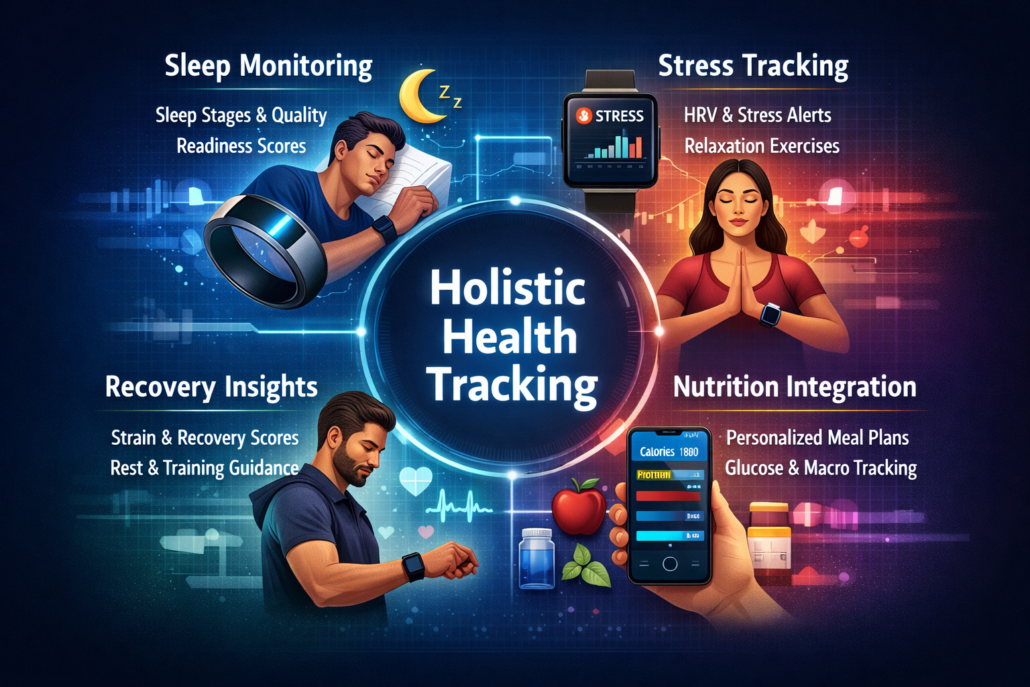
Holistic health tracking

Holistic health tracking

🧠 What Holistic Health Tracking Really Means

Traditional fitness devices used to focus on just one metric, steps, calories, or heart rate. Holistic health tracking in 2026 goes far beyond that. It’s about monitoring the entire spectrum of your well‑being alongside workouts, so you’re not just training harder, but smarter.

🌙 Sleep Monitoring

  • Modern wearables track sleep stages (light, deep, REM) and give you a sleep score.
  • They highlight how recovery quality impacts your energy and performance the next day.
  • Example: Oura Ring Horizon shows readiness scores based on sleep + recovery data.

😌 Stress Tracking

  • Devices now measure stress through heart rate variability (HRV) and skin conductance.
  • Apps provide real‑time stress alerts and suggest breathing exercises or mindfulness breaks.
  • This helps athletes avoid burnout and balance mental health with physical training.

🔄 Recovery Insights

  • Tools like WHOOP Strap analyze strain vs. recovery daily.
  • They recommend whether you should push hard, train lightly, or rest.
  • This prevents overtraining and reduces injury risk, crucial for long‑term progress.

🥗 Nutrition Integration

  • Apps like MyFitnessPal Pro sync with glucose monitors and smart scales.
  • They provide personalised nutrition coaching based on your activity and biometrics.
  • Instead of generic calorie counts, you get tailored advice for fueling workouts and recovery.

✅ Why It Matters

Holistic health tracking ensures that fitness isn’t just about how much you train, but also how well you recover, how balanced your stress is, and how effectively you fuel your body. It’s the difference between chasing numbers and building sustainable, long‑term health.

AI‑Driven Coaching

AI‑Driven Fitness Coaching

🤖 What AI‑Driven Coaching Really Means

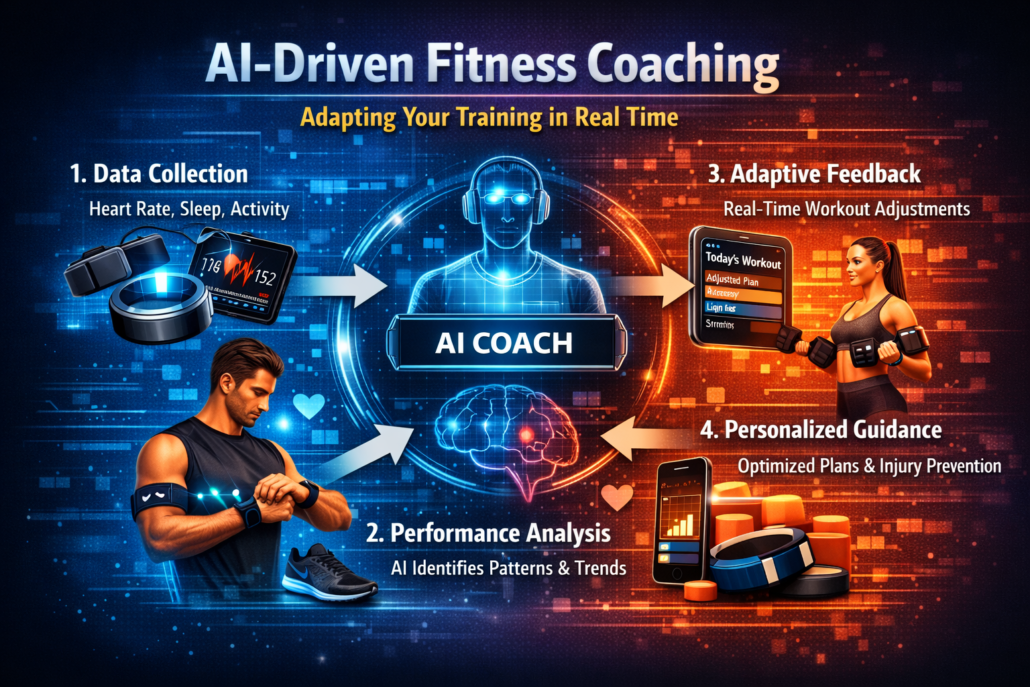
AI‑driven coaching uses artificial intelligence to analyse your workout data, heart rate, pace, sleep, recovery, and even stress levels, and then adapts your training plan in real time. Instead of following a static routine, your app becomes a dynamic coach that learns from your performance and adjusts accordingly.

⚙️ How It Works

  1. Data Collection: Your wearable gathers metrics like heart rate variability, calories burned, and movement patterns.
  2. Pattern Recognition: The AI compares your current performance with historical data to detect trends, fatigue, improvement, or inconsistency.
  3. Adaptive Feedback: Based on those insights, it modifies your next workout automatically. For example, if your recovery score is low, it might suggest a lighter session or yoga instead of HIIT.
  4. Predictive Insights: Over time, the AI predicts when you’re likely to plateau or risk injury and adjusts your plan to prevent it.

🧠 Real‑World Examples

  • WHOOP Strap 5.0 uses AI to recommend rest days and recovery strategies.
  • Future App combines human trainers with AI analytics to tailor workouts daily.
  • Fitbod adjusts strength training loads based on fatigue and muscle recovery.
  • Apple Fitness+ uses machine learning to suggest workouts that match your energy and goals.

💪 Why It Matters

AI‑driven coaching bridges the gap between data and decision‑making. It eliminates guesswork, helping users train smarter rather than harder. You get the benefits of a personal trainer, motivation, accountability, and precision, without the cost or scheduling hassle.

🔮 The Future Outlook

By 2026, AI coaches will integrate emotional and cognitive data too, detecting stress or low motivation and offering encouragement or mindfulness breaks. Fitness will become a conversation between you and your data, where your app doesn’t just track progress but actively guides it.

Community Engagement in Fitness

Community Engagement in Fitness

What does community engagement mean?

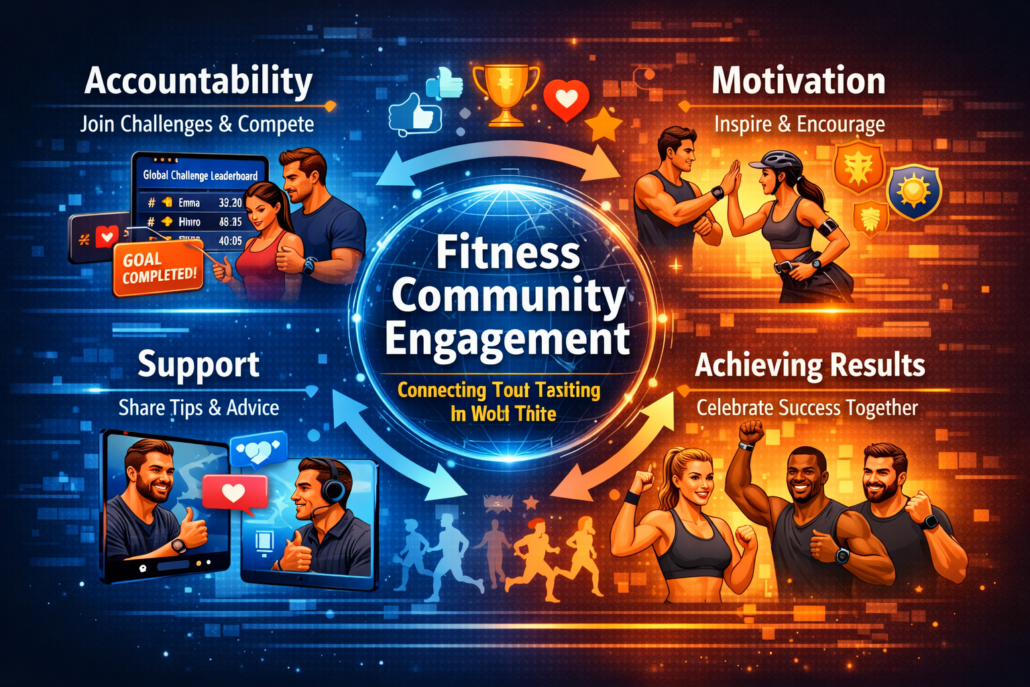
Community engagement in fitness platforms is about creating social ecosystems where athletes don’t just train alone, they connect, share, and hold each other accountable. This is one of the most powerful motivators in 2026 because it blends technology with human connection.

🌍 Global Accountability Networks

  • Platforms like Strava and Peloton allow athletes worldwide to join challenges, compare progress, and celebrate milestones.
  • Seeing peers complete workouts or hit goals creates a sense of accountability — you’re less likely to skip a session when your community is watching.

💬 Motivation Through Social Features

  • Leaderboards, group chats, and live classes foster friendly competition.
  • Apps now include community badges and recognition systems, rewarding consistency and effort.
  • This gamification keeps users engaged far longer than solo tracking.

🤝 Support & Shared Experience

  • Communities provide emotional support, whether it’s encouragement after a tough workout or advice on recovery.
  • Niche groups (e.g., marathon runners, yoga practitioners, cyclists) allow athletes to share experiences and tips tailored to their discipline.

📈 Why It Matters

Community engagement transforms fitness from a solo pursuit into a shared journey. It builds accountability, motivation, and belonging, three pillars that dramatically increase adherence to training programs. In fact, studies show people are far more likely to stick with fitness goals when they’re part of a supportive group.

Seamless integration

Seamless integration in fitness wearables

🔗 What Seamless Integration Means

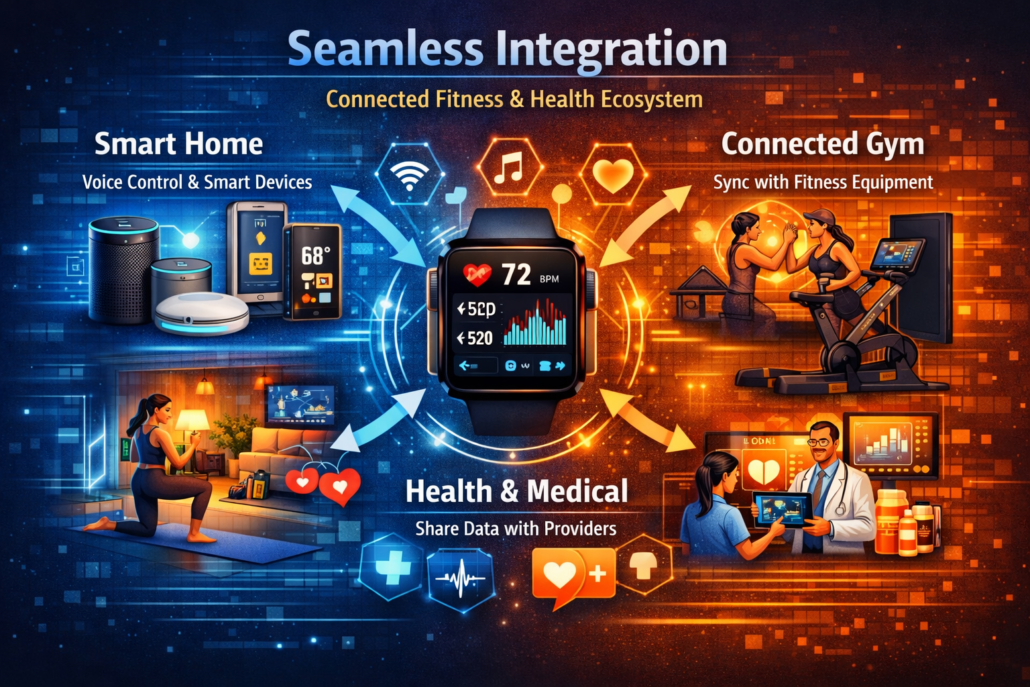
Seamless integration is about creating a connected fitness ecosystem where your wearable doesn’t just track your activity, it communicates with your environment. Every device, from your smartwatch to your smart home, gym equipment, and even healthcare providers, works together to give you a unified view of your health and performance.

🏠 Smart Home Connectivity

  • Modern wearables sync with smart home systems like Alexa, Google Home, or Apple HomeKit.
  • You can say, “Start my morning workout,” and your smart lights adjust, your speaker plays your training playlist, and your treadmill powers up automatically.
  • Post‑workout, your thermostat lowers to help recovery, and your smart fridge suggests a protein‑rich meal.

🏋️ Gym Equipment Integration

  • Connected gym machines (like Peloton, Tonal, and NordicTrack) now sync directly with wearables to record reps, heart rate, and calories burned.
  • Your smartwatch automatically logs the workout, updates your fitness app, and adjusts your next session based on performance.
  • This eliminates manual tracking; everything updates in real time.

🩺 Medical & Wellness Sync

  • The most advanced wearables share data securely with healthcare providers.
  • Doctors can monitor heart rate variability, sleep quality, or glucose levels remotely.
  • This integration bridges the gap between fitness and preventive healthcare, allowing early detection of issues and personalised wellness recommendations.

⚙️ Why It Matters

Seamless integration turns fitness into a frictionless experience. You don’t have to juggle multiple apps or devices; everything works in harmony. It saves time, improves accuracy, and ensures your health data is actionable across platforms.

🌐 The Future Outlook

By 2026, expect wearables to connect not only with your home and gym but also with nutrition trackers, mental health apps, and telemedicine platforms. Fitness will no longer be isolated; it’ll be part of a continuous, intelligent health network that adapts to your lifestyle.

These trends set the stage for the Fitness Apps & Wearables in 2026.

Best Fitness Apps & Wearables in 2026

Here are the 10 standout tools that are redefining fitness this year for Fitness Apps & Wearables in 2026.

  1. Strava 2026 – Still the go‑to for runners and cyclists, now enhanced with AI‑powered route optimisation and real‑time safety alerts.
  2. MyFitnessPal Pro – Expanded beyond calorie tracking to include personalised nutrition coaching and integration with glucose monitors.
  3. Fitbit Sense 3 – Advanced stress detection, sleep scoring, and heart health monitoring make it a holistic wellness device.
  4. Apple Watch Ultra 2 – Built for multi‑sport athletes, with rugged durability and enhanced recovery insights.
  5. WHOOP Strap 5.0 – Focused on recovery and strain analysis, now offering predictive injury alerts.
  6. Peloton App 2026 – Immersive VR workouts and global live classes keep users motivated.
  7. Garmin Forerunner X – Designed for endurance athletes, with satellite precision and adaptive training plans.
  8. Oura Ring Horizon – Sleek design with advanced sleep, readiness, and stress tracking.
  9. Tonal Smart Gym – AI‑driven strength training with adaptive resistance and real‑time feedback.
  10. Future App – A personal trainer in your pocket, offering one‑on‑one coaching powered by AI and human trainers.

Together, these tools represent the cutting edge of fitness technology, blending convenience with science supporting Fitness Apps & Wearables in 2026.

Smart Training Devices for Everyday Athletes

Beyond Fitness Apps & Wearables in 2026, smart training devices are becoming mainstream. Connected dumbbells, VR fitness platforms, and smart bikes now integrate seamlessly with apps to provide real‑time feedback. For example, Tonal’s adaptive resistance system adjusts weight automatically, while VR platforms like Supernatural make workouts immersive and engaging. Everyday athletes can now train with the same precision as professionals, without leaving their homes.

AI‑Powered Fitness Coaching

Artificial intelligence is the biggest game‑changer in fitness. AI‑powered fitness coaching, Fitness Apps & Wearables in 2026 will analyse performance data, predict fatigue, and adjust training plans instantly. Instead of static workout routines, users get dynamic programs that evolve with their progress. AI also helps prevent injuries by flagging overtraining risks and suggesting recovery strategies. This level of personalisation was once reserved for elite athletes; now it’s accessible to anyone with a smartphone or wearable.

The Future of Health Tracking

The future of health tracking goes far beyond fitness. Continuous glucose monitoring, stress detection, and even mental health insights are being integrated into Fitness Apps & Wearables in 2026. Devices like Fitbit Sense 3 and Oura Ring Horizon now provide holistic wellness dashboards, helping users balance physical training with emotional well‑being. In 2026, fitness technology is not just about building muscle or endurance; it’s about optimising the entire human experience.

Conclusion – Fitness Apps & Wearables in 2026

The best fitness apps & wearables in 2026 are more than gadgets; they’re partners in transformation. By combining AI coaching, smart devices, and holistic health tracking, they empower everyday athletes to train smarter, recover faster, and live healthier lives. Whether you’re a cyclist using Strava, a strength athlete on Tonal, or someone focused on sleep with Oura, the future of fitness is here — and it’s personalised, data‑driven, and incredibly powerful.

7 Proven Back and Biceps Workout Routines for Maximum Muscle Growth

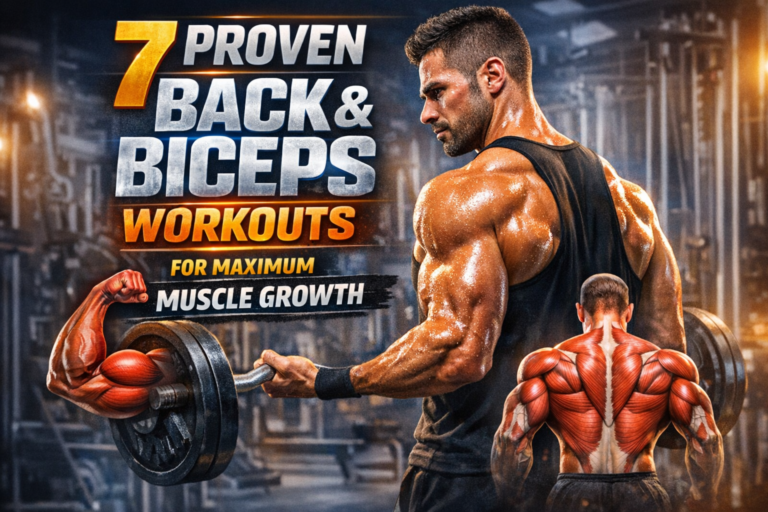
When it comes to building an impressive upper body, few combinations are as effective as a back and biceps workout. These muscle groups complement each other naturally; your biceps assist in pulling movements while your back provides the foundation of strength and posture. Training them together not only saves time but also ensures balanced development. In this article, we’ll explore seven proven routines, the science behind them, and how you can apply principles like progressive overload and compound exercises to achieve sustainable muscle growth.

Progressive overload is the systematic, gradual increase of stress placed on the musculoskeletal system during exercise to enhance muscle growth, strength, and endurance.

Compound Exercises: The big 5 lifts — deadlift, bench press, squat, shoulder press, and pull-up — are widely considered the best compound exercises because they have been shown to maximise muscle growth, build strength, and improve functional fitness.

Muscle Growth: To make muscles grow faster, optimise for high-volume training (10-20+ weekly sets per muscle), train near failure, and prioritise exercises that challenge muscles in a stretched position

Check out the shoulder and leg workout.

Back and Biceps Workout Together?

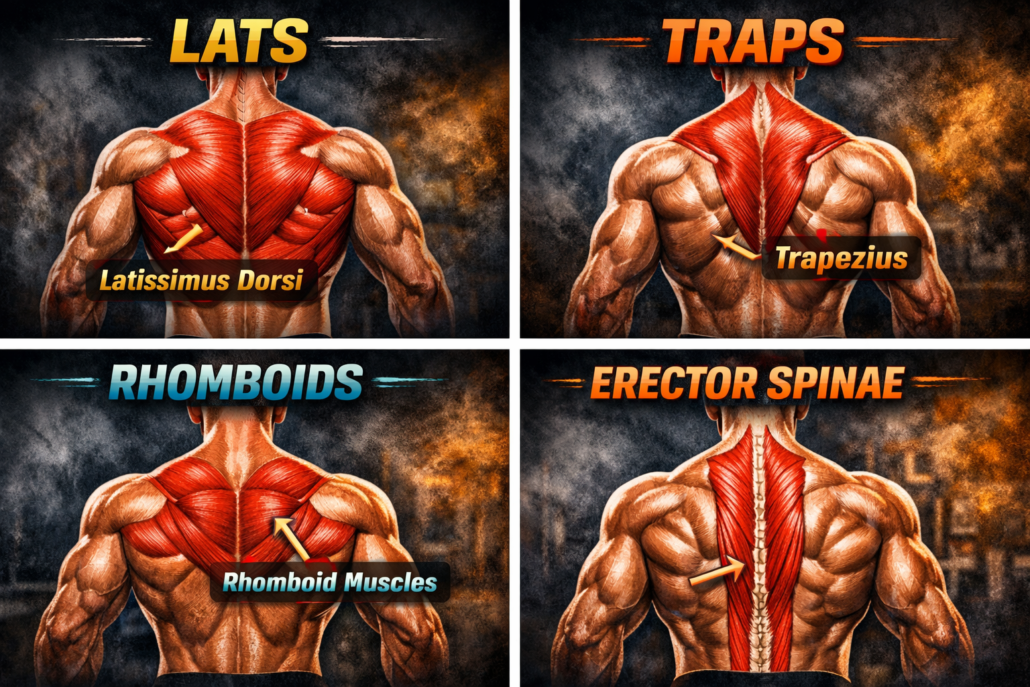
The back is one of the largest muscle groups in the body, consisting of the lats, traps, rhomboids, and erector spinae. Meanwhile, the biceps are smaller but play a crucial role in pulling movements. Pairing them in a single session makes sense because: Look at the image below to understand better about these muscles.

lats, traps, rhomboids, and erector spinae
  • Most back exercises (like rows and pull-ups) already recruit the biceps.
  • Training them together enhances efficiency and recovery.
  • It allows for a focused strength training approach without overtraining.

7 Proven Back and Biceps Workout Routines

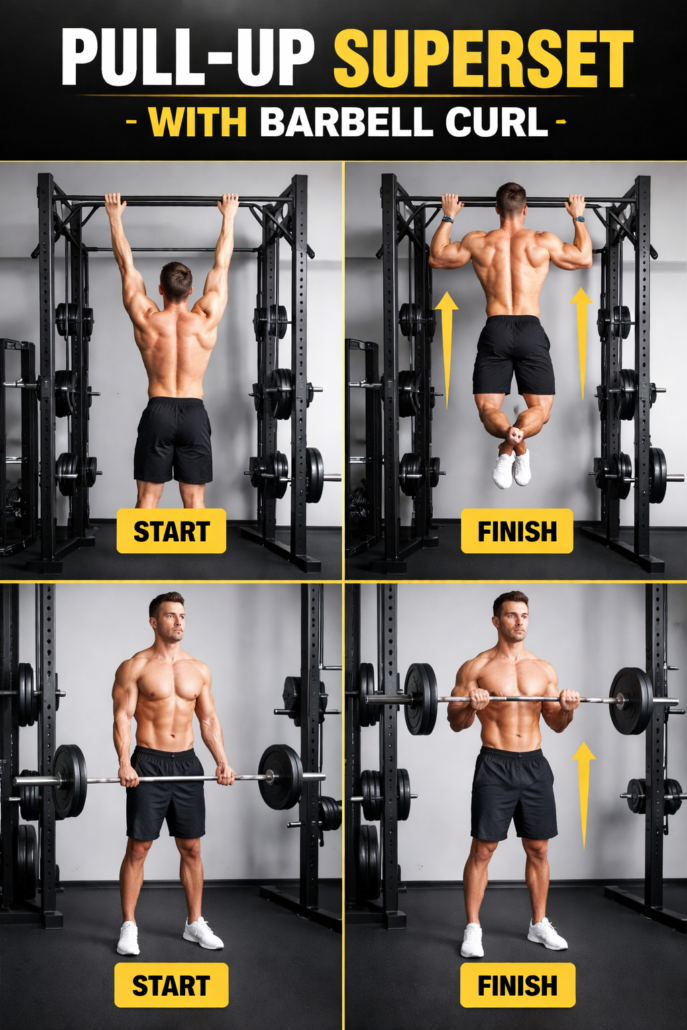
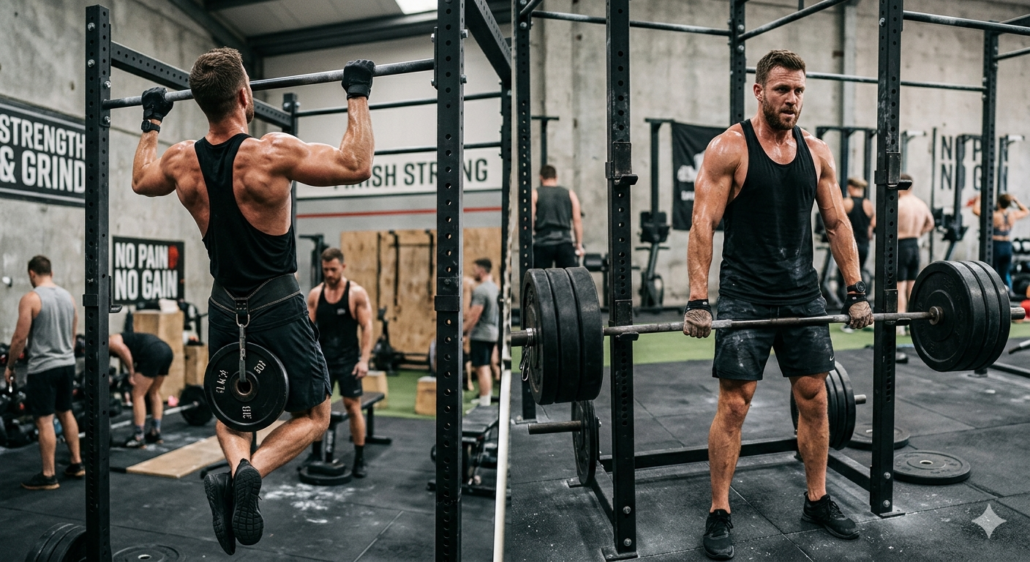
1. Pull-Up Superset with Barbell Curl

Pull-Up Superset with Barbell Curl
  • Pull-Ups (4 sets of 8–12 reps)
  • Barbell Curl (4 sets of 10–12 reps)

Pull-ups are a classic compound exercise that target the lats, traps, and biceps. Supersetting them with curls ensures maximum pump and hypertrophy.

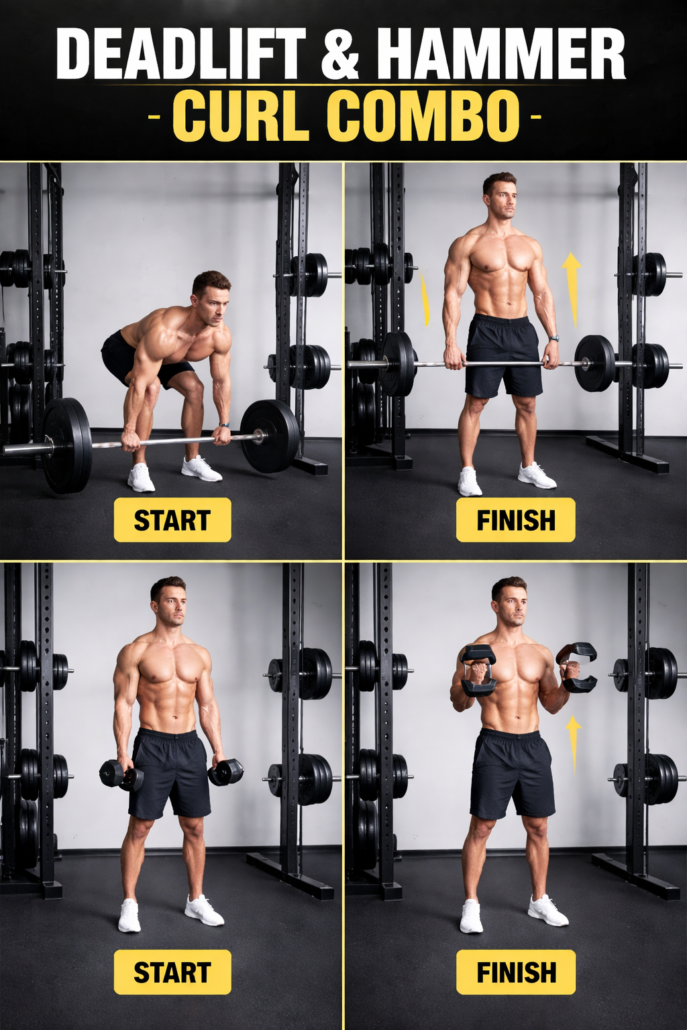
2. Deadlift and Hammer Curl Combo

Deadlift and Hammer Curl Combo
  • Deadlift (4 sets of 6–8 reps)
  • Hammer Curl (3 sets of 12 reps)

Deadlifts build overall strength and thickness in the back. Pairing them with hammer curls emphasises the brachialis, adding width to your arms.

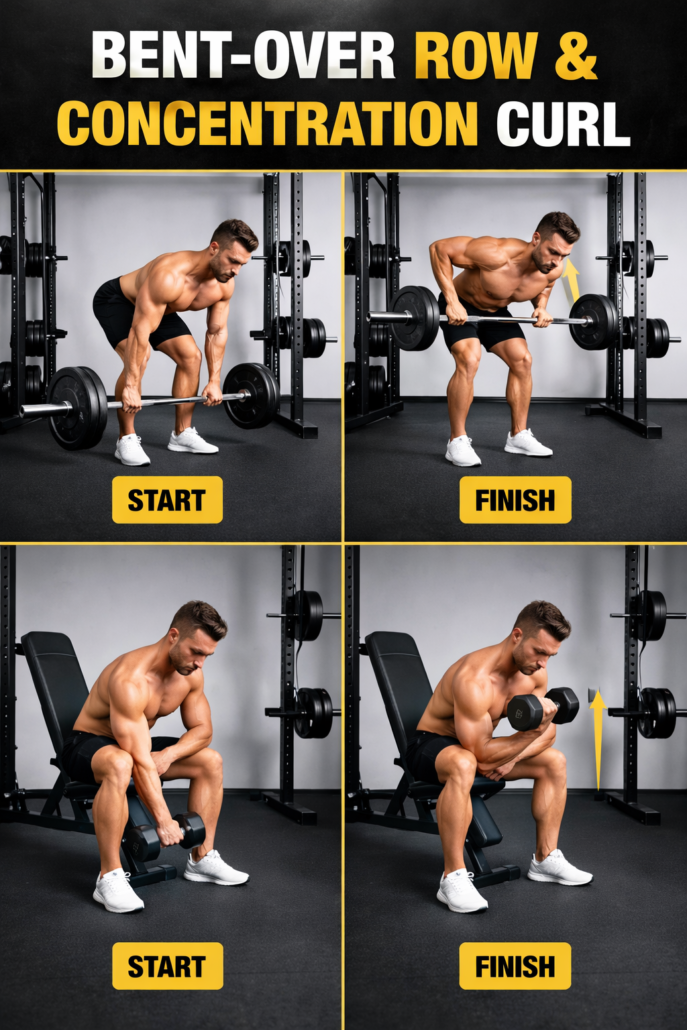
3. Bent-Over Row with Concentration Curl

Bent-Over Row with Concentration Curl
  • Bent-Over Barbell Row (4 sets of 8–10 reps)
  • Concentration Curl (3 sets of 12 reps)

Rows are essential for back thickness, while concentration curls isolate the biceps for peak contraction.

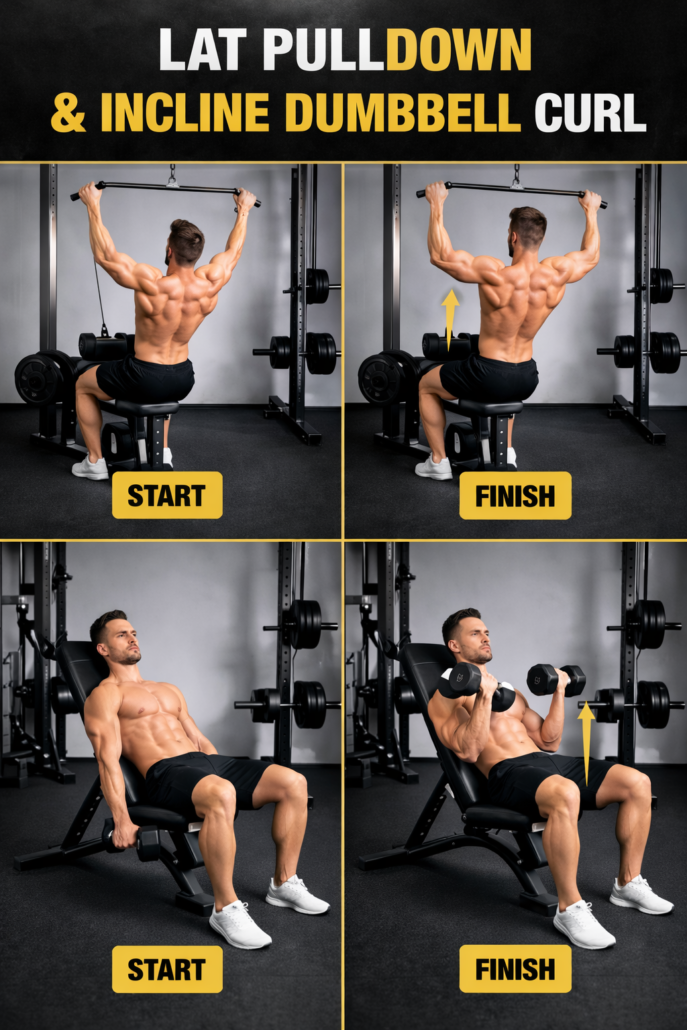
4. Lat Pulldown and Incline Dumbbell Curl

Lat Pulldown and Incline Dumbbell Curl
  • Lat Pulldown (4 sets of 10–12 reps)
  • Incline Dumbbell Curl (3 sets of 12 reps)

Lat pulldowns mimic pull-ups but allow for controlled progressive overload. Incline curls stretch the biceps under tension, stimulating growth.

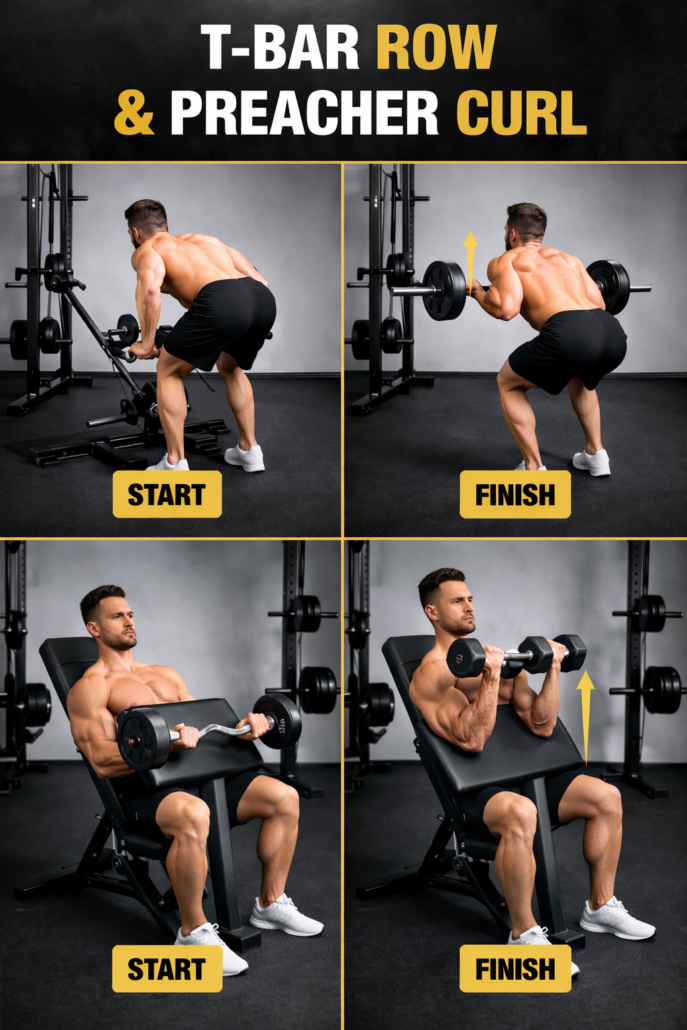
5. T-Bar Row and Preacher Curl

T-Bar Row and Preacher Curl
  • T-Bar Row (4 sets of 8–10 reps)
  • Preacher Curl (3 sets of 12 reps)

T-Bar rows hit the mid-back and traps, while preacher curls eliminate momentum, isolating the biceps fully.

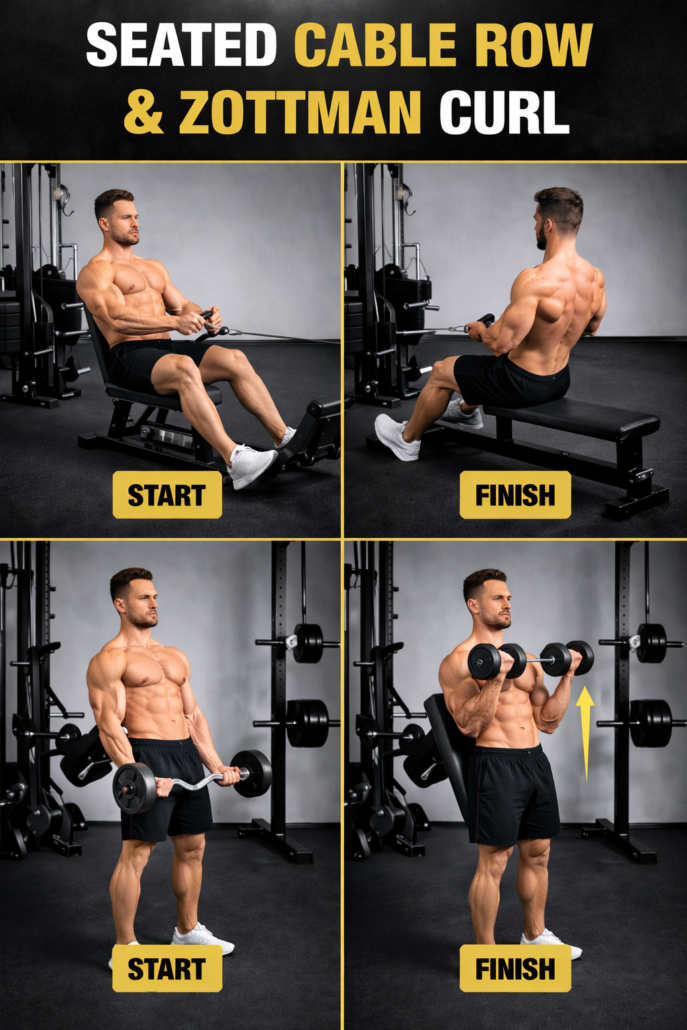
6. Seated Cable Row and Zottman Curl

Seated Cable Row and Zottman Curl
  • Seated Cable Row (4 sets of 10–12 reps)
  • Zottman Curl (3 sets of 12 reps)

Cable rows provide constant tension on the back, while Zottman curls combine supination and pronation for complete biceps development.

7. Chin-Up and Barbell Shrug Finisher

Chin-Up and Barbell Shrug Finisher
  • Chin-Ups (3 sets to failure)
  • Barbell Shrugs (3 sets of 15 reps)

Chin-ups emphasise biceps more than pull-ups, while shrugs strengthen traps, rounding out your upper body.

Key Principles for Success

1. Progressive Overload

To achieve consistent muscle growth, gradually increase the weight, reps, or intensity. Without progressive overload, your body adapts and plateaus.

2. Compound Exercises First

Start your routine with heavy compound lifts like deadlifts, rows, and pull-ups. These recruit multiple muscles, maximising efficiency.

3. Isolation for Finishing Touches

After compound lifts, use isolation movements like curls to target the biceps directly.

4. Recovery and Nutrition

Muscles grow outside the gym. Ensure proper sleep, protein intake, and rest days to optimize results.

Sample Weekly Split

  • Day 1: Chest & Triceps
  • Day 2: Back & Biceps Workout
  • Day 3: Rest
  • Day 4: Legs & Shoulders
  • Day 5: Back & Biceps (variation)
  • Day 6: Cardio/Active Recovery
  • Day 7: Rest

This split ensures balanced training while giving your back and biceps enough frequency for growth.

Conclusion

A well-structured back and biceps workout is the cornerstone of upper body strength and aesthetics. By combining compound exercises, applying progressive overload, and maintaining consistent strength training, you’ll unlock new levels of muscle growth. Whether you’re a beginner or advanced lifter, these seven routines provide a roadmap to sculpting a powerful physique.

5 Shocking Truths About the PM CARES Fund Scam and Its Impact on Indian Taxpayers

When the PM CARES Fund was launched in March 2020, it was presented as a lifeline during the COVID‑19 crisis. But over time, questions about transparency, accountability, and misuse have turned it into one of the most controversial funds in India’s recent history. Critics argue that billions were siphoned off under the guise of emergency relief, leaving taxpayers and citizens in the dark.

The PM CARES Fund, created in March 2020 to address emergencies like COVID‑19, collected about ₹13,000 crore in its first three years and was promoted as eligible for CSR contributions, with ministers urging donations.

However, transparency concerns have persisted: the government has argued that the fund is not a “public authority” under the RTI Act, making it exempt from disclosure; the Prime Minister’s Office has told the Lok Sabha Secretariat that parliamentary questions about it are inadmissible since it relies on voluntary contributions rather than the Consolidated Fund of India; and while audits are reportedly conducted by private firms, their reports have not been made public, fueling criticism about accountability and oversight.

1. Lack of Transparency

Lack of Transparency in PM care fund

The government declared PM CARES outside the purview of the Right to Information Act (RTI), meaning citizens cannot demand details of donors or expenditures. Parliamentary questions about the fund were ruled inadmissible, effectively shielding it from scrutiny. This secrecy has fueled suspicions of misuse.

The PM CARES Fund, set up in March 2020, has faced sustained criticism for its opacity. The government has consistently argued that the fund is not a “public authority” under the RTI Act, meaning it is not obliged to disclose details to citizens.

In February 2026, the Prime Minister’s Office (PMO) communicated to the Lok Sabha Secretariat that questions about PM CARES, PMNRF, and the National Defence Fund are “not admissible” in Parliament, citing their voluntary nature and independence from the Consolidated Fund of India.

This move sparked outrage among transparency activists and opposition parties, who argue that funds promoted by constitutional office-holders should be subject to parliamentary scrutiny. Critics also highlight that audit reports of PM CARES fund have not been made public, with audits reportedly conducted by private firms rather than the Comptroller and Auditor General (CAG). Activists like Anjali Bharadwaj have questioned why Parliament is barred from oversight, warning that such restrictions undermine democratic accountability.

Opposition leaders have compared the opacity of PM CARES fund to the secrecy surrounding electoral bonds, framing it as part of a broader trend of shielding financial flows from public scrutiny.

These concerns have been widely reported in outlets such as Frontline, The Federal, and Telegraph India, all of which emphasize that the fund’s lack of transparency raises serious questions about governance and accountability in India’s emergency relief mechanisms.

2. Duplication of Relief Mechanisms

Duplication of Relief Mechanisms

India already had the Prime Minister’s National Relief Fund (PMNRF), established in 1948. Many questioned why a new fund was needed. Analysts argue PM CARES was designed to centralize control under the PMO, bypassing established relief channels.

One of the major criticisms of the PM CARES Fund is that it duplicates existing relief mechanisms, raising questions about the need for a separate trust. India already had the Prime Minister’s National Relief Fund (PMNRF), established in 1948, which serves a similar purpose of providing financial assistance during emergencies and disasters.

Critics argue that instead of creating PM CARES fund in 2020, the government could have strengthened PMNRF, which is subject to established oversight and has a long track record of disbursing aid. The creation of PM CARES fund, therefore, led to confusion and overlap, with two parallel funds soliciting donations for disaster relief.

Transparency activists and opposition leaders have pointed out that this duplication not only fragments accountability but also allows the government to bypass existing scrutiny mechanisms tied to PMNRF. Reports in The Hindu and Indian Express highlight that the lack of clarity on why PM CARES fund was necessary has fueled suspicion that the new fund was designed to operate with fewer checks and balances, thereby undermining trust in India’s relief architecture.

3. Corporate CSR Loopholes

Corporate CSR Loopholes

A major criticism of the PM CARES Fund is its eligibility to receive Corporate Social Responsibility (CSR) contributions, which critics argue created a loophole that diverted resources away from grassroots development projects.

Under India’s CSR framework, companies are mandated to spend a portion of their profits on social welfare initiatives such as education, healthcare, and rural development. By allowing donations to the PM CARES fund to qualify as CSR spending, corporations could fulfill their legal obligations simply by contributing to a central trust with opaque usage, rather than investing directly in community‑level projects.

Transparency concerns deepened because the donor lists remain undisclosed, making it impossible to track which companies contributed and whether donations were linked to expectations of political favor. Analysts writing in The Hindu and Frontline have noted that this arrangement effectively centralized CSR flows into a fund shielded from RTI scrutiny and parliamentary oversight, undermining the original intent of CSR laws to empower local development.

This loophole, critics argue, not only weakened grassroots accountability but also blurred the line between voluntary philanthropy and regulatory compliance.

Donations to PM CARES were allowed to count as Corporate Social Responsibility (CSR) spending. This diverted funds away from grassroots development projects into a trust with opaque usage. Critics allege that companies donated for political favor, especially since donor lists remain undisclosed.

4. Alleged Misuse of Funds

Alleged Misuse of Funds in PM cares fund scam

Another area of concern surrounding the PM CARES Fund is the alleged misuse and ineffective deployment of resources. While billions of rupees were collected, reports suggest that allocations and disbursements were not clearly documented, leaving citizens uncertain about how the money was spent.

A prominent example was the procurement of ventilators through PM CARES, which several states later reported as faulty, under‑utilized, or lying unused in hospitals due to technical issues and lack of trained staff.

Investigations by outlets such as The Hindu and Indian Express highlighted that procurement processes lacked transparency, with limited disclosure on vendor selection, pricing, and quality checks.

Critics argue that this undermines the very purpose of the fund, which was to provide rapid and effective relief during the COVID‑19 crisis. The absence of publicly available audit reports further compounds these concerns, raising questions about whether PM CARES resources were deployed efficiently or whether political and administrative discretion overshadowed accountability.

Reports suggest that billions were collected, but allocations were unclear. For example, ventilators purchased through PM CARES were later found faulty or unused in several states. This raised questions about procurement transparency and whether funds were effectively deployed.

5. Impact on Taxpayers

Impact on Taxpayers in PM fund scam

While donations were voluntary, the taxpayer indirectly bore the burden:

  • Corporate donations were tax‑deductible, reducing government revenue.
  • CSR obligations were redirected, weakening local development initiatives.
  • Opportunity costs meant state health systems received less direct support.

In effect, taxpayers lost out on both accountability and grassroots benefits.

Although donations to the PM CARES Fund were technically voluntary, critics argue that taxpayers indirectly bore the burden in several ways. First, corporate donations were made tax‑deductible, which reduced overall government revenue and shifted the fiscal load back onto the public.

Second, by allowing contributions to PM CARES to qualify as CSR obligations, companies redirected funds away from grassroots development initiatives such as education, sanitation, and rural health projects, weakening local impact.

Finally, the opportunity costs of channeling vast sums into a trust with opaque usage meant that state health systems and public hospitals received less direct support during the pandemic, despite being in urgent need of resources.

Analysts writing in The Hindu and Frontline have emphasized that this indirect burden on taxpayers highlights how the fund’s structure centralized relief while diminishing decentralized welfare spending, raising questions about fairness and accountability in India’s emergency financing.

🗣️ Political & Civil Society Reactions

  • Opposition Parties: Alleged PM CARES was engineered to give the Prime Minister unchecked financial control.
  • Civil Rights Groups: Called for judicial review, arguing exclusion from RTI undermines democracy.
  • Media Investigations: Outlets like The Wire, Frontline, and The Hindu highlighted how secrecy erodes public trust.

📊 Comparison: PM CARES vs PMNRF

FeaturePM CARESPMNRF
Launch Year20201948
OversightNot under RTI, no parliamentary scrutinySubject to RTI, audited
Donor DisclosureNot publicPublicly available
CSR EligibilityYesNo
ControlPM + select ministersBroader administrative oversight

🔍 Conclusion

The PM CARES Fund may not have been legally declared a scam, but its opacity, donor secrecy, and bypassing of existing relief mechanisms have left a lasting dent in public trust. For Indian taxpayers, the concern is not direct taxation but the diversion of corporate CSR funds and public donations into a trust shielded from accountability.

Transparency is the cornerstone of democracy. Without it, even well‑intentioned initiatives risk being perceived as scams.

10 minute workouts that work

Time is the number one excuse people give for skipping exercise. But here’s the truth: you don’t need an hour in the gym to see results. With 10 minute workouts, you can torch calories, build strength, and improve endurance, all without disrupting your busy schedule. These short, intense routines are backed by science and designed for maximum efficiency.

In this article, we’ll explore seven proven routines that fit seamlessly into your day, whether you’re at home, in the office, or travelling. Check more fitness articles.

Why 10 Minute Workouts Work

Research shows that high‑intensity interval training (HIIT) and short bursts of exercise can deliver similar benefits to longer sessions. The key is intensity and consistency. By pushing your body hard for a short period, you trigger fat loss, muscle activation, and cardiovascular improvements.

Think of it as fitness minimalism: less time, more results.

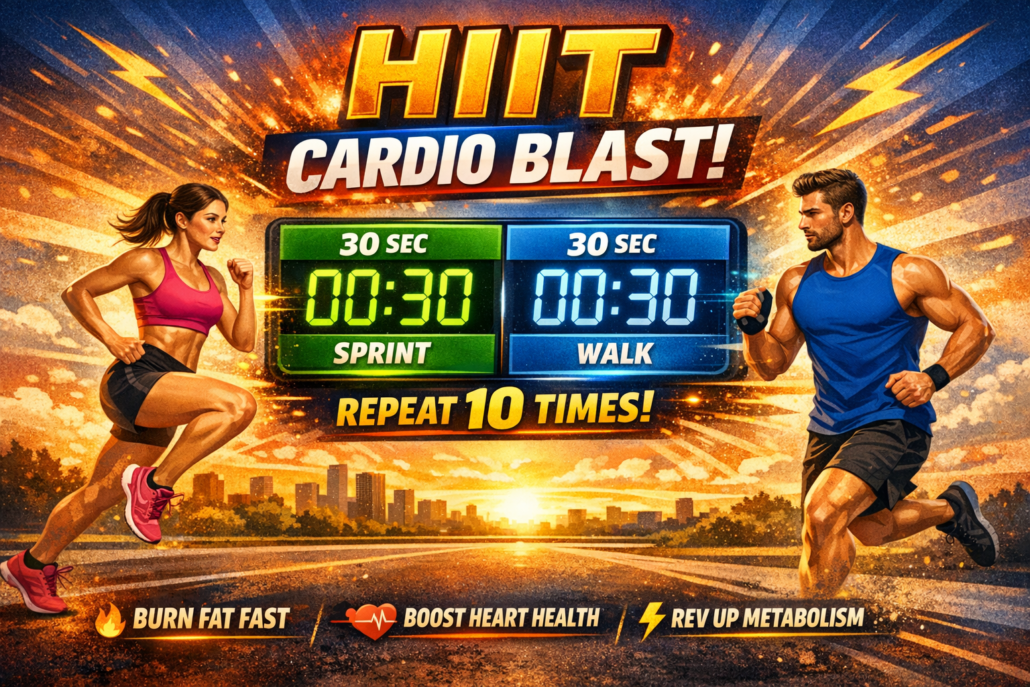
1. HIIT Cardio Blast

HIIT Cardio
  • Duration: 10 minutes
  • Structure: 30-second sprint, 30-second walk (repeat 10 times)
  • Benefits: Burns fat fast, improves heart health, and boosts metabolism.
  • Perfect for: Busy mornings when you need a quick energy boost.

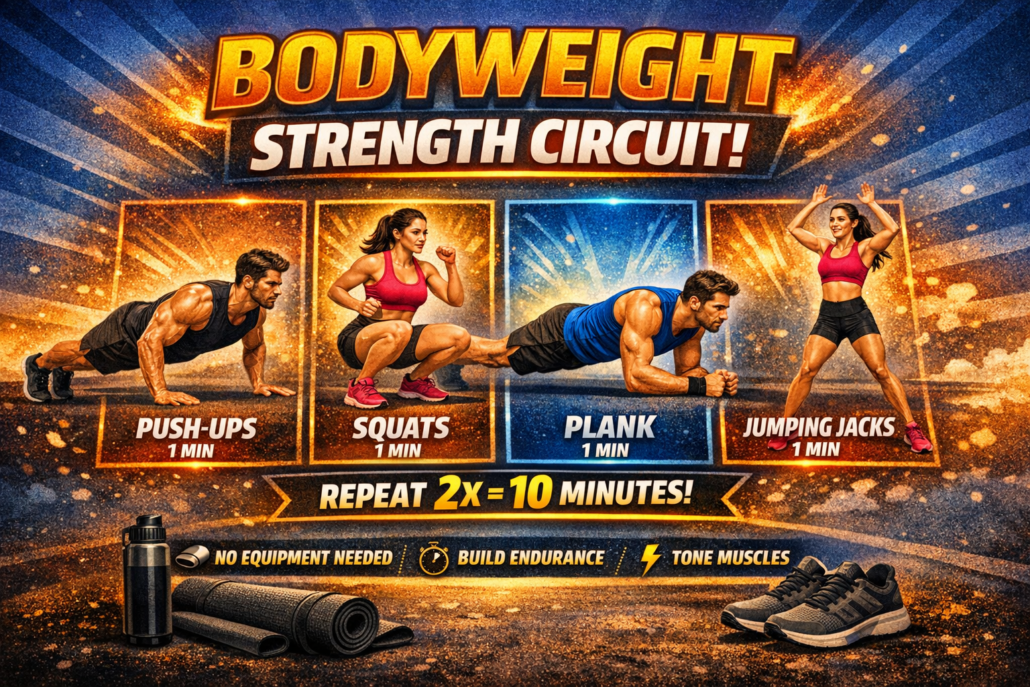
2. Bodyweight Strength Circuit

Bodyweight Strength Circuit
  • Push‑ups (1 min)
  • Squats (1 min)
  • Plank (1 min)
  • Jumping jacks (1 min)
  • Repeat twice for a total of 10 minutes.
  • Benefits: Builds strength without equipment, improves endurance, and tones muscles.

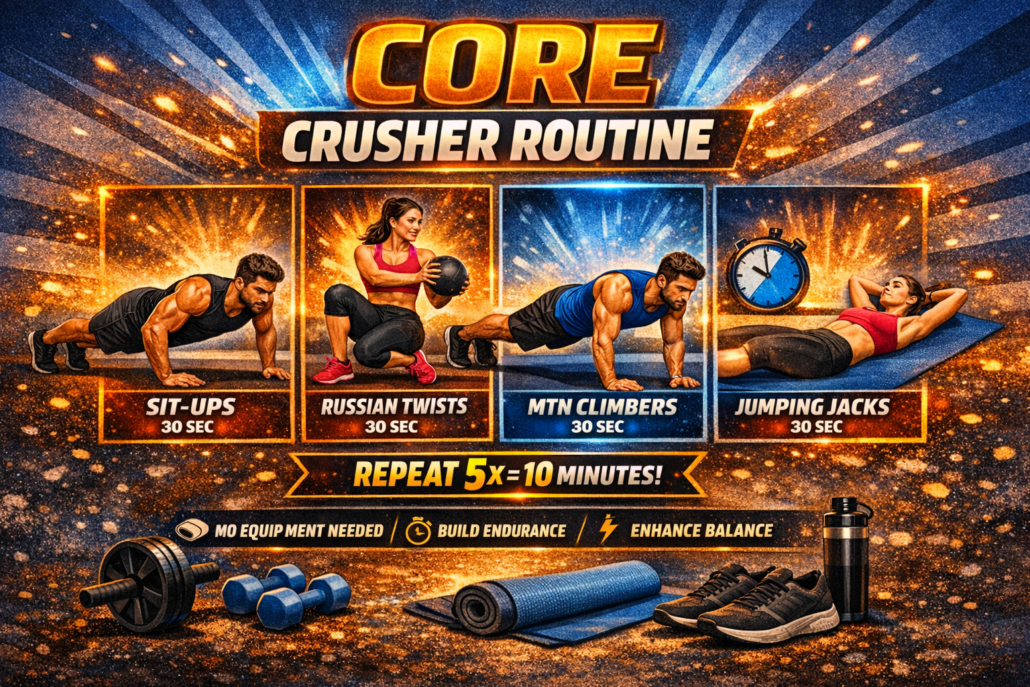
3. Core Crusher Routine

Core Crusher Routine
  • Sit‑ups (30 sec)
  • Russian twists (30 sec)
  • Mountain climbers (30 sec)
  • Rest (30 sec)
  • Repeat 5 times.
  • Benefits: Strengthens abs, improves posture, and enhances balance.

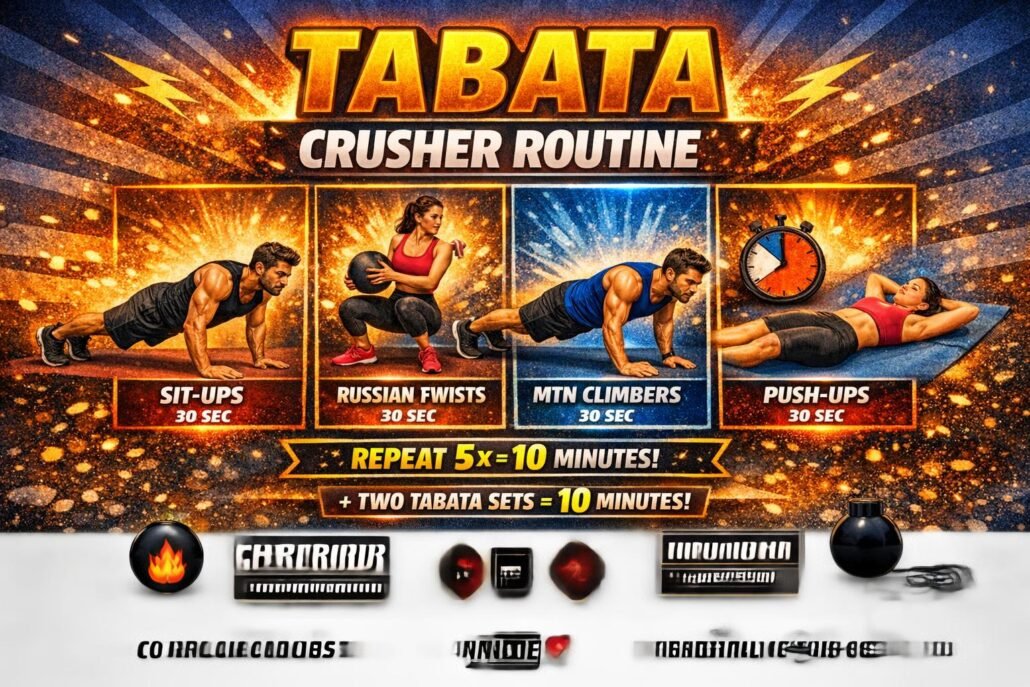
4. Tabata Training

Tabata Training
  • 20 seconds of max effort (burpees, squats, or push‑ups)
  • 10 seconds rest
  • Repeat for 8 rounds (4 minutes)
  • Do two different Tabata sets for a full 10 minutes.
  • Benefits: Extreme calorie burn, improved endurance, and mental toughness.

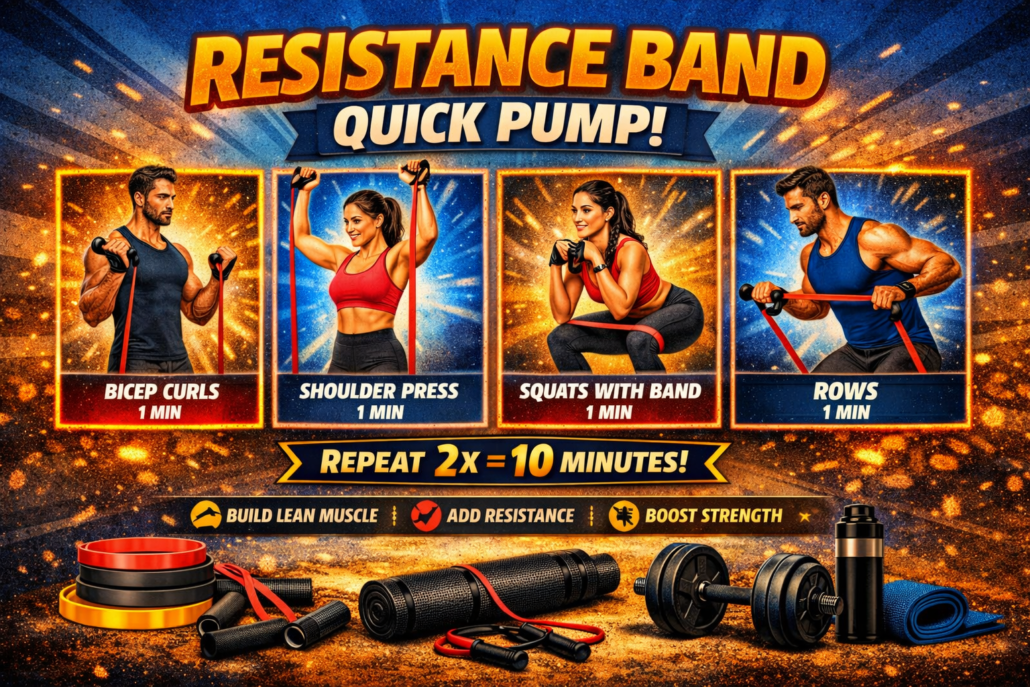
5. Resistance Band Quick Pump

Resistance Band Quick Pump
  • Bicep curls (1 min)
  • Shoulder press (1 min)
  • Squats with band (1 min)
  • Rows (1 min)
  • Repeat twice.
  • Benefits: Adds resistance, builds lean muscle, and improves strength.

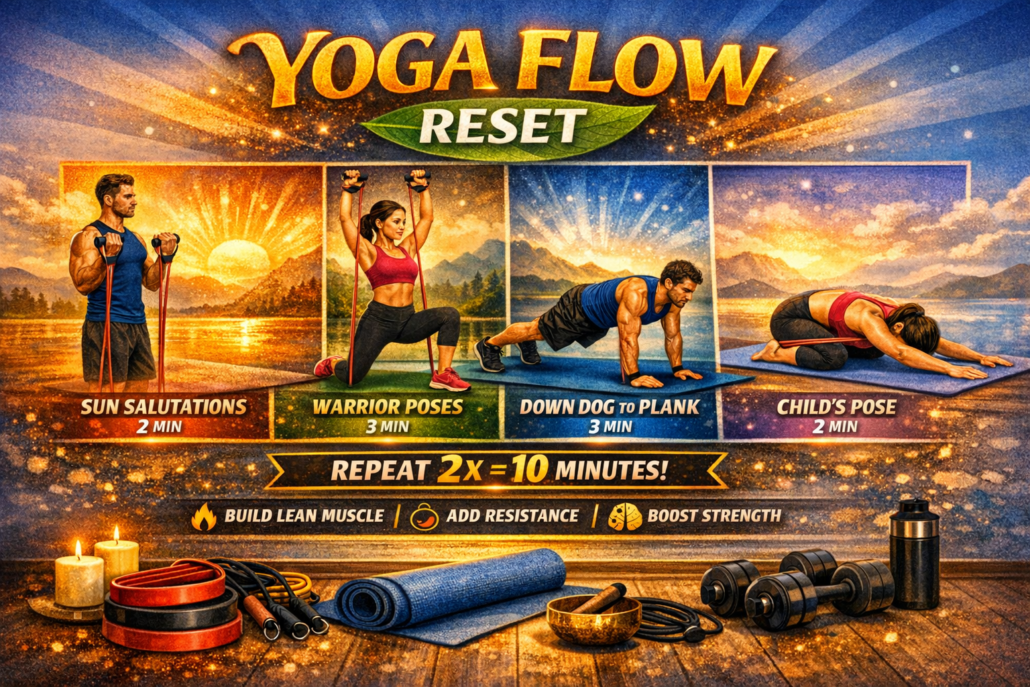
6. Yoga Flow Reset

Yoga Flow Reset
  • Sun salutations (2 min)
  • Warrior pose sequence (3 min)
  • Downward dog to plank transitions (3 min)
  • Child’s pose (2 min)
  • Benefits: Improves flexibility, reduces stress, and enhances recovery.

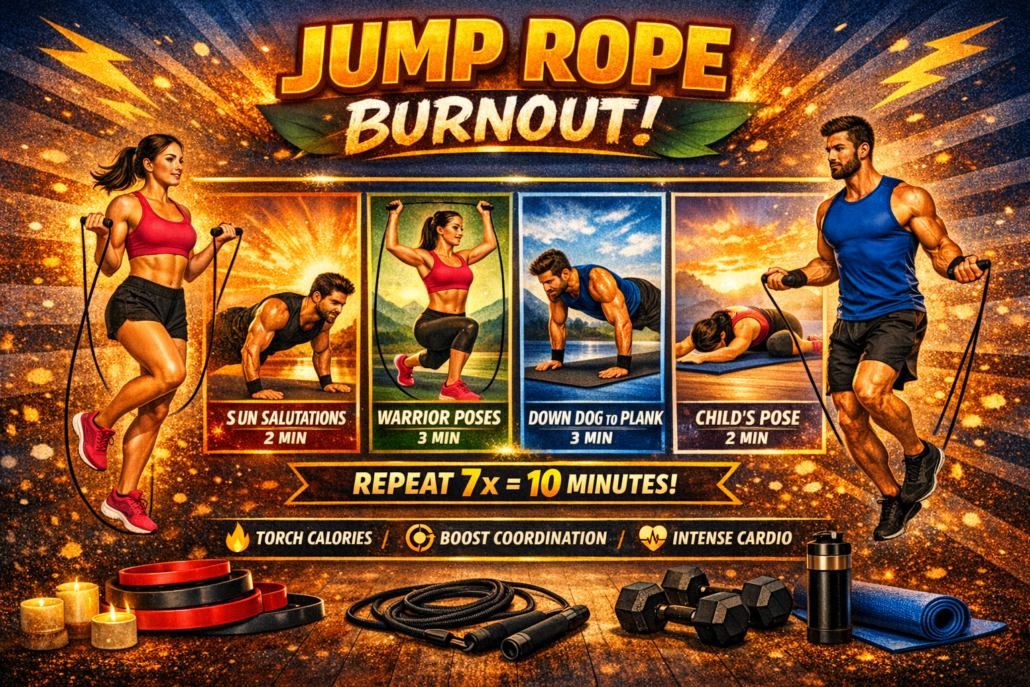
7. Jump Rope Burnout

Jump Rope Burnout
  • 1 min fast skipping
  • 30 sec rest
  • Repeat 7 times
  • Benefits: Incredible cardio, coordination, and calorie burn.

Tips for Success

  • Consistency beats duration. Doing a 10‑minute workout daily is more effective than a single long session once a week.
  • Track progress. Use a fitness app or journal to measure improvements in strength and endurance.
  • Mix it up. Rotate between cardio, strength, and yoga flows to keep your body challenged.

Conclusion

The excuse of “no time” no longer holds up. With these 10‑minute workouts, you can transform your fitness, boost energy, and stay consistent even on the busiest days. Whether you’re chasing fat loss, strength gains, or endurance improvements, these routines prove that short workouts can deliver big results.

Leg and Shoulder Day Exercises

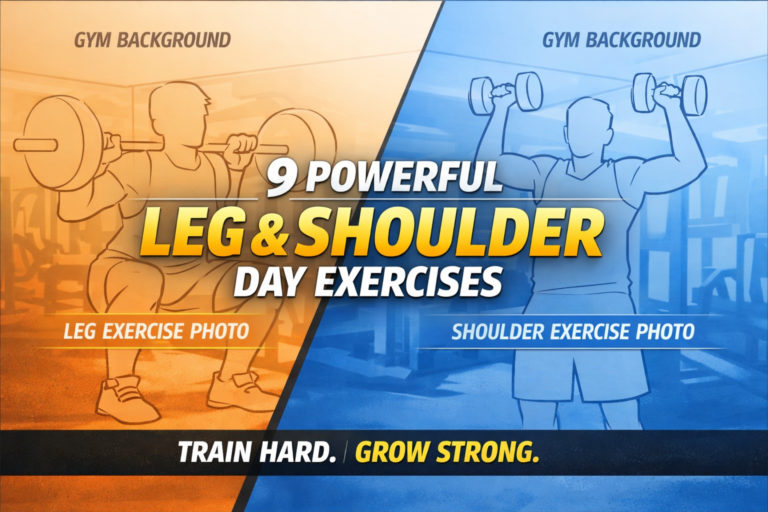
Leg and Shoulder Day Exercises are two of the most critical muscle groups for strength, balance, and aesthetics. Leg and Shoulder Day Exercises together create a powerhouse workout that builds lower-body stability and upper-body definition. In this article, I’ll share my complete leg and shoulder day routine, covering all the essential exercises, their benefits, and how they fit into a sustainable fitness lifestyle. Visit my blog.

Leg and Shoulder Day Exercises

This workout combines compound lifts and isolation moves to maximise muscle activation. Training legs and shoulders together challenges endurance, boosts testosterone, and accelerates calorie burn. It’s a routine that not only builds strength but also enhances overall athletic performance.
Fitness, Strength, Muscle Growth, Balance

Leg and Shoulder Day Exercises impact multiple aspects of fitness:

  • Fitness: Improves cardiovascular endurance and functional strength.
  • Strength: Builds raw power through compound lifts.
  • Muscle Growth: Stimulates hypertrophy in major muscle groups.
  • Balance: Enhances posture and stability, reducing injury risk.

Leg Day Essentials

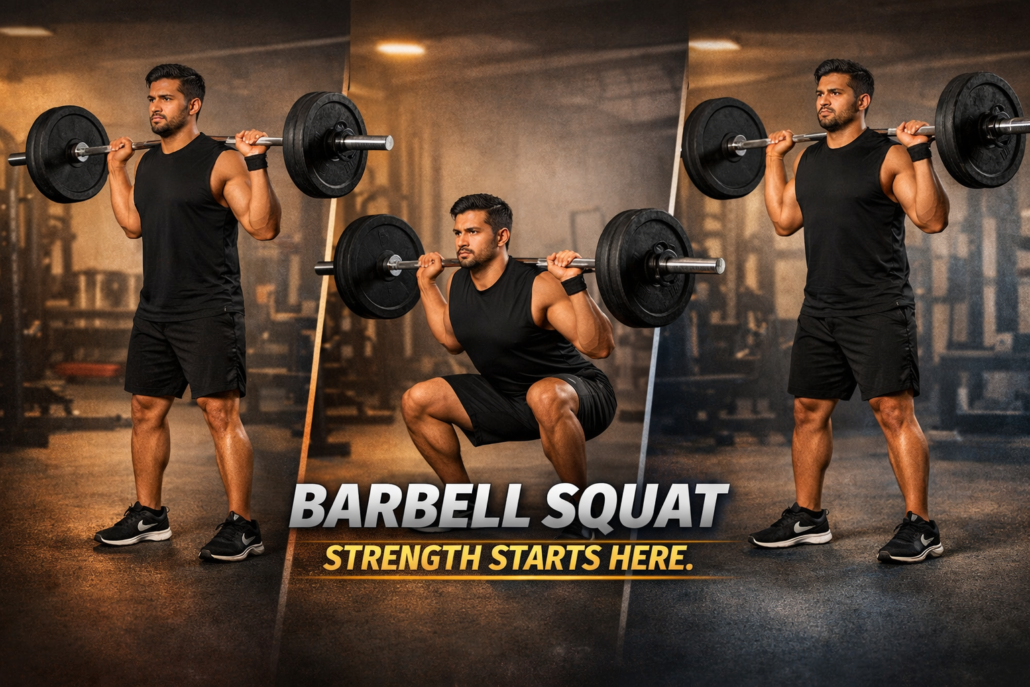
1. Barbell Squats

Barbell Squats

The king of leg exercises. Squats target quads, hamstrings, glutes, and core. Keep your chest up, back straight, and drive through your heels.

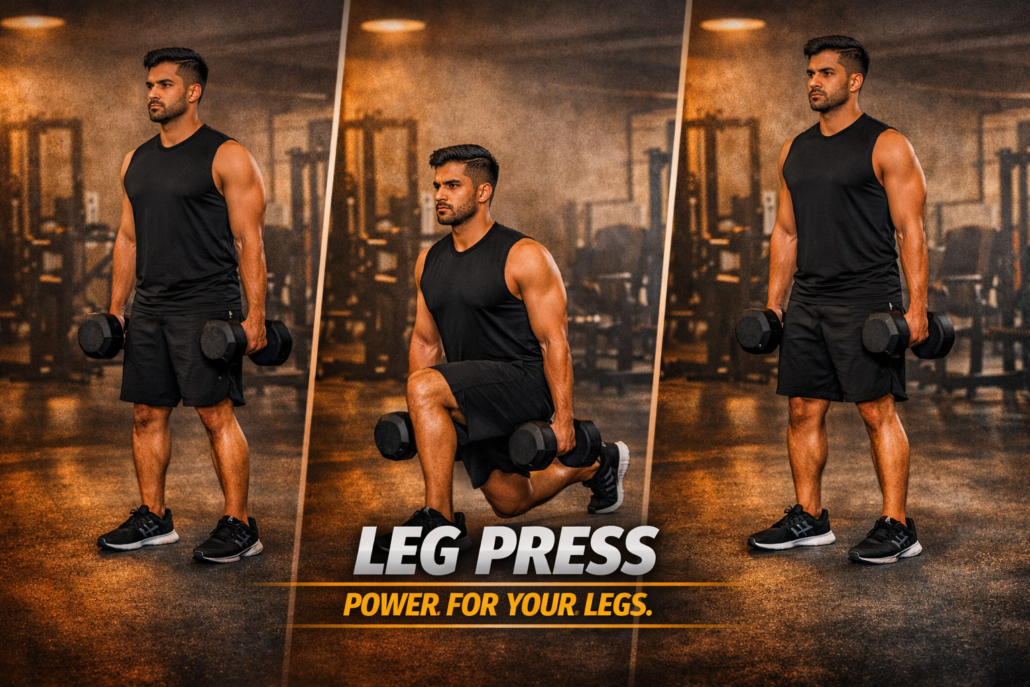
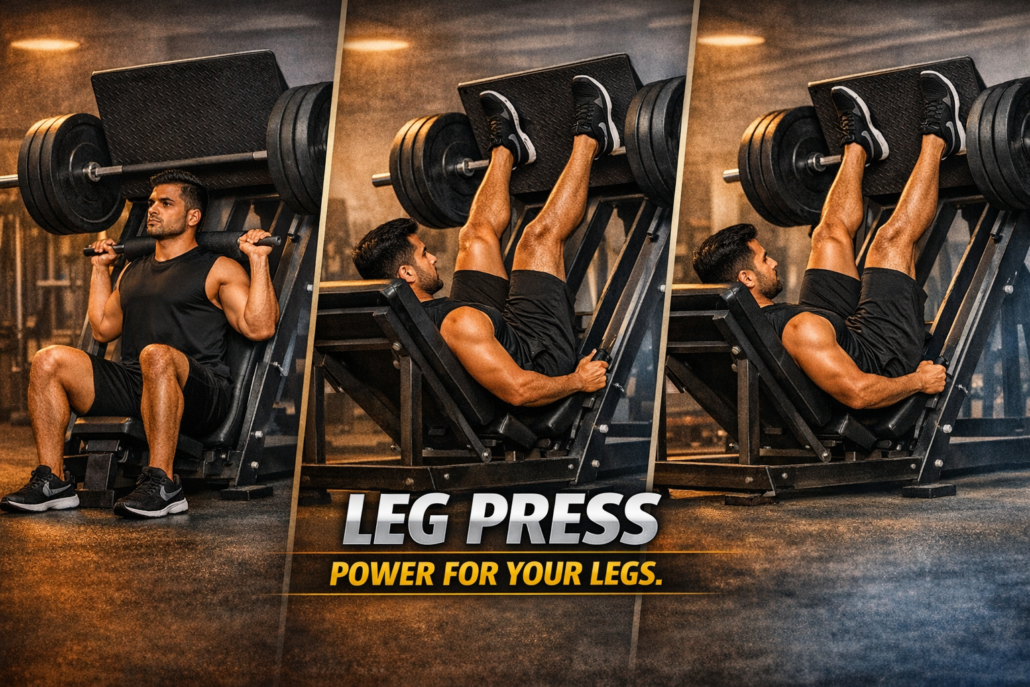
2. Leg Press

Leg Press

A machine‑based powerhouse move that allows heavy loading to be done safely. Great for building quad and glute strength.

3. Lunges

Lunges

Walking or stationary lunges improve balance and unilateral strength. They also sculpt glutes and hamstrings.

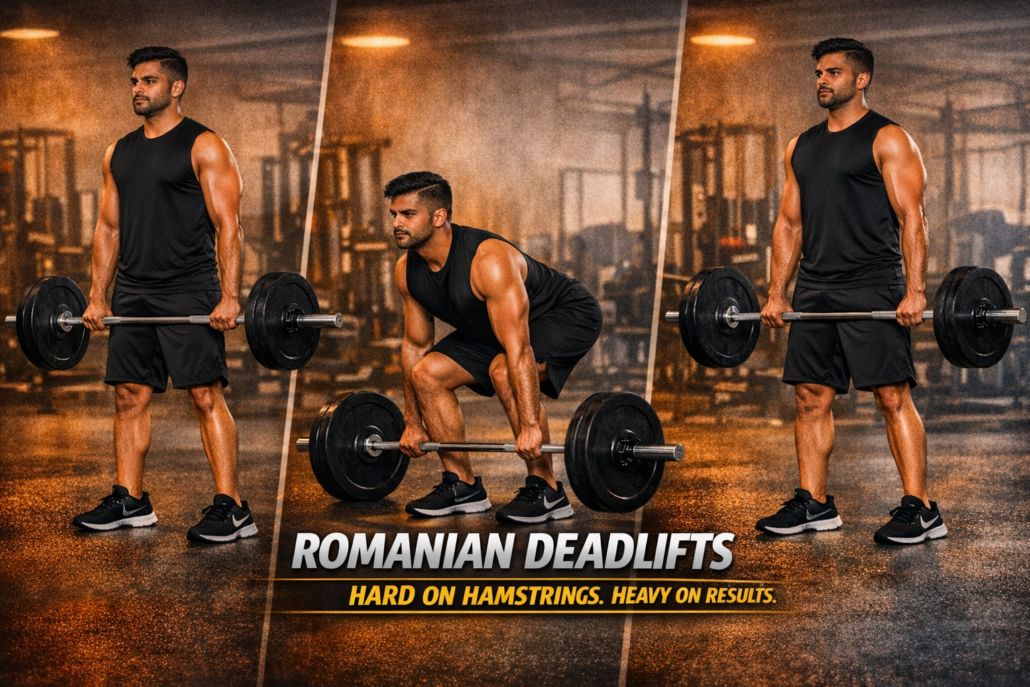
4. Romanian Deadlifts

Romanian Deadlifts

Perfect for hamstring and glute development. Focus on hip hinge mechanics for maximum benefit.

5. Calf Raises

Calf Raises

Often overlooked, calves add stability and aesthetics. Perform standing or seated variations for complete development.

Shoulder Day Essentials

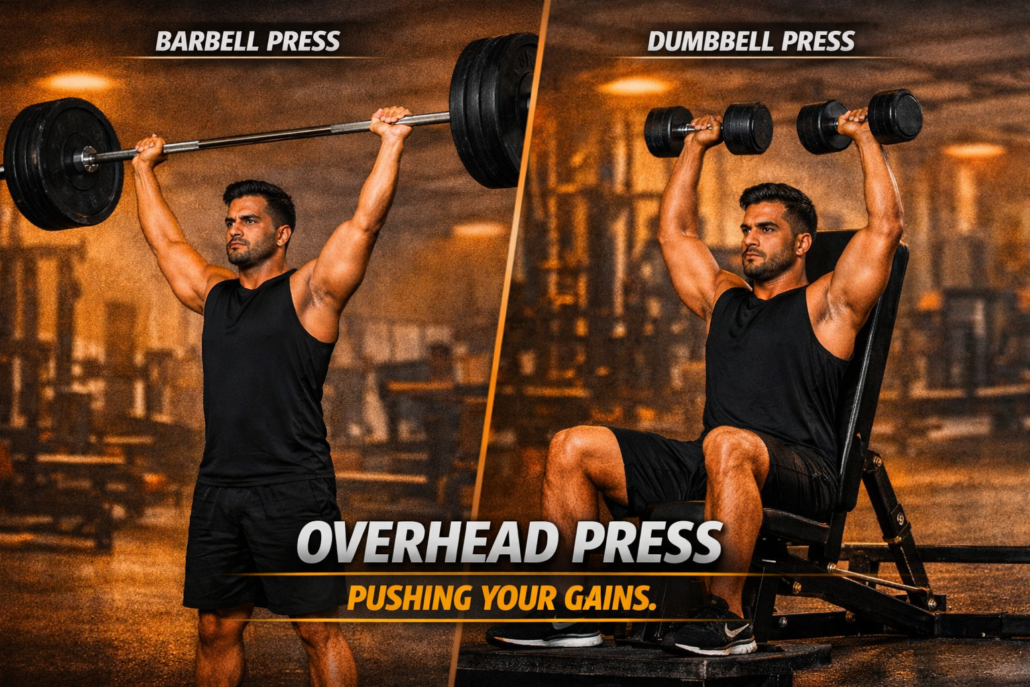
6. Overhead Press (Barbell or Dumbbell)

Overhead Press (Barbell or Dumbbell)

The cornerstone of shoulder strength. Builds deltoids, triceps, and upper chest.

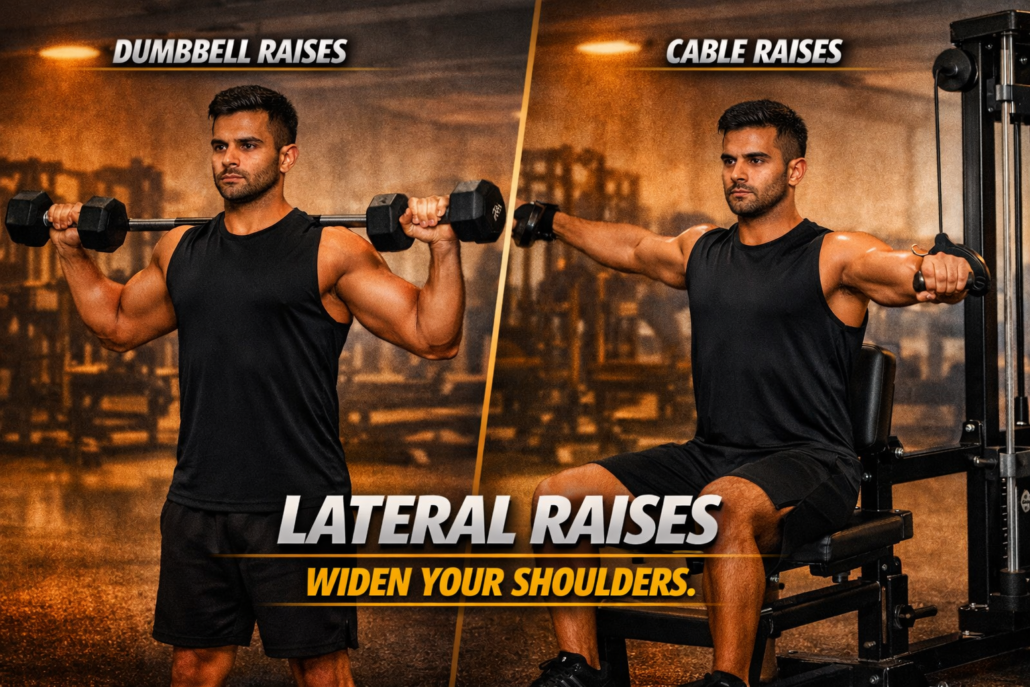
7. Lateral Raises

Lateral Raises

Isolation move for the medial delts, giving shoulders that wide, capped look.

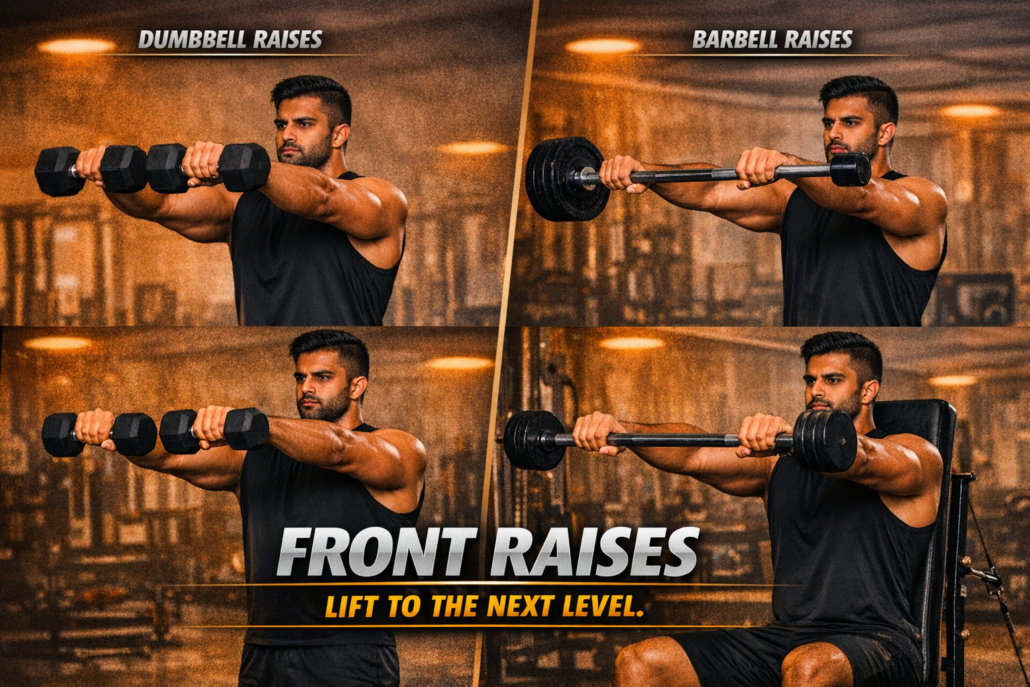
8. Front Raises

Front Raises

Targets anterior delts, improving pressing strength and shoulder aesthetics.

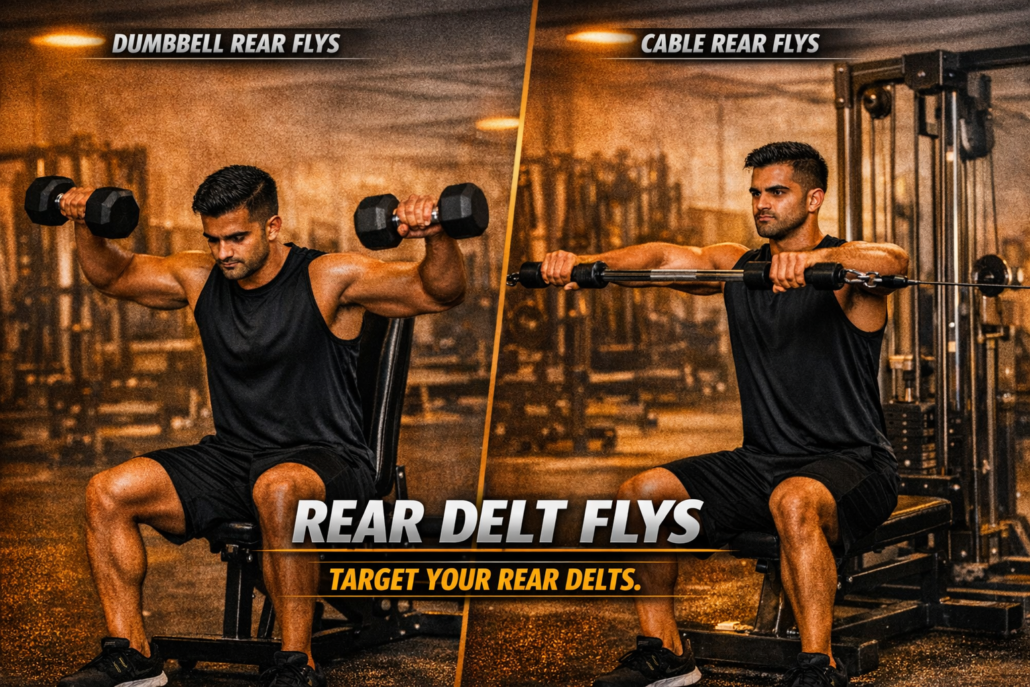
9. Rear Delt Flys

Rear Delt Flys

Balances shoulder development by strengthening posterior delts, improving posture and reducing injury risk.

Leg and Shoulder Day Exercises: Programming Tips

  • Warm‑Up: Dynamic stretches and light sets.
  • Volume: 3–4 sets of 8–12 reps for hypertrophy.
  • Progression: Gradually increase weights or reps weekly.
  • Rest: 60–90 seconds between sets for optimal recovery.

Lifestyle Integration

Leg and shoulder training builds discipline and balance. By consistently hitting these muscle groups, you create sustainable wellness habits that extend beyond the gym. The routine teaches patience, resilience, and commitment—qualities that shape both fitness and life.

Ready to transform your physique? Start incorporating these leg and shoulder day exercises into your weekly routine. Track your progress, stay consistent, and share your journey. Drop a 💪 in the comments if you’re committing to stronger legs and shoulders this week!

Post Leg and Shoulder Day Exercises, Cardio Finisher – Treadmill at 15% Incline

No leg and shoulder workout feels complete without a powerful cardio finisher. I wrapped up my session with a treadmill run at a 15% incline, which is a game‑changer for endurance and fat burn.

Incline treadmill training mimics uphill running, forcing your legs—especially quads, hamstrings, and calves—to work harder while keeping your heart rate elevated. This not only torches calories but also builds muscular endurance and cardiovascular strength. The steep incline challenges balance and stability, making it a perfect complement to heavy leg and shoulder lifts.

Benefits of Incline Cardio:

  • 🔥 Accelerated Fat Loss: Higher calorie burn compared to flat treadmill runs.
  • 💪 Leg Strength & Endurance: Engages glutes, hamstrings, and calves intensely.
  • ❤️ Cardiovascular Conditioning: Keeps heart rate elevated for improved stamina.
  • 🧠 Mental Toughness: Pushing through the incline builds resilience and discipline.

Pro Tip: Start with 10–15 minutes at a moderate pace, gradually increasing duration or speed as your endurance improves. Pairing incline cardio with strength training creates a balanced workout that maximises both muscle growth and conditioning.