

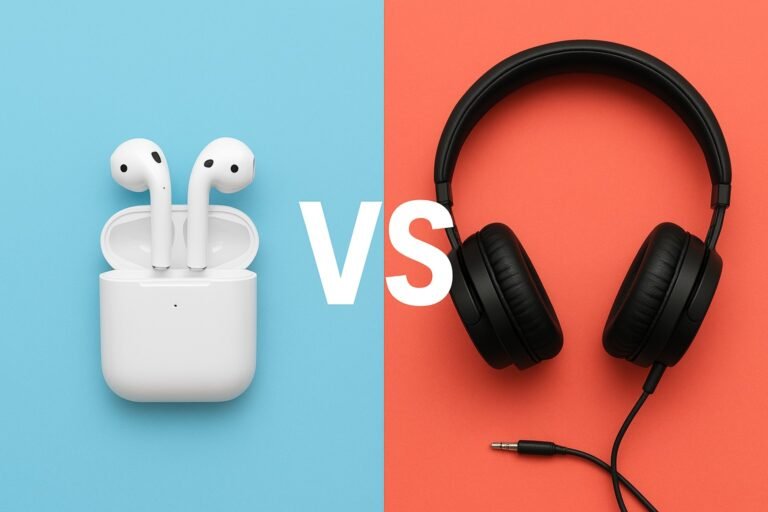
Bluetooth Earbuds vs Wired Headphones: In the age of wireless everything, Bluetooth earbuds have become the go-to accessory for music lovers, gym-goers, and remote workers alike. Sleek, portable, and cable-free, they promise convenience and style. But beneath the surface of this tech marvel lies a growing debate: Are Bluetooth earbuds safe for long-term use? And are wired headphones actually better for your health? If you have an iPhone you check check out these wired earphones. I have been using these for the last 2 years.
Let’s unpack the science, the concerns, and the smarter choices you can make. Read more articles.
🔍 The Rise of Bluetooth Earbuds — and the Radiation They Bring
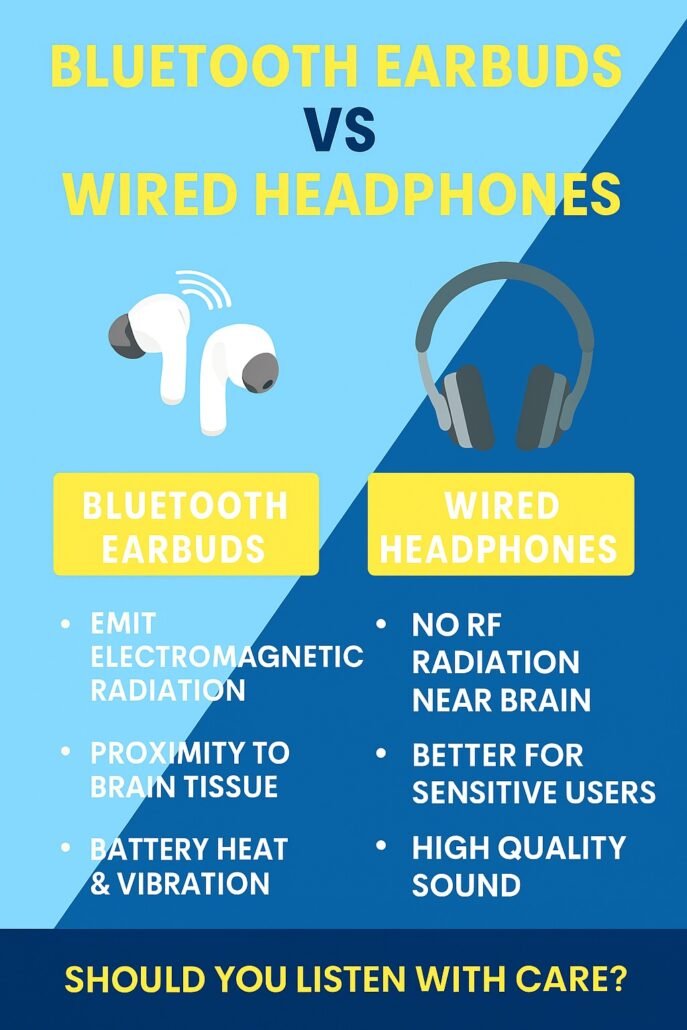
Bluetooth earbuds work by transmitting audio signals via radiofrequency (RF) waves, a form of electromagnetic radiation. While the levels are low compared to cell phones or Wi-Fi routers, the proximity to your brain makes them a unique concern.
Unlike your phone, which you might keep in your pocket or bag, Bluetooth earbuds sit deep inside your ear canal, just millimetres from sensitive brain tissue. This constant exposure, especially during long listening sessions, has raised eyebrows among researchers and health advocates.
Some studies suggest that prolonged RF exposure may contribute to:
- Sleep disturbances
- Headaches or fatigue
- DNA damage in cells
- Increased oxidative stress
- Potential links to cancer (though evidence remains inconclusive)
While major health organisations like the WHO and FDA haven’t declared Bluetooth earbuds unsafe, they do recommend limiting exposure to RF radiation when possible, especially for children and heavy users.
🧠 The Brain Connection: Why Location Matters
In the context of comfort and health, many are debating this comparison.
The human brain is an incredibly sensitive organ, and its proximity to wireless devices matters. Bluetooth earbuds, especially those with active noise cancellation or high-powered chips, emit pulsed RF signals that interact with your body’s natural electromagnetic field.
This can potentially disrupt:
- Neurotransmitter balance (affecting mood and cognition)
- Blood-brain barrier integrity
- Melatonin production (impacting sleep cycles)
While these effects are still being studied, anecdotal reports of discomfort, dizziness, or “brain fog” after extended Bluetooth earbud use are increasingly common.
Check out most celebrities using wired headphones now.
🔋 Bluetooth Earbuds vs Wired Headphones: Heat, Vibration, and Battery Stress
Beyond radiation, Bluetooth earbuds also generate heat and micro-vibrations due to their internal batteries and signal processing. Some users report:
- Warm sensations in the ear
- Mild headaches
- Ear fatigue or pressure buildup
These symptoms may not be dangerous in the short term, but they can contribute to discomfort and long-term weariness — especially for those using earbuds for hours at a stretch.
🎧 Wired Headphones: The Safer, Smarter Alternative?
Wired headphones don’t rely on wireless signals or internal batteries. They transmit audio through physical cables, which means:
- No RF radiation near your brain
- No battery heat or signal pulses
- Minimal electromagnetic interference
While some EMF can travel up the wire from your phone or laptop, it’s significantly lower than what Bluetooth devices emit. For people with EMF sensitivity, neurological conditions, or simply a desire to reduce exposure, wired headphones are a safer bet.
They also tend to offer:
- Better sound quality at lower prices
- No latency or connection issues
- Longer lifespan (no battery degradation)
⚠️ The Precautionary Principle: Why It Matters
Even if Bluetooth earbuds aren’t conclusively harmful, the precautionary principle suggests that we should minimise exposure to potential risks — especially when safer alternatives exist.
This is particularly relevant for:
- Children and teens, whose brains are still developing
- Pregnant individuals, where fetal exposure may be a concern
- Heavy users, such as remote workers, gamers, or frequent travellers
Simple steps like switching to wired headphones, using speaker mode, or limiting earbud use to short sessions can make a big difference.
🧘♂️ Wellness Meets Tech: Finding Balance
Technology should enhance our lives — not compromise our health. If you love your Bluetooth earbuds, you don’t have to ditch them entirely. But consider these smart habits:
- Use one earbud at a time to reduce exposure
- Avoid sleeping with earbuds in
- Take regular breaks during long listening sessions
- Keep volume moderate to protect hearing
- Store earbuds away from your body when not in use
For those building a wellness routine or recovering from anxiety, burnout, or alcohol-related symptoms, reducing EMF exposure can be a subtle but powerful step toward clarity and balance.
🧠 Final Thoughts: Listen Smarter, Live Better
Bluetooth earbuds are a marvel of modern convenience, but come with invisible baggage. Radiation, heat, and proximity to the brain are real concerns, even if science hasn’t reached a verdict yet.
On the other hand, Wired headphones offer a low-risk, high-quality alternative that aligns with health and performance. Whether you’re a biohacker, a wellness enthusiast, or just someone who wants to listen smarter, the choice is yours.
In a world obsessed with wireless, sometimes the best connection is the one with fewer signals.