

Fitness Apps & Wearables in 2026: The fitness industry has always been quick to embrace innovation, but 2026 marks a turning point where technology is no longer just a companion to training; it’s becoming the coach, the motivator, and the health guardian. From advanced wearables that track every heartbeat to apps powered by artificial intelligence, fitness technology is reshaping how we train, recover, and stay accountable. In this article, we’ll explore the best fitness apps & wearables in 2026, the trends driving them, and how they’re transforming everyday workouts into data‑driven experiences. Read More Articles.
Top Fitness Technology Trends in 2026 and Fitness Apps & Wearables in 2026
The fitness landscape in 2026 is defined by personalisation and integration. Gone are the days when wearables only counted steps or calories. Today’s devices combine biometric data, predictive analytics, and AI coaching to deliver tailored recommendations.
Key trends for Fitness Apps & Wearables in 2026 include:
Holistic health tracking
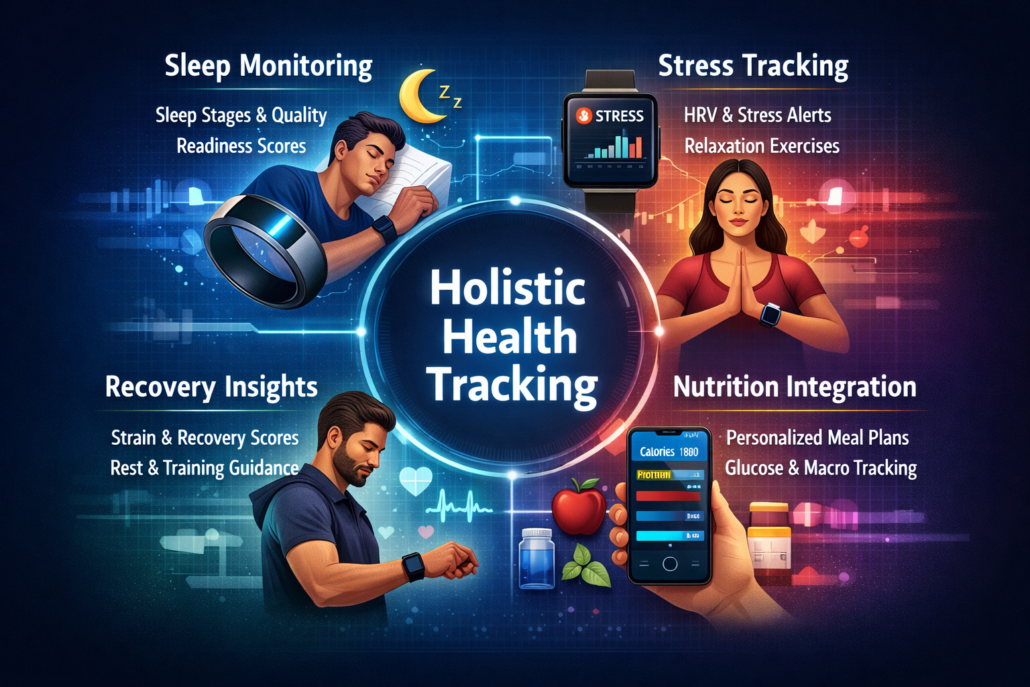
🧠 What Holistic Health Tracking Really Means
Traditional fitness devices used to focus on just one metric, steps, calories, or heart rate. Holistic health tracking in 2026 goes far beyond that. It’s about monitoring the entire spectrum of your well‑being alongside workouts, so you’re not just training harder, but smarter.
🌙 Sleep Monitoring
- Modern wearables track sleep stages (light, deep, REM) and give you a sleep score.
- They highlight how recovery quality impacts your energy and performance the next day.
- Example: Oura Ring Horizon shows readiness scores based on sleep + recovery data.
😌 Stress Tracking
- Devices now measure stress through heart rate variability (HRV) and skin conductance.
- Apps provide real‑time stress alerts and suggest breathing exercises or mindfulness breaks.
- This helps athletes avoid burnout and balance mental health with physical training.
🔄 Recovery Insights
- Tools like WHOOP Strap analyze strain vs. recovery daily.
- They recommend whether you should push hard, train lightly, or rest.
- This prevents overtraining and reduces injury risk, crucial for long‑term progress.
🥗 Nutrition Integration
- Apps like MyFitnessPal Pro sync with glucose monitors and smart scales.
- They provide personalised nutrition coaching based on your activity and biometrics.
- Instead of generic calorie counts, you get tailored advice for fueling workouts and recovery.
✅ Why It Matters
Holistic health tracking ensures that fitness isn’t just about how much you train, but also how well you recover, how balanced your stress is, and how effectively you fuel your body. It’s the difference between chasing numbers and building sustainable, long‑term health.
AI‑Driven Coaching
🤖 What AI‑Driven Coaching Really Means
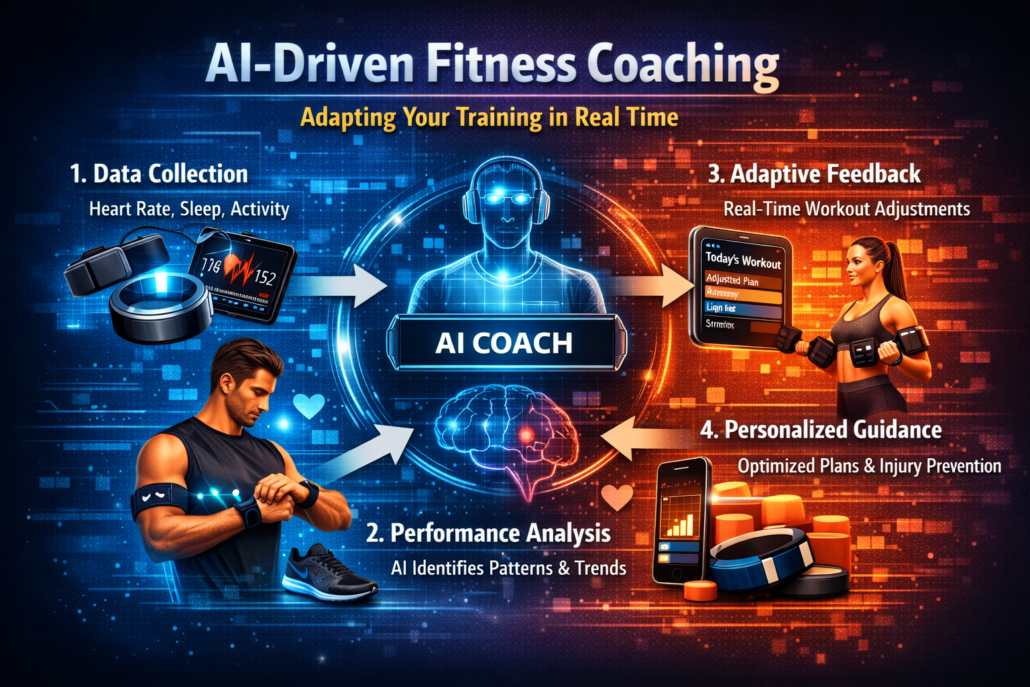
AI‑driven coaching uses artificial intelligence to analyse your workout data, heart rate, pace, sleep, recovery, and even stress levels, and then adapts your training plan in real time. Instead of following a static routine, your app becomes a dynamic coach that learns from your performance and adjusts accordingly.
⚙️ How It Works
- Data Collection: Your wearable gathers metrics like heart rate variability, calories burned, and movement patterns.
- Pattern Recognition: The AI compares your current performance with historical data to detect trends, fatigue, improvement, or inconsistency.
- Adaptive Feedback: Based on those insights, it modifies your next workout automatically. For example, if your recovery score is low, it might suggest a lighter session or yoga instead of HIIT.
- Predictive Insights: Over time, the AI predicts when you’re likely to plateau or risk injury and adjusts your plan to prevent it.
🧠 Real‑World Examples
- WHOOP Strap 5.0 uses AI to recommend rest days and recovery strategies.
- Future App combines human trainers with AI analytics to tailor workouts daily.
- Fitbod adjusts strength training loads based on fatigue and muscle recovery.
- Apple Fitness+ uses machine learning to suggest workouts that match your energy and goals.
💪 Why It Matters
AI‑driven coaching bridges the gap between data and decision‑making. It eliminates guesswork, helping users train smarter rather than harder. You get the benefits of a personal trainer, motivation, accountability, and precision, without the cost or scheduling hassle.
🔮 The Future Outlook
By 2026, AI coaches will integrate emotional and cognitive data too, detecting stress or low motivation and offering encouragement or mindfulness breaks. Fitness will become a conversation between you and your data, where your app doesn’t just track progress but actively guides it.
Community Engagement in Fitness
What does community engagement mean?
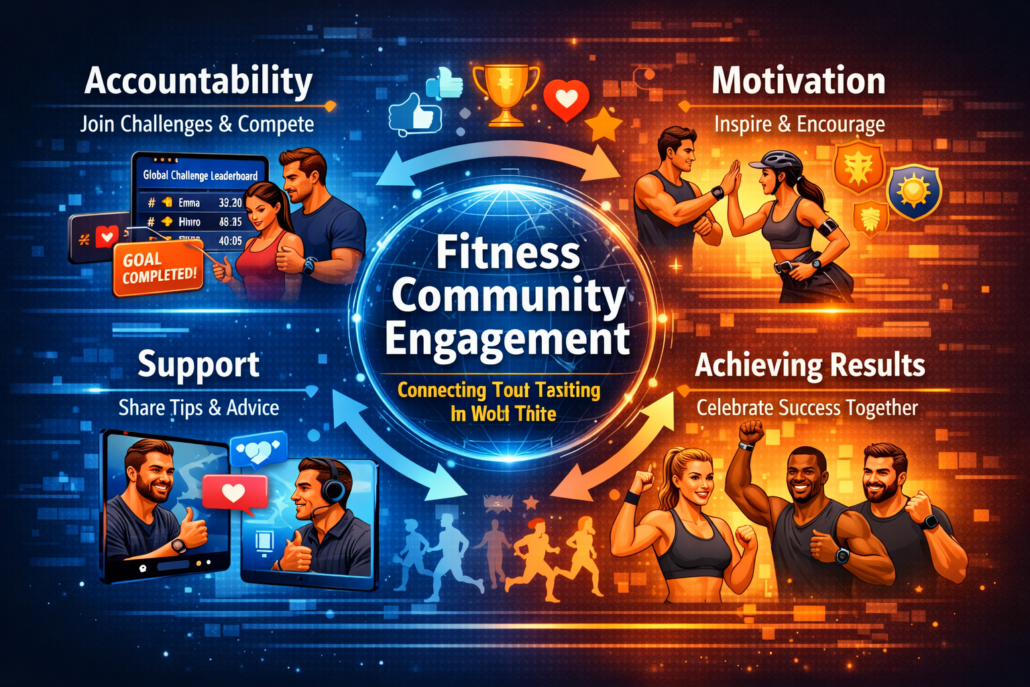
Community engagement in fitness platforms is about creating social ecosystems where athletes don’t just train alone, they connect, share, and hold each other accountable. This is one of the most powerful motivators in 2026 because it blends technology with human connection.
🌍 Global Accountability Networks
- Platforms like Strava and Peloton allow athletes worldwide to join challenges, compare progress, and celebrate milestones.
- Seeing peers complete workouts or hit goals creates a sense of accountability — you’re less likely to skip a session when your community is watching.
💬 Motivation Through Social Features
- Leaderboards, group chats, and live classes foster friendly competition.
- Apps now include community badges and recognition systems, rewarding consistency and effort.
- This gamification keeps users engaged far longer than solo tracking.
- Communities provide emotional support, whether it’s encouragement after a tough workout or advice on recovery.
- Niche groups (e.g., marathon runners, yoga practitioners, cyclists) allow athletes to share experiences and tips tailored to their discipline.
📈 Why It Matters
Community engagement transforms fitness from a solo pursuit into a shared journey. It builds accountability, motivation, and belonging, three pillars that dramatically increase adherence to training programs. In fact, studies show people are far more likely to stick with fitness goals when they’re part of a supportive group.
Seamless integration
🔗 What Seamless Integration Means
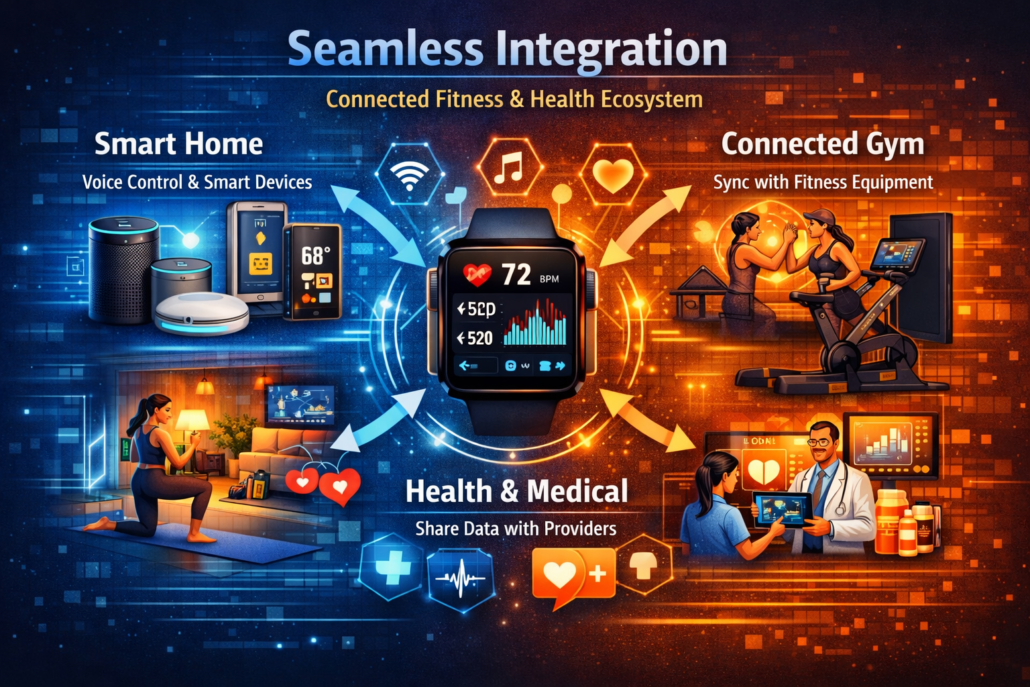
Seamless integration is about creating a connected fitness ecosystem where your wearable doesn’t just track your activity, it communicates with your environment. Every device, from your smartwatch to your smart home, gym equipment, and even healthcare providers, works together to give you a unified view of your health and performance.
🏠 Smart Home Connectivity
- Modern wearables sync with smart home systems like Alexa, Google Home, or Apple HomeKit.
- You can say, “Start my morning workout,” and your smart lights adjust, your speaker plays your training playlist, and your treadmill powers up automatically.
- Post‑workout, your thermostat lowers to help recovery, and your smart fridge suggests a protein‑rich meal.
🏋️ Gym Equipment Integration
- Connected gym machines (like Peloton, Tonal, and NordicTrack) now sync directly with wearables to record reps, heart rate, and calories burned.
- Your smartwatch automatically logs the workout, updates your fitness app, and adjusts your next session based on performance.
- This eliminates manual tracking; everything updates in real time.
🩺 Medical & Wellness Sync
- The most advanced wearables share data securely with healthcare providers.
- Doctors can monitor heart rate variability, sleep quality, or glucose levels remotely.
- This integration bridges the gap between fitness and preventive healthcare, allowing early detection of issues and personalised wellness recommendations.
⚙️ Why It Matters
Seamless integration turns fitness into a frictionless experience. You don’t have to juggle multiple apps or devices; everything works in harmony. It saves time, improves accuracy, and ensures your health data is actionable across platforms.
🌐 The Future Outlook
By 2026, expect wearables to connect not only with your home and gym but also with nutrition trackers, mental health apps, and telemedicine platforms. Fitness will no longer be isolated; it’ll be part of a continuous, intelligent health network that adapts to your lifestyle.
These trends set the stage for the Fitness Apps & Wearables in 2026.
Best Fitness Apps & Wearables in 2026
Here are the 10 standout tools that are redefining fitness this year for Fitness Apps & Wearables in 2026.
- Strava 2026 – Still the go‑to for runners and cyclists, now enhanced with AI‑powered route optimisation and real‑time safety alerts.
- MyFitnessPal Pro – Expanded beyond calorie tracking to include personalised nutrition coaching and integration with glucose monitors.
- Fitbit Sense 3 – Advanced stress detection, sleep scoring, and heart health monitoring make it a holistic wellness device.
- Apple Watch Ultra 2 – Built for multi‑sport athletes, with rugged durability and enhanced recovery insights.
- WHOOP Strap 5.0 – Focused on recovery and strain analysis, now offering predictive injury alerts.
- Peloton App 2026 – Immersive VR workouts and global live classes keep users motivated.
- Garmin Forerunner X – Designed for endurance athletes, with satellite precision and adaptive training plans.
- Oura Ring Horizon – Sleek design with advanced sleep, readiness, and stress tracking.
- Tonal Smart Gym – AI‑driven strength training with adaptive resistance and real‑time feedback.
- Future App – A personal trainer in your pocket, offering one‑on‑one coaching powered by AI and human trainers.
Together, these tools represent the cutting edge of fitness technology, blending convenience with science supporting Fitness Apps & Wearables in 2026.
Smart Training Devices for Everyday Athletes
Beyond Fitness Apps & Wearables in 2026, smart training devices are becoming mainstream. Connected dumbbells, VR fitness platforms, and smart bikes now integrate seamlessly with apps to provide real‑time feedback. For example, Tonal’s adaptive resistance system adjusts weight automatically, while VR platforms like Supernatural make workouts immersive and engaging. Everyday athletes can now train with the same precision as professionals, without leaving their homes.
AI‑Powered Fitness Coaching
Artificial intelligence is the biggest game‑changer in fitness. AI‑powered fitness coaching, Fitness Apps & Wearables in 2026 will analyse performance data, predict fatigue, and adjust training plans instantly. Instead of static workout routines, users get dynamic programs that evolve with their progress. AI also helps prevent injuries by flagging overtraining risks and suggesting recovery strategies. This level of personalisation was once reserved for elite athletes; now it’s accessible to anyone with a smartphone or wearable.
The Future of Health Tracking
The future of health tracking goes far beyond fitness. Continuous glucose monitoring, stress detection, and even mental health insights are being integrated into Fitness Apps & Wearables in 2026. Devices like Fitbit Sense 3 and Oura Ring Horizon now provide holistic wellness dashboards, helping users balance physical training with emotional well‑being. In 2026, fitness technology is not just about building muscle or endurance; it’s about optimising the entire human experience.
Conclusion – Fitness Apps & Wearables in 2026
The best fitness apps & wearables in 2026 are more than gadgets; they’re partners in transformation. By combining AI coaching, smart devices, and holistic health tracking, they empower everyday athletes to train smarter, recover faster, and live healthier lives. Whether you’re a cyclist using Strava, a strength athlete on Tonal, or someone focused on sleep with Oura, the future of fitness is here — and it’s personalised, data‑driven, and incredibly powerful.