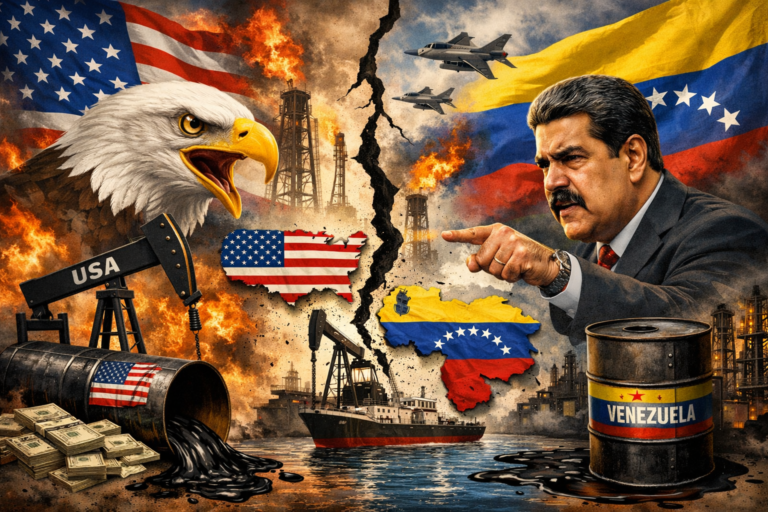
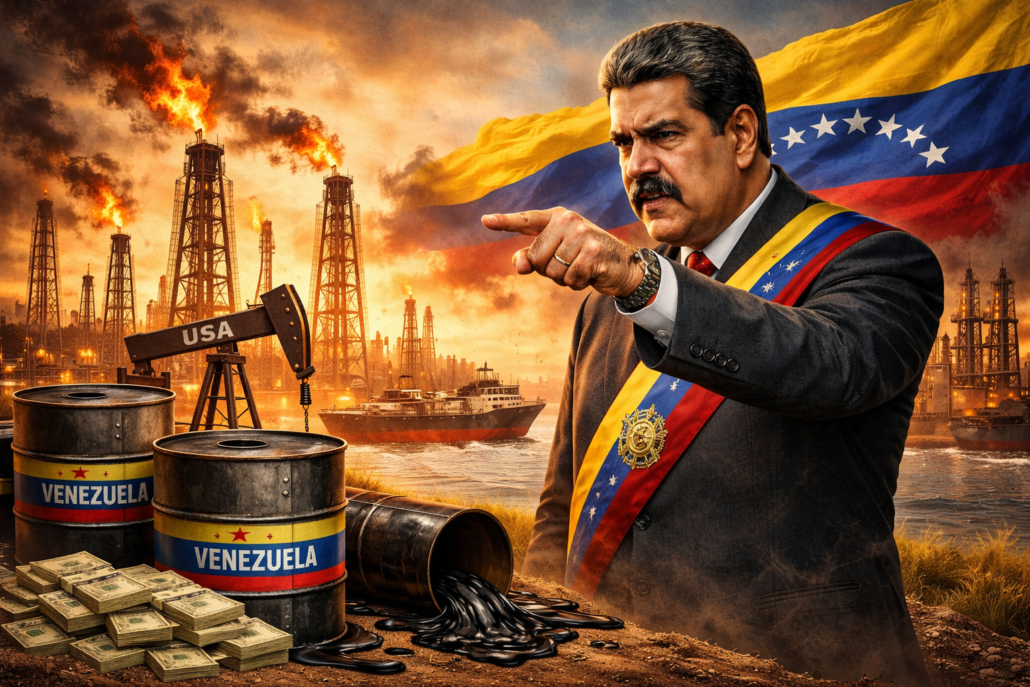
The unfolding crisis in Venezuela has once again placed the country at the centre of global headlines. With the United States carrying out a dramatic operation that led to the capture of President Nicolás Maduro, the world is watching closely. While Washington frames its actions in terms of democracy and human rights, many observers argue that the deeper issue is oil. Venezuela’s oil reserves are among the largest in the world, and control over them has long shaped both domestic politics and international relations. This article explores two key points: the recent developments in Venezuela and the role of oil in U.S. intervention.
Recent Developments in Venezuela
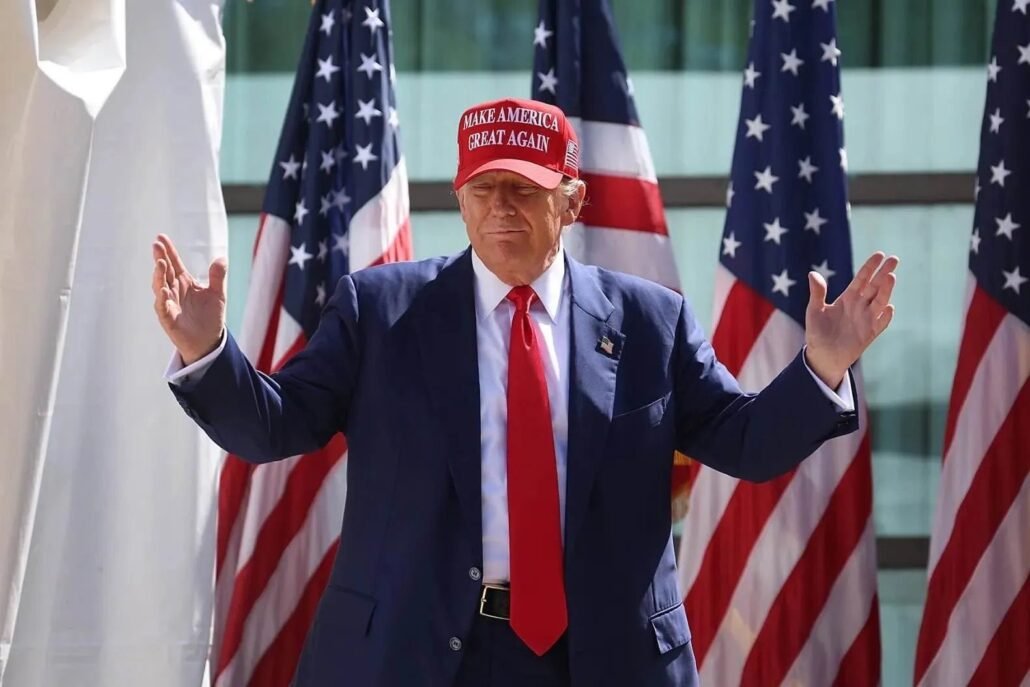
Hey America, we just successfully detabalised one more country for our oil greed.
by, World Peace Leader Donald Trump!
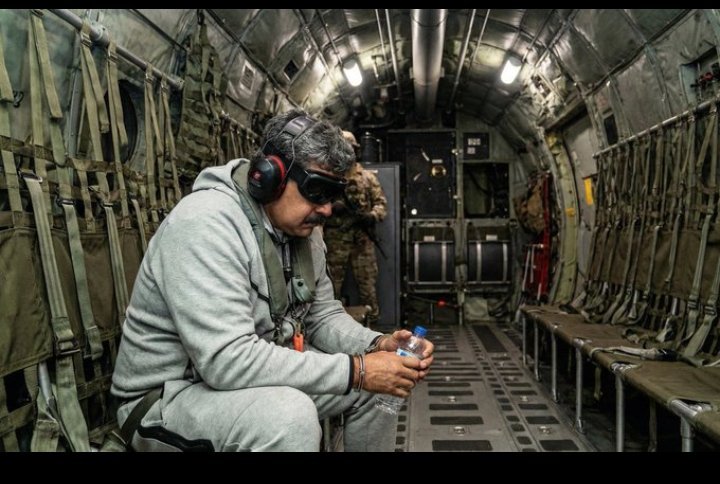
On January 3, 2026, the U.S. launched Operation Absolute Resolve, a nighttime raid in Caracas that resulted in the capture of President Nicolás Maduro and First Lady Cilia Flores. This marked a dramatic escalation in U.S.–Venezuela tensions. For years, Washington has accused Maduro of undermining democracy, suppressing dissent, and mismanaging the economy. The operation signals a shift from sanctions and diplomatic pressure to direct intervention.
The international response has been swift. India expressed “deep concern,” urging dialogue and peaceful resolution. India-US$ $ War(My recent article). China criticised the U.S. move, warning of destabilisation in Latin America. Meanwhile, the Venezuelan people face uncertainty. With Maduro removed, questions arise about who will govern, how institutions will function, and whether the crisis will deepen into civil conflict.
For ordinary Venezuelans, the situation is dire. Economic collapse, hyperinflation, and shortages of food and medicine have already strained daily life. The sudden removal of leadership risks worsening humanitarian conditions. Refugee flows into neighbouring countries may increase, further destabilising the region.
Venezuela’s Oil as the Underlying Factor
While democracy and human rights are the stated reasons for U.S. intervention, Venezuela’s oil is impossible to ignore. The country possesses the largest proven reserves globally, surpassing even Saudi Arabia. Oil revenues have historically funded the government, and control over this resource has been central to political power.
The U.S. has long had an interest in Venezuelan oil. In recent years, sanctions targeted the state oil company PDVSA, cutting off revenue streams to Maduro’s government. These sanctions weakened the economy but also created opportunities for rivals like China and Russia, who invested heavily in Venezuela’s energy sector. For Washington, the capture of Maduro may be seen as a way to reassert influence over Venezuelan oil and prevent competitors from dominating the market.
Critics argue that this fits a familiar pattern: U.S. interventions in oil‑rich nations often coincide with strategic energy interests. Iraq is frequently cited as an example where oil played a hidden but significant role. Supporters of U.S. policy counter that the focus is on restoring democracy and protecting human rights. Yet in practice, global energy politics and humanitarian concerns are deeply intertwined.
Venezuela’s OilSanctions and Their Impact
Sanctions have been a key tool in U.S. policy toward Venezuela. By restricting access to international markets and freezing assets, Washington aimed to weaken Maduro’s grip on power. However, sanctions also hurt ordinary citizens, contributing to shortages and economic decline.
The oil sector was hit hardest. Production plummeted, and Venezuela struggled to maintain its infrastructure. With limited buyers, the country turned to allies like China and Russia. This shift highlighted how sanctions can reshape global alliances, pushing nations toward alternative partnerships.
Now, with Maduro captured, the future of sanctions is uncertain. Will the U.S. lift restrictions to stabilise the economy, or maintain pressure until a new government aligns with its interests? The answer will significantly affect both Venezuelans and global oil markets.
Nicolás Maduro Captured: The Arrest That Shook Venezuela’s Oil Power
In a stunning turn of events, Venezuelan President Nicolás Maduro was captured during a covert U.S. military operation dubbed Operation Absolute Resolve, executed in the early hours of January 3, 2026.
The raid, carried out in Caracas, also led to the detention of First Lady Cilia Flores. This arrest marks a seismic shift in Venezuela’s political landscape and sends ripples through global energy markets. Maduro, long accused of authoritarian rule and economic mismanagement, had clung to power largely through control of Venezuela’s vast oil reserves.
His removal not only destabilises the nation’s leadership but also raises urgent questions about who will now control the country’s oil wealth, a resource that has drawn intense international interest and rivalry. The operation has been met with mixed reactions globally, with some nations condemning the intervention and others quietly recalibrating their energy strategies.
Global Energy Politics
The crisis in Venezuela underscores how energy resources shape international relations. Control over Venezuela’s oil is not just about national wealth; it influences global supply chains, prices, and geopolitical balance.
For India, which imports Venezuelan crude, stability is essential. Supply disruptions could affect domestic energy security. For China and Russia, investments in Venezuela represent strategic footholds in Latin America. For the U.S., regaining influence over oil exports is both an economic and geopolitical priority.
This convergence of interests makes Venezuela a battleground for global energy politics, where democracy, sanctions, and oil are inseparable.
Delcy Rodríguez: Venezuela’s Interim Leader or U.S. Puppet?
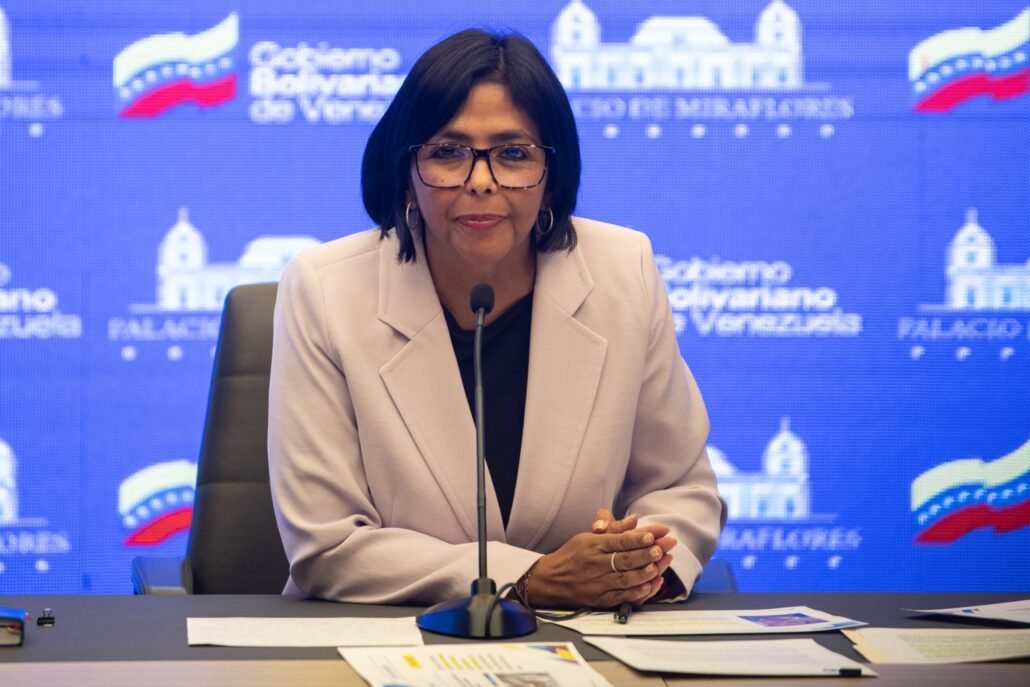
Delcy Rodriguez, Venezuela’s vice president, during a news conference at Miraflores Palace in Caracas, Venezuela, on Wednesday, May 3, 2023. Rodriguez said the Venezuelan government won’t recognise opposition-brokered agreements with creditors. Photographer: Carlos Becerra/Bloomberg via Getty Images
Following the dramatic arrest of Nicolás Maduro, Vice President Delcy Rodríguez was swiftly elevated to interim president. While her appointment was sanctioned by Venezuela’s Supreme Court, many observers argue that her rise reflects Washington’s influence more than domestic legitimacy.
Critics describe Rodríguez as a U.S. puppet, pointing to her willingness to cooperate with American demands and her reliance on external backing to maintain authority. With Venezuela’s vast oil reserves at stake, her leadership is seen less as a sovereign transition and more as a geopolitical manoeuvre designed to secure U.S. control over the nation’s energy wealth.
Conclusion
The capture of Nicolás Maduro marks a turning point in Venezuela’s crisis. While the U.S. frames its intervention as a fight for democracy, the shadow of oil looms large. With the world’s largest reserves, Venezuela’s oil is a prize that shapes global energy politics and international power struggles.
Sanctions, humanitarian concerns, and geopolitical rivalries all intersect in this moment. For Venezuelans, the hope is for stability and relief from years of hardship. For the international community, the challenge is balancing principles of democracy with the realities of energy dependence.
Ultimately, the story of Venezuela is not just about one leader or one nation. It is about how oil continues to drive global politics, shaping interventions, alliances, and the future of entire regions.