
Home Blog Page 7

Places for a Photoshoot in Jaipur

Who does not like getting clicked? I guess no one! Let me share 8 stunning places where you can photoshoot in Jaipur.

Jaipur, Pink City, is also India’s most colourful city. The city is a synthesis of Indian culture and contemporary experiences. Jaipur was most likely India’s first planned city. It was destined to be pink, as it is the hue of welcoming signage. The city is well-known for providing visitors and locals with an unforgettable experience.

Pink city has moods and flavours that match well and provide an entirely new experience.

Jaipur is known for its forts, museums, cuisine, monuments, shopping, and many more attractions. What attracts the tourists, even more, is the royalty that the city offers. As Jaipur has been the home to many royal families, the monuments reflect great heritage and beauty. It makes Jaipur the perfect place for a Photoshoot.

This article brings you a list of the best Photo shoot locations in Jaipur. Please give it a read to learn more about the best places for a Photoshoot!

Why is a photoshoot in Jaipur preferred by photographers?

Jaipur’s bustling, colourful streets display a recurring new and old pattern. The city, surrounded by besieged walls and rocky hills, is rich in historical structures and regal legacy.

You might choose to be shot in and around the historic sites that dot Jaipur, or you can select an unusual spot. Many photographic packages are offered across the city to suit any budget.

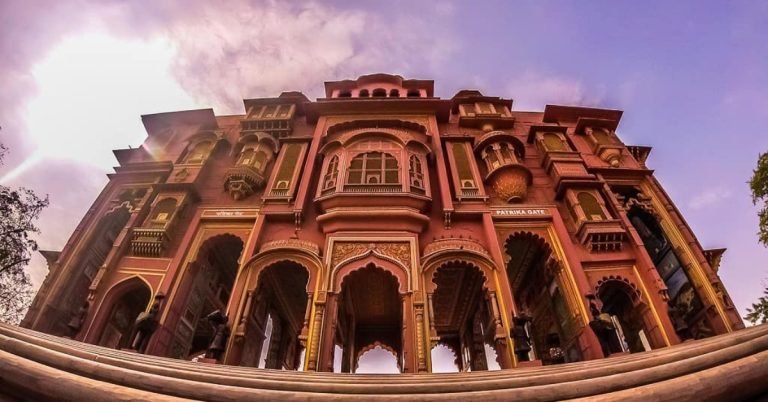
Pink city Jaipur Photo shoot locations include Amer Fort, Albert Hall Museum, Jal Mahal, and more. The city offers some of the best studios for photoshoot in Jaipur. Here are some of the top sites to visit!

Unique places for a wedding photoshoot in Jaipur.

1. Photoshoot in Jaipur at Hawa Mahal

Hawa Mahal in Jaipur is one of the famous locations for photoshoot in Jaipur

Because of its beauty and charm, you are probably familiar with this moniker. The ‘palace of winds‘ is another name for the Hawa Mahal. The buildings of the Hawa Mahal are incredibly bright and elegantly sculpted.

It is an excellent location for capturing the enchantment in photographs. The finest time to see the Hawa Mahal is early morning when the sun shines through the windows.

Golden sunlights illuminate the mahal. The entrance cost to the location is modest. The Hawa Mahal is open to the public from 9:30 am to 4:30 pm. The honeycomb-shaped and elegantly carved windows allow breezes to flow through the palace, making it ideal for a summer residence. 

2. Photoshoot in Jaipur at Amer Fort

Photoshoot in Jaipur at Amer Fort

Amber Fort is another name for Amer Fort. It is in the Rajasthani town of Amer. The palace is the maternal residence of Hindu Rajput princess Jodha Bai, who married a Muslim king, Akbar. This place is ideal for couples looking for a place for a photoshoot in Jaipur.

It is possible to take stunning wedding photos at every location at the fort. You’ll be captivated by the construction style. The monument will add an elegant and unique touch to your photos.

In addition, you can take many silhouette photos in ideal lighting. Amer fort is well-known for its Hindu-style characteristics, such as the carved walls and gates. Situated on the bank of Moata Lake, which also serves as the fort’s water supply, the Amer Fort is open daily from 8 am to 5:30 pm.

3. Photoshoot in Jaipur at Man Sagar Lake

Visit Man Sagar lake for a photoshoot in Jaipur. Follow me on Instagram.

The Jal Mahal Palace, located in the centre of Jaipur’s Man Sagar Lake, is one of the state’s most aesthetically magnificent buildings.

It was erected in the 18th century by Maharaja Madho Singh in a blend of Rajput and Mughal styles and is also known as the Water Palace. It has five levels of red sandstone, but only the top story can be seen now due to the water level. When the lake is complete, the other four stories are usually submerged.

When illuminated at night, the abandoned water castle resembles something out of a fairy tale, making it ideal for photographing.

4. Photoshoot in Jaipur at Nahargarh Fort

Photoshoot in Jaipur at Nahargarh Fort

When it comes to forts, these historical structures are currently among the most popular locations for photoshoot in Jaipur. Jaipur is home to several magnificent forts.

The Nahargarh Fort is one of these forts. If you’re looking for a fantastic site, Nahargarh Fort in Jaipur should be at the top of your list of the best places for a photoshoot in Jaipur. It has a large area reflecting Rajputana architecture that you can use to capture the desired images.

October through March are ideal for seeing the fort and other magnificent city attractions. You can capture incredible angles and pictures in the expansive area. Daily visitation hours are 10:00 am to 5:30 pm.

5. Photoshoot in Jaipur at Albert Hall Museum

Photoshoot in Jaipur at Albert Hall Museum

When you talk about Jaipur photoshoot places, you can’t miss Albert hall.

The Albert Hall Museum is renowned for its sombre collection of artefacts and a history that is as extensive as the state. It is a treat for the eyes.

Albert Hall Museum, the pride of Jaipur, is an authentic example of Indo-Saracenic architecture and design. The splendid museum is a sight to behold and a loved Jaipur photoshoot place.

The stone walls have a brown and beige tint. The impressive standalone building with well-designed arches makes for the best location for shoots on a low budget.

The expansive garden and walls adorned with Persian paintings and murals are a sight to behold. They offer the perfect royal background. Albert Hall Museum is the ideal location if you want to give your photos a regal flair.

The timings are morning to evening: 9 am to 5 pm. (Maintenance and upkeep of the museum are done on the last Tuesday from October to March and the previous Monday from April to September.)

6. Jaipur photoshoot places – Birla Mandir

Jaipur photoshoot places - Birla Mandir
Jaipur photoshoot places – Birla Mandir

Many couples make it a point to visit the renowned temples in Jaipur while they are there. The Birla Mandir, also known as the Laxmi Narayan temple, is one of these well-known temples of the city.

It houses the most intricate idols of Lord Vishnu and Goddess Lakshmi you would have ever seen. In spotless white, Birla Mandir stands majestically against a hilly environment representing peace.

The temple’s white marble has a golden tint inlaid, giving the façade a stunning appearance. People travel to this beautiful location to click photos and get mesmerized by its natural beauty.

The building is impressive, making it ideal for any romantic photoshoots. Get your calm and spiritual Photoshoot at Birla Mandir. This album will bring peace and good vibes. One of the best Jaipur photoshoot places.

7. Best photoshoot places in Jaipur – Neemrana Fort

Shoot location in Jaipur at Neemrana Fort

Neemrana, located on the Aravali mountain range, is the ideal setting for a romantic photo. Neemrana is an expensive shoot location in Jaipur though.

Enhance your photographs with the ponds, hanging gardens, and other details of the fort. Colonial furniture and sculptures are unique backdrops to add royalty.

Although Neemrana is not one of Jaipur’s most well-liked pre-wedding photo sites, couples are now beginning to discover this stunning location. Here, shooting packages start at Rs. 40,000.

One of India’s oldest heritage and most distinctive palace hotels, it features some stunning interiors and exteriors from its windows. The hotel’s interior is opulent and graced with some magnificent works of art and sculptures inside the palace.

The magnificence of the fort is unmatched. Dress up to get clicked in a royal palace. Check out the fort website here.

8. Bar Palladio

Are you seeking a mix of modern and traditional photography in Jaipur? Bar Palladio may be helpful here. Bar Palladio Jaipur, designed by Dutch designer Marie-Anne Oudejans, is housed in a daringly renovated garden belvedere in the old Narain Niwas Palace Hotel.

Bar Palladio Jaipur is an orientalist fantasy, a fresh vision for European dining in India, with roving peacocks, mature mango trees, and a garden of tented canopies. Bar Palladio would be an ideal location for glamorous wedding photographs. The interiors create a perfect setting for pre-wedding pictures. This place is private property, and one may need prior permission for photography. 

9. Sisodia Rani Ka Bagh

Sisodia Rani Ka Bagh in Jaipur

Sisodia Rani Ka Bagh, also known as Sisodia Rani Garden, is a symbol of Maharaja Sawai Jai Singh Ji’s devotion to Sisodia Queen. Ten kilometres from the city centre, it is on the Jaipur-Agra route.

This lush green garden has prominent floral beds, offers tranquillity, and abounds with nature. It is ideal for picnics and tourists due to its lush vegetation, pavilions, fountains, water courses, murals, and panoramic views. The variety of flowers is what makes this place so appealing.

This location will make for beautiful wedding images with flowers in the background. As a bride-to-be, it is a dream come true to get clicked in places where queens used to live. You can also get a bachelorette Photoshoot here with your friends. 

How to reach Jaipur? 

By air: Jaipur International Airport is your best bet for flights to Jaipur. The airport, around 13 kilometres from the city centre, serves all major cities in the country, including Mumbai, Delhi, Kolkata, and Chennai. The airport also connects the town to Muscat, Sharjah, Singapore, and Dubai.

Train

One of the foremost significant to go to Jaipur is by train. Jaipur Railway Station, the headquarters of the North Western Railway Zone, has direct trains to all important cities in the country. Trains such as the Shatabdi, Rajdhani, Duronto, and Mandor Express are popular alternatives from Delhi to Jaipur.

By road

Jaipur is well-connected to neighbouring cities via well-maintained roadways. If you’re wondering how to get from Delhi to Jaipur by car, take the NH 8, which spans almost 268 kilometres.

Travel from Delhi to Jaipur takes roughly 5 hours, maybe more if there is traffic. When you get through the gridlock and onto the highway, the picturesque drive through the deep forests with little settlements on both sides is perfect for those slow-motion videos. Let your dupatta/scarf loose and feel the utmost Bollywood fantasy. 

Local travel

Once you have reached Jaipur, auto rides or cabs are the best ways to explore the city. As Jaipur consists of great photogenic locations, walking through the markets and heritage gullies of the city will give you the utmost pleasure. Candids in the streets will be the highlight of your Photoshoot. Jaipur is a city full of hustle and bustle and will provide every opportunity for a lively picture.

Conclusion 

In a nutshell, Jaipur has some of the most stunning views in and around India. If you want your photos to portray the narrative of your love and passion, select Jaipur as the setting for your Photo shoots. This city is full of strange marvels that will make your Photoshoot an unforgettable experience. As they say, Jaipur is the city of all! Padhaaro Mhaare Des. 

Comment below what you want me to explore next!
Aasavari Mata Temple

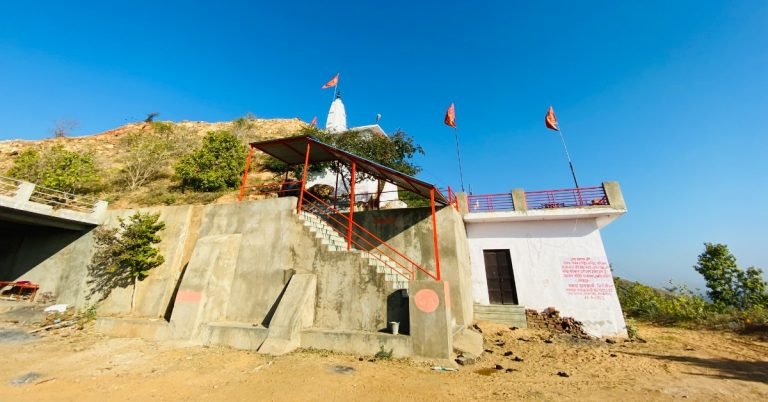
Aasavari Mata temple, Goner, is a famous place of worship. The temple is one of the most important shrines in the region, and it is of great religious significance for Hindus. This temple in Jaipur has been a tourist attraction for decades. Many people come to see the views from up here, and it’s not just tourists but locals.

Aasavari Mata temple location

Aasavari mata temple location is a little outside Jaipur’s central city. You need to go towards Jagatpura and then take the road to Goner. Check out the map below for a better understanding.

Aasavari Mata temple’s History

Aasavari mata, the sister-in-law of Devi Parvati, is a joyous devi per the Hindu scriptures. When Mata Parvati came to Kailash, she used to feel lonely and wished for someone with whom she could talk.

She used to think if Lord Shiva had a sister, she could speak with her and share her thoughts. Lord Shiva learned about his beloved wife’s wishes and created the goddess Aasavari. 

Goddess Aasavari was fat and had cracks in her feet. As the legend goes, Mata Parvati was happy to have found a companion in Aasavari. She wanted to do a lot of things for her. As Mata Parvati cooked food, Aasavari ate it all by herself, and nothing was left for anyone else. Further, when Parvati thought of gifting new clothes to her sister-in-law, nothing fit Aasavari.

Aasavari was mischievous. She hid Parvati in the cracks of her feet. When Lord Shiva came looking for Mata Parvati, she giggled and refused to tell where Mata Parvati was. In the end, Mata Parvati asked Lord Shiva to send her sister-in-law to her home. 

Hike to Asavari Mandir

I visited the Aasavari temple in Goner. It was an excellent trek. On the Jagatpura Flyover, you will only encounter a little traffic heading toward Akshay Patr. As you progress towards Goner on the flyover, you reach a roundabout.

Take a left from the roundabout. Go straight for a while, and you will have a petrol pump on your left. You can refuel your vehicle or take a loo break here. There is no fuel station beyond this point on this way. Headed straight, you will reach a T-point. Take a right turn from here to reach Aasavari Mata Temple. 

You will start witnessing hills and a good view. The flag of the temple is visible from the T-point itself. You can catch the fantastic sunset and sunrise from the high point. So going a bit further, you will see a board for “Vilay Kunj Vihar” from here; go ahead on the road to your left.

View from the top!

You are now traversing through Goner village. There is a rough incline to the temple; you can choose to walk. Finally, after a short trek, you reach the temple. The fantastic views from here are worth the hike. From here, you can see both Goner and Sitapur Industrial areas. 

The small temple is peaceful. The cool breeze is fantastic here. You can bring some snacks to the top to enjoy the view and the snacks. This temple is a small, private place that is not crowded and often forgotten.

Here, you can find peace, enjoy the view from the top of the mountain, and snack on some snacks. You will need to bring water with you to stay hydrated. Climbing up can be exhausting. When I visited, the temple was not locked, nor was there any rush. Small steps lead to the temple. I had a peaceful darshan. 

Watch my Vlog on this temple below.

Asavari Temple near Goner in Jaipur. Subscribe to my YouTube channel.

A small trail goes behind the temple. I was curious, so I went up the route. People frequently use it. You can ascend the hill to a higher point by following the trail. It’s the perfect place to watch the sunset. You will get a fantastic city view from the mountain. A few black goats roamed around, and it was nice to be connected to nature away from the city. 

I recommend these peaceful, adventurous, and holy places to all travel enthusiasts. Suppose you are running low on time but want to explore some offbeat location, head straight to Aasavari Mata temple. Seek blessings and enjoy the picturesque view from the hilltop.

If you have any questions about Asavari Mandir in Jaipur, please leave them in the comment section below.

List Of Dangerous Water Crossings in Spiti Valley & Ladakh

Every Biker, Traveler in India dreams of visiting Spiti and Ladakh at least once in a lifetime. It has become a haven for those people over time. In older times, we can look at travelogue by writers like Rahul Sanskrityayan about the route. So the course is a familiar one. There was a generation who travelled this route on foot. In this article let’s take a look at the water crossings in Spiti valley and Ladakh.

With some of the highest motorable roads in the world, the Ladakh valley and Spiti valley are visited by thousands of thrill-seeking travel enthusiasts. Check out my articles on how to read Ladakh & Spiti valley.

The ambience and aura of the valley are unique, and the water crossings make it more memorable. These water crossings in Spiti valley & Ladakh makes the travel worth remembering.

Ladakh Valley and Spiti valley are bordering areas near China. Due to the terrain, construction in the region is complex. Border Roads organization is responsible for the maintenance and structure of the roads in these areas. Check out the condition of roads in Spiti valley.

Some streets in Spiti are hard to travel on; the water crossings in Spiti valley make them more challenging.

Amidst all the bliss ushered by the BRO by making these super highways, we must enjoy these water crossings. Here is a list of the water crossings I crossed and those I know.

What exactly is a water crossing?

This video will give you an idea of what water crossings in Spiti valley can be. Follow me on Instagram.

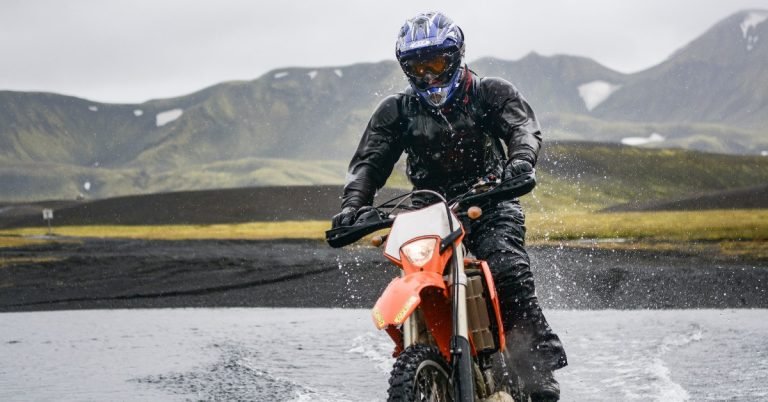
The water crossing is where the pucca/concrete/stone/damar road gets submerged under the massive water flow. This water comes as a result of melting snow.

The continuous flow of the water leaves potholes and boulders. Crossing these is an essential task to proceed on the way. Riding them is even more complicated if you’re visiting on a bike. It requires expertise to manoeuvre a motorcycle on the turbulent water flow. A few of them remain closed due to heavy snowfall in winter.

The above water crossing is on the way to Ladakh, Baralacha Paas.

The one below is my friend when he was crossing Sarchu going to Ladakh.

Water crossings in Leh Ladakh are as brutal as in Spiti valley.

Water crossings in leh ladakh

First, let us check out the major water crossings in Leh Ladakh region.

Water crossings in Leh Ladakh – Zoji La Pass

Water Crossings in Spiti Valley at Zojila Pass
The Zoji La pass

One of the highest passes in the Srinagar- Leh Highway, The Zoji La, connects Srinagar to Drass valley. This is the first water crossings in Leh Ladakh coming via the Pathankot route.

It is at an elevation of 3528 m above sea level and is close in the winter. With the start of hot summers, the snow melts, and the water comes onto the roads. The road is almost asphalted, but the top of the pass is terrible.

The massive truck carrying essentials further deteriorates the road. Till April and May, one encounters heavy snow at the top. This is dominated by melting water from nearby peaks in July and August.

Water crossings in Leh Ladakh – Sarchu and Zing Zing Bar

Check out my vlog for this water crossings in Leh Ladakh. This is just after Sarchu and Zing Zing bar.

Water crossings in Leh Ladakh – Subscribe to my Channel.

Most visitors to Leh stopped at Sarchu, a settlement halfway between Manali and Leh. The Lungalacha Pass marks a difference in the route’s condition from Leh to Pang, which is in good condition otherwise.

A few river crossings between Sarchu and Baralacha La call for caution. Similar to this, there are a couple of additional river crossings between Baralacha La and Zing Zing Bar. Although I saw the road’s construction in full swing during my visit, I doubt it will withstand the region’s severe weather.

Take a look at a few more of the Ladakh water crossings from my friend Taranjeet who keeps on riding in the valley. Check out his Instagram.

Water crossings in the mountains – water crossings in Leh Ladakh

Water crossings in Leh Ladakh – Pangong Tso and Tso Moriri

Ladakh water crossings - Pangong Tso
Ladakh water crossings – Pangong Tso

The route connecting Pangong Tso and Tso Moriri is one of the most challenging in India. Anyone who has travelled this distance knows how tough it can be. This is by far one of the worst Ladakh water crossings.

The rise in water level is caused by snow melting from neighbouring peaks. Still, the obstacle between Pangong Tso and Tso Moriri is caused by the overflowed Indus River.

There are a few water crossings on the path from Pangong Tso to the Chushul Village, but for the most part, it is picturesque ( thanks to a ride parallel to the Pangong Lake). Between Mood Village and Nyoma Village, where the Indus River runs parallel to the road, is where the main difficulty lies. It was monsoon season in India when I travelled to Leh-Ladakh in August.

Most rivers run over their danger threshold during that time of year, and the Indus River was no exception. The Indus River had overflowed its banks at Loma Bend, covering the whole route, and there was no indication of the road elsewhere. I debated whether to continue or turn around and head back to Pangong Lake for 40 minutes.

Water crossings in Leh Ladakh – Tangtse Village to Spangmik Village

Tangtse Village to Spangmik Village route map

This route is well known to everyone who has visited the Pangong Tso. The bulk of the way from Leh City to Pangong Lake is in decent shape (apart from Chang La), but as Pangong Lake gets closer, the state of the road deteriorates.

I recall travelling through ten to fifteen little and large water crossings when visiting Ladakh, especially while seeing Pangong Tso. The minor water crossings were simple to navigate, but the larger ones caused considerable congestion. I attempted to cross a body of water by speeding my motorcycle but was soaked in the icy water. There are several other crossings between Spangmik and Phobrang villages.

Major Water Crossings in Spiti Valley

Spiti valley water crossings

The Spiti Valley is referred to as a biker’s paradise, just like the Ladakh Valley is. There are two ways to go to the Spiti Valley, like Leh-Ladakh.

The Rohtang Pass and Kunzum Pass are used on the first route, and Shimla-Reckong Peo-Nako is operated on the second route.

Even though both roads go to the Spiti Valley, they are both known for treacherous water crossings. On their way to Spiti Valley, riders must cross the following list of waterways.

Between Gramphu and Chhatru, a water crossing

Water Crossings in Spiti Valley

As a tri-point between Leh, Spiti, and Manali, it serves the Gramphu Village. There are 4-5 water crossings between Gramphu and Chhatru, which presents a challenge. The road on this route is lousy and goes parallel to the Chenab River.

While riding to Spiti Valley, I encountered five river crossings in the 18 km stretch between Gramphu and Chhatru. The route at this portion is made up of sand, dirt, and rock boulders, making it more challenging to cross the river.

Please note that the mobile network does not work between Gramphu and Kunzum La. This is a stretch of 80 Km.

Water Crossing At Chota Dara

Water Crossings in Spiti Valley

This river crossing was the most hazardous in the entire Spiti and Ladakh Valley journey. The most significant river crossings all begin in Chota Dara. However, Chota Dara is where the Gramphu-Batal-Kaza road is in the worst condition.

Furthermore, a sea of water is brought by the quickly melting snow from the adjacent peaks, which makes it much more challenging to traverse. The Chota Dara river crossing was where our bikes and energy were most severely damaged throughout my journey.

Water Crossing at Malling in Spiti Valley

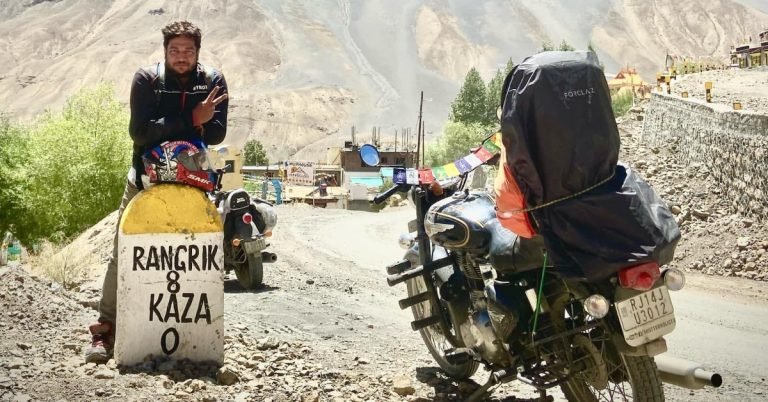
On the Nako-Kaza road lies a little settlement called Malling. The perilous Malling Nalah crossing is the village’s most prominent feature. Although the road in this section is superior to the Batal-Kaza-Route, crossing Malling Nalah demands good manoeuvrability, particularly during the winter.

The Malling Village is 3600 meters above sea level, forcing the water to stay frozen for most of the year. Snow melts throughout the summer months, yet landslides are still a problem. Those who have travelled this section of the Rampur-Nako-Kaza route know it is the most hazardous.

Water Crossing at Spello

The Shimla-Kaza route is one of the best highways constructed by the Border Roads Organization in the Himalayan area. Most of it is in great shape. However, the section in and around Spello presents severe difficulties for cyclists.

Landslides frequently occur in the area, and as I cycled to the Spiti Valley, I was detained at Spello for six hours. A landslide and mudslide recently blocked the route, and it took six hours for authorities to clear the way.

The Shimla-Kaza route has a few shorter stretches. Still, they don’t provide a significant barrier compared to the other water crossings described above.

Precautions to Take While riding through Water Crossing

The primary water source for every water crossing en route to Ladakh or the Spiti is melting the snow. Both the temperature and the rate of water flow rise during the day. So it’s best to cross these waterways as early as possible in the day.

There is a good chance that these river crossings will be flooded if you wait and try to travel in the afternoon. However, the same regulation does not apply to snow and black ice hubs, even if I witnessed a few vehicles in similar circumstances.

The Chota Dara wrecked two motorbikes during my journey on the Batal-Kaza Route, forcing us to forego our excursion to the Spiti Valley. Nearly all of India’s hill roads include water crossings, which I experienced when travelling across North-East India. However, compared to other areas of India, water crossing in the Himalayan region is far more hazardous and difficult.

Everyone considering visiting Ladakh or the Spiti Valley will gain some understanding from this essay. Because it significantly affects my memory, I will concentrate on one specific water crossing in the forthcoming post, namely the Chota Dara Water Crossing.

Any questions related to the article please drop a comment below.

Cost of Spiti Valley bike tour from Jaipur

Let me clear something at first. The Spiti Valley bike tour from Jaipur is not very expensive. Do not look up the tour packages where folks quote somewhere between INR 30K to INR 40K or maybe even INR 50K. Spiti valley bike tour does not cost that much even when your departure is from Jaipur and your arrival too. I did a bike tour of Spiti amidst Monsoons which is considered the most dangerous time because of untimely floods and landslides. Still manage to do it safely and within INR 20K.

Common Misconceptions for Spiti valley bike tour

Spiti Valley bike tour from Jaipur
Spiti valley road trip
  • We do not know which season is best for this tour. All questions answered here about the season schedule.
  • Spiti valley is dangerous! it’s not! The only rough patch is from Batal to Gramphu which is a stretch of 80 km. Other than that all roads are amazingly maintained by the BRO. Trust me some patches are better than city roads.
  • The cost is too much. That’s because you are looking at everything online glued to your cellphone. I did this trip is approximately 20K with my bike. This includes fuel in Spiti valley(Jaipur to Jaipur), staying (usually homestays and hostels), and food and drinks expenses. (Ohh yeah this included our rum sessions as well along with non-veg food)
  • What if we get lost? You simply can’t because BRO has laid out direction signs everywhere. You simply can’t just get lost. The route is pretty simple and after every major town/establishment, you have directions written on the signboard along with the distance.
  • Our cell phones won’t work. Are you going to spend time in the mountains with your cell phones or with the mountains? For your information, only the stretch between Losar Khas and Gramphu has no cellphone coverage which is around 90 Km approx. Rest everywhere in Spiti valley has cellphone coverage, better than the city because of fewer users. 🙂
  • Which network works in Spiti valley? All networks do, if I were to put them in ranking I would put JIO first, Airtel second and BSNL third based on my experience.
  • Only expert bikers do the Spiti valley bike tours. NO! I went along with two bikers who did not have much experience riding in the mountains, they enjoyed and easily completed the trip with ease. You need just one experience rider to take them through. They had me 🙂

Watch all my Spiti valley bike tour vlogs on my YouTube channel

This is the first video on my Spiti valley bike tour, follow me and watch the next set of videos.

Cost of The Spiti Valley bike tour from Jaipur & Itinerary

The Itinerary for the Spiti bike trip

Let me first tell you the itinerary and then I would tell you the Cost of the Spiti Valley bike tour from Jaipur. The minimum amount of days that you need for the Spiti valley road trip is 10 days. This would be from Jaipur to Jaipur taking the Shimla route. There are plenty of fuel pumps in Spiti valley so don’t worry you do not have to carry fuel cans. You can click on these links to check out more details of the Spiti valley road trip.

Spiti bike trip route map

Above is the spiti valley road trip route that I would recommend. You can check my article on the distance from Chandigarh here. For new riders and travellers, I would always recommend the Shimla Kaza Manali route to avoid acute mountain sickness.

Spiti valley road trip cost

spiti valley bike tour packages 2022
Spiti valley bike tour packages 2022

I will give you a ballpark figure here. The folks who are offering Spiti valley bike tour packages in 2022 would be charging a bit too much. Firstly is because they want to earn and secondly they would have a mechanic going with them in case the bike breaks down. I never had any issues with my bike in Spiti and in Ladakh.

  • Fuel expense: From Jaipur to Jaipur the total distance done will be approx 2100 Km, considering the price of petrol in Jaipur the cost comes out to be somewhere around INR 7500 (Rough approximation) The fuel however is cheap in Haryana and Himanchal as compared to Rajasthan. No tolls are to be paid by bikers!
  • Food & lodging: I have a rule on this, I usually carry my tent and you can pitch your tent after speaking to locals anywhere for a cheap price of INR 200 if someone gives you their space like homestays or hostels. Or there are rooms available for INR 800 that you can share with 2 more riders, so it becomes economical. For a 10-day stay nothing more than INR 1000 a day for a single person, and it becomes more economical if there are two more riders. Luckily we were three riders.
  • Permits: Indian nationals do not require any permits and even foreigners till Reckong Peo. Having said that foreign nationals will require an inner line permit by the HP government if they want to go to Kaza and beyond.
  • Purchases (Local Market): There is no limit to this so it all depends on you. Having said that you can’t carry a lot of new items on your bike so just see if your luggage allows you to shop lavishly.
  • Extra cash in hand: Till Narkanda ATMs are available, however, when you go to small villages like Chitkul, Nako, and Tabo there are very few and at times they don’t work. So carry a good amount of cash with you.

How to get your bike ready for the Spiti valley trip

Cost of the Spiti Valley bike tour from Jaipur
Spiti valley bike tour

I would split this section into two things. Primarily you need to prepare yourself physically and mentally. And then you need to get your bike ready for this long ride.

Preparing yourself for the Spiti bike trip

Follow me on Instagram

Everyone needs to be physically fit before going to the mountains. The spiti valley has some high-altitude passes that you will cross, some of the high-altitude villages where you will stay like Chitkul, Tabo, and Nako, or you might visit places like Hikkim village or Chicham bridge. Some first-time travellers might face some mild breathing issues due to mountain sickness. Learn what is mountain sickness and how to prevent it from happening.

I recommend picking up some sort of exercise that you can do daily and starting a month before your trip. Believe me, it would be very beneficial for you. I love cycling, so I do that regularly and it helped me in building my stamina over the years making mountain travel easy.

Keep your bike fit for the Spiti valley bike tour

Follow me on Instagram

Getting your bike serviced a couple of weeks before would be ideal. Get checked thoroughly every wire, every fuse, every circuitry, oil level, brake oil and other essentials. You know what I mean. I would also recommend going on a long ride a week before your Spiti bike trip just to get into that riding groove.

Carry all the safety gear like gloves, helmets, jackets etc. If you love making videos you can set up a motovlogging helmet with the help of this article.

Once you do this your ride is going to be fun and without any bottlenecks. Also, every village and every establishment will have a repair shop so don’t worry about getting stuck. I usually carry a puncture kit, air pump and some extra fuse. That is all that you need to get this trip done safely.

So folks, if you have any questions please leave them in the comment box below.

Things to do in Tabo village

Tabo is a small village in the Spiti valley of Himachal Pradesh. After passing Chitkul and Nako from Shimla, one can reach Tabo village nestling the oldest active Buddhist monastery in India.

Some people might wonder what Tabo village holds besides the old Gompa. So, we will answer this question about what things one must not miss while visiting the village.

As per the records, there was a monastery in Tabo since the 10th century. However, it was closed for a few decades and reopened in 1988. There are still many people serving as monks here.

The Gompa is open to visitors on certain days of the year but it is not easy to get an entrance unless you come with an invitation letter from one of the residents or clerics of the monastery.

How to reach Tabo Village?

How to reach Tabo village
Just before Tabo village near Spiti river.

One can opt for one of the two, either the Manali route or the Shimla way. When deciding how to reach Tabo village I chose the latter and had some meaningful and photogenic stops at Chitkul and Nako, respectively. You can take your vehicle to have a long drive experience or take a bus from Reckong Peo, which takes around 11 hours to reach Tabo village. The average temperature in Tabo village is about 17-18 degrees.

Best places to stay in Tabo village

There are several homestays available in the area. There is a homestay within the monastery, where accommodation is available at a minimal price, but it is usually closed. We stayed at Trojan homestay. The owner plays a local instrument quite fantastically. The food was simple and good but we weren’t expecting the awesome hospitality that we got.

We got a room with 3 beds for INR 800 a night.

Things to do in Tabo village

There are a lot of things to do in Tabo village. I was not able to do all of them, but by talking to locals they recommended the below, especially the travellers who are coming to study the culture and mingle with the locals.

Check out my Vlog for Tabo village, this is going to help you plan your travel.

Check out my vlog and subscribe to my YouTube channel.

Visit the oldest Monastery in India

Visting Tabo Monastery is one of the amazing things to do in Tabo village. Check out my Instagram.

Also called the Ajanta of the Himalayas, the monastery has many statues, paintings, Thangka arts, Murals, and Manuscripts representing multiple strains of Buddhist culture across the Indian subcontinent. The place has a legacy of thousands of years—the energy of the space where the monks still chant.

Things to do in Tabo village visit the Monastery
Mud huts in Tabo Monastery

Visit this monastery and meditate for at least an hour for a spiritual experience. Mud bricks and wood make up the sanctuary. Mud even makes up the statues inside. Painting made over a thousand years ago is still fresh. The paint they used was natural colours.

There is an old monastery, a new monastery, and a Kalachakra stupa.

Tea at the Gompa in Tabo Village

Enjoy the Tabo complex tea. It is offered to everyone who enters the monastery. It is good to have some chat with locals or other tourists. And the taste is good and it’s organic. We were offered tea inside the Gompa and photography or videography was not allowed so I do not have any images or videos.

A stay with Lamas

Monks in Tabo monastery

One must not lose once in a lifetime chance to stay with Lamas. Those red robes wise people might impart some knowledge and wisdom to you. There is a guesthouse in the Gompa itself. A night is recommended for your stay inside the Gompa. But it is the most challenging place to book in. A local high-value individual might help, so see if you can talk to some locals and get a room booked in the Gompa.

Take a walk in the fields

The monastery offers an area of green meadows. This place has some fields of peas. You should take a walk in the fields and get lost in this green patch. An afternoon walk and an air bath would make your stay extraordinary. You could also help locals on the farms who could invite you for a cup of tea after that. Talk to them and know their life.

Hike to the caves

There are caves that the monks used to use for their meditation in the winter times. It is a relatively easy thing to go there. One must visit the caves to get a birds-eye view of the whole town. You should also tie some prayer flags there. A few of these are conserved as cultural heritage by the Archaeological Survey of India. There are paintings inside the caves.

Sunset time lapse

Captured at Tabo village Check out more on my Instagram

The elevation makes the sun and sky closer to the land. Tabo is an ideal time to take those time-lapse and slow-motion videos. You could use your phone or a DSLR to shoot the same. But remember your tripod to make your camera stable. I got no time-lapse but was fortunate enough to click galaxy with my GoPro 10.

Spiti ke Nachos

The monastery-run guest house offers homemade nachos. These are filled with cheese and veggies. These are indeed a must on the to-do list while visiting Tabo. They might not look exactly what you’ve had in the city, but they are a great memory to keep.

Play with doggies

Did not click a picture of the dogs there but here is my Dexter at home. He was small so could not take him along.

You might or might not be an animal lover, but the Himalayas have many dogs, most with fur and dreadlocks. One of the most friendly creatures found in the Himalayas, they will make your journey special. Open a parle-G packet, and many of them will come to you. kind of reminded me of Dexter as he was not with me on this trip.

Nature calling

Tabo village in Spiti valley Food in Tabo village is awesome
The food in Tabo village is awesome

Have you ever read those boring geography texts in middle school? Visit Spiti, and it will all make sense. This ever-evolving trans-Himalayan region has meadows, hollow caves, mesa, and buttes. Alternatively, you can become an explorer, learn about these landforms, or meditate on Taal’s side.

Explore new food in Tabo village

If you’re a foodie and you crave new food experiences, Spitian food is full of adventures. The food in Tabo village is awesome. The spice is less, and if added, it is grown locally. I explore new items, either talking to the owners of the restaurants or staying with localities. You can ask for new things: Kiu, Chulpi, Chushi, Thupa, and Chutrep. The Spitian homes have a seating arrangement called Chaukse for the dining, and the togetherness can be felt in this too. So, this is a part I’d like you to take advantage of.

Visit the apple orchards

There are a lot of apple orchards in Tabo village. If you visit during the October-November season, you can pluck them yourselves. It’sIt’s the fresh, juicy apple that made Snow white faint. Or urged Newton to discover gravity. Pluck one; you might find something too.

Pay Homage to the oldest tree in Tabo.

Our homestay owner also told us about the oldest tree in the region. It is a 400 to 500 years old tree. He also told us that there used to be a time when their teacher used to teach them under that tree. Sit under the tree, and take some pictures. Meditate for a while and imagine yourself living in simplicity like that.

Stargaze

You might have gazed at stars from your roof or any other place on earth, but that helipad in Tabo. It is entirely different— stars talking to you about the time. They have been talking about a million miles they cover to reach us and the million years. Most amazing thing.

Sunrise above the hills.

The sunrise in Tabo was like the scenery we made as children in our school days. A hut, sun rising above in between two mountains, birds chirping, and wind blowing. Peace is like nowhere else. Shining sun, a cup of tea, and you.

Rooftop breakfast

Time to say goodbye, but before that, a nutritious, delicious breakfast is a must. A rooftop experience can provide a 360-degree view of the area with wind blowing past your ears and making the prayer flags chant their songs.

Dhankar and Tabo bridge

Try to move to Dhankar village. You can see the peaceful Dhankar lake. Stop at the Tabo bridge and enjoy the quiet moments at that spot. Make some slow-motion videos too. Also, do not miss the Dhankar Monastery, it is beautiful and the view from up top is mesmerizing.

Dhankar Monastery near Tabo village
Dhankar Monastery near Tabo

Overall, it’s an enchanting experience to go to Tabo and have this experience. I am blessed that I was able to visit this place. I hope you take your time deciding on your trip to Spiti, especially Tabo. In the end, I’d like to end this one with a few lines.

If you have any questions please leave them in the comment section below.

Things to do in Nako village

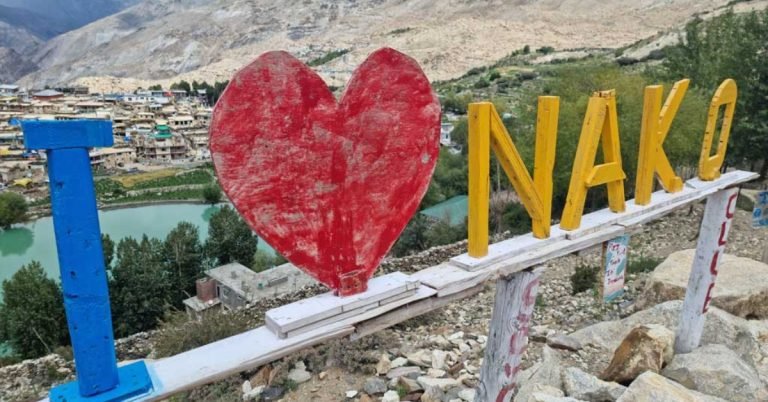
The Nako village is found in the Kinnaur district of Himachal Pradesh’s Trans-Himalayan area, close to the Indo-China border. Here, where it borders the town, Nako Lake is a noteworthy landmark.

The site is home to various Buddhist Stupas and the 1025-year-old Nako Monastery. At a height of roughly 3600 meters, the unspoiled, peaceful, and lovely Nako village may be found in Himachal Pradesh’s Kinnaur District. Nako, which lies towards the end of the route to Malling Nallah, may be found in the eastern end of Kinnaur Valley.

Stupa in Nako village
Stupa’s

Due to the village’s small size, it is simple to explore its hidden attractions on foot.

Nako village became a famous destination for those completing the circuit in recent years as Spiti tourism began to grow. Several hotels/lodges are nearby, and the location is worth visiting for a while because of how beautiful and quiet it is.

Its most notable features are the village’s lake, monastery, and breathtaking view of the surrounding Himalayan peaks. The settlement is completely encircled by lush fields, starkly contrasting with the desert-like, bare mountains all surrounding it.

Foreign nationals will require a permit to visit Nako. An Inner Line Permit is available in Reckong Peo for Rs.400 or Kaza or Shimla for Rs.300 and is suitable for 14 days. Overnight stay is not allowed anywhere within the restricted zone unless you have the Inner Line Permit.

Weather in Nako Village

Weather in Nako village

Nako provides breathtaking views of the mountains and valleys throughout the year. For those visiting Nako anytime soon, here is a description of the seasonal Weather in Nako village.

Monsoon: From July to September, Nako experiences cool and fresh weather. The temperature during these months ranges between 3°C to 13 °C. 

Winter: From October to February, the temperature moves towards a sub-zero region. These months have cold winds and chilly nights. Due to the sub-zero temperature, snowfall is witnessed almost throughout these months.

Summer: From March to June, the temperature is still excellent as the temperature rises above sub-zero temperature. However, these months are the ideal months for visiting Nako.

Weather in Nako village is challenging during the winter time, take all precautions. Also, keep a check on you acute mountain sickness if it happens.

What is the best time to visit Nako village?

https://www.instagram.com/p/ChkXNr5Be6F/
Our bike tour to Nako village! Follow me on Instagram!

The Nako village is undoubtedly delightful all year round. Best time to visit Nako village is summers.

However, summer is the easiest time to travel because there is so much to see and do. Apple harvest season, which lasts from August to September, is a sight to behold, with the entire landscape changing to colours representing the land’s fertility.

The weather is so pleasant, making it a no-brainer to finish the Shimla-Kinnaur-Spiti-Manali loop. The whole winter season is covered in snow.

How to reach Nako village?

How to reach Nako village?
Things to do in Nako village

Nako can be reached through two routes, one from the Spiti valley and the other from the Shimla side. The route from the Shimla side is generally considered to be more accessible. 

1. Via Shimla: Delhi – Chandigarh – Shimla – Narkanda – Rampur – Pooh – Nako

2. Via Manali: Delhi – Chandigarh – Manali – Rohtang Pass – Gramphoo – Batal – Kunzum Pass – Kaza – Dhankar – Tabo – Nako

By air

The closest airport is located in Shimla, 312 kilometres distant. You’ll need to take a taxi or a bus to Reckong Peo, and then proceed further. Shimla, being an airport in the hills, has limited connection; you must be aware of this. The next-best alternative is Chandigarh Airport, located 425 kilometres from Nako. Once more, there are bus and taxi choices throughout the city.

By train

By train, the closest trainyard is in Shimla. However, connectivity at this station is also somewhat limited. The nearest commercial railhead with good connectivity is Chandigarh Railway Station. Again, one must take a cab or bus for the other part of the trip.

By bus

Many buses ply between the main bus stands, such as Chandigarh or Shimla. Himachal Roadways buses can be used to reach Nako village from these stops. There are two buses daily plying from Peo to Nako and beyond. You can also catch a Peo-bound bus from Kaza to reach Nako if you are from the Manali side.

By car or cab

Nako is situated between Reckong Peo (Kinnaur) and Kaza on the Hindustan Tibet Highway (Spiti). Nowadays, the Hindustan Tibet Road is comfortable mainly and supple. It was once one of the most challenging roads, but over the past few years, a lot of work has been done, and I have witnessed its improvement. The road is now easy to drive on, except for one or two places where there are still a few hairpin twists on the edge of deep gorges that can scare you.

Things to do in Nako Village

Things to do in Nako village

Nako Lake

Between the bare mountains, Nako Lake is like a paradise. A short path runs alongside the seasonal lake’s round shape. The lake’s periphery is entirely encircled by a dense canopy of willow and poplar trees, giving it a blue-green hue.

The Lake place is revered because it is thought Saint Padmasambhava stayed there. There are several temples and a monastery on the lake’s bank just north. Among them, the Gyu Chok Ling monastery is in the centre of town. The mountain road which leads to Nako Lake passes through a valley full of farms.

The road winds between two high summits with sheer drops on both sides.

Chango Gompa

On the road to Spiti, in Chango town, the Chango Gompa is located approximately 25 kilometres from the Nako monastery. The prayer wheel at the Gompa is almost 500 years old and has an 11-foot diameter.

Yak skin is used to make it. A two-stage wheel is used for the prayer wheel. The first stage, called the hub, is made of a bronze plate. The second stage is made of yak skin and is about seven feet in diameter.

The monastery was founded by Terton Nyengyel Drubthob in 1205 AD and was named Nako after his birthplace in Tibet. It became a centre for Buddhist studies at an early date and many important texts were produced here.

Nako Monastery

Me at Nako Monastery

This monastery was allegedly established in the eleventh century by famed old translator Lochen Rinchen Zangpo. It is located in the village of Nako, about six hour’s drive from Manali.

The complex of the translator is another name for the monastery, also known as the Lotsava Jhakang. This tranquil monastery, located near Nako Lake, was built in the Spiti Valley after the famed Tabo Monastery’s design and is divided into four halls or chapels.

The monastery’s gate is etched with complex structures. Visitors from around the world visit the Vajrayana Buddhist monastery. This building is embellished with beautiful artwork. Buddha teachings, clay and metal idols, and stupas can be found at the Nako Monastery.

Sightseeing

Clicked at night in Nako

Nako is a small resort town in the Himalayan foothills of India. It is situated on the bank of the Beas River and surrounded by hills. This town has a lot to offer its visitors – from restaurants to adventure sports and even entertainment.

Nako is one of the best places to get away from busy lifestyles. Take a short stroll to one of the nearby hills to get a bird’s eye view of the pristine village. The bells in the gompas are at strategic points and one can get great view from these spots.

This beautiful town is a beautiful place for those who love photography. 

Trekking

Nako is a remote hamlet in Kinnaur, Himachal Pradesh, where the inhabitants lead a simple life with primitive means. Nako has plenty of shepherd trails that lead to Chango, Hango, and Tashigang villages.

The scenic valley of Narkanda is located in the state of Himachal Pradesh, India. The valley is full of high peaks that stand tall on a backdrop of lush green forest. Some of the highest peaks like Rio Purgyil (6816 m) are located in the valley.

Nako is also a focal point for trekking trails like Nako to Chango village, Nako to Hango village, and Nako to Somang village trek via Tashigang.

Meet the locals

The residents of Nako village are hot and welcoming. A lot of people have opened homestays for tourists and provide excellent services. Talking to the locals at Nako is a great way to know more about their heritage, beliefs, lifestyle, and more. 

What to eat in Nako village?

Himachali cuisine is one of the most diverse cuisines in the nation. The homestays and hotels do provide decent meals. Some of the best food options here at Nako are:

Momos: These are dumplings with vegetable or non-vegetarian fillings. These are served hot with red chilli dips. Momos are integral to the most famous food in and around the area.

Chowmein: This dish has roots in east India and Tibet. A lot of variants of these noodles are available at Nako.

Thukpa: This dish is famous in East India, Himachal, Nepal, and Tiber. It is any soup or stew combined with noodles.

North-Indian food: Basic food items from North India are also available at Nako. One can have Maggi, Rajma rice, and parathas at dhabas here.

Staying options at Nako

In Nako, there are numerous homestays available. The lodging choices at Nako Village include affordable homestays, the motel Reo Purgil, the PWD guest house, and Knaygoh Kinner Camp. In contrast to hotels and camps, where prices can go as high as Rs. 4000, homestays have starting prices of Rs. 200 and maximum fees of Rs. 650.

The cost of hotels significantly increases during the tourist season. Regarding phone connections, the valley does not allow any data connections. You can only make calls using BSNL connections, so do not expect data connectivity.

Important things to remember while visiting Nako

Always carry your water bottle, which can be refilled multiple times before discarding. This helps keep the mountains clean.

Always carry sunscreen while visiting this place to avoid sunburns.

Research the staying options, routes, and food options before reaching the place.

In acute mountain sickness, staying at Tabo rather than Nako is better because the place does not have emergency medical services. 

Conclusion Nako is a handful of houses, homestays, monasteries, and tourist attractions. The place is not much explored and can serve as a great mountain getaway. If you are looking for a place in the mountains, away from the crowd and hustle-bustle of daily life, then Nako is the place.

Any questions please leave them in the comment section below.

Chitkul – Last village of India

Visiting Spiti in August, a peak monsoon month, was thrilling. During this tour, I had a chance to spend a night at Chitkul. Literally had fun at this place. During the daytime in Chitkul, I visited all the places in this mountain village. I am putting together this comprehensive guide for everyone heading to Chitkul. The kind of peace that you get here is just mesmerizing.

I am going to break this article down into sections and would cover everything that Chitkul has to offer you.

I started my journey from Jaipur and I reached this village in about 3 days. First I reached the starting point of the Spiti circuit which was Shimla. Check out my article on how to reach Spiti from Jaipur.

From Shimla, you can reach this mountain village by taking the Kinnaur route. Check out my Vlog from Shimla to Chitkul, and do not forget to subscribe to my YouTube channel.

My journey from Shimla to Chitkul.

Chitkul village is the last inhabited place on the Indo-Tibetan border. This beautiful, enchanting hamlet is located in the Kinnaur valley. It is the most gorgeous village in the Baspa valley in Himachal Pradesh.

If you want an escapade to some isolated, beautiful place in the world to enjoy nature’s lap, Chitkul is the place to be. It is a heavenly sight to those who love nature —a paradise for those who love mountains. The area is filled with awe-inspiring geographical features. So, A trip to Chitkul is a must. Check for the directions below.

They say the most challenging climbs offer the best views. I agree with them on this. Chitkul is situated at an altitude of 11,319 feet. This is one of those offbeat places where you get disconnected from the world, there is no phone, and there is no internet. Here nature shrouds you. It reconnects you with the pristine elements of nature.

Chitkul village has secured a perfect spot at the banks of the Baspa river with Mount Kailash in the background. The hamlet is full of long-standing queues of Deodar defining the temperature range of this place. The valley is abundant in Chilgoza orchards and is famous for its delicious Golden apples. Chitkul is blessed with high-quality potatoes with accommodative weather and fertile land. The high-quality produce sells for a high marked price.

At Chitkul Village!

It is believed that Kinnaur used to be a land of mythical creatures called Kinnars. Kinnars are the creatures between gods and humans. So Kinnaur is a land between Heaven and the Earth. The villagers are either Hindus or Buddhists who speak a Tibeto-Burman dialect called Kinnauri. People here wear pahadi caps.

Tibet is to the east of Chitkul, Garhwal is to its South, Spiti valley is to the North of it, and Kullu surrounds the west. Chitkul is 20km from the Uttarakhand border. From Uttarakhand, you can reach here by walking into Govind pashu Vihar and crossing Borasu Pass.

Delhi is around 570 km from Chitkul. The nearest Settlement from Chitkul is approximately Sangla Valley, about 28 km from here. Rakcham village is a midpoint of Sangla to Chutkul. The route from Rackham to Chitkul is adventurous and Amazing.

It is approximately 90 KMs from Chitkul to the Indo-Tibet border. Since there is no civilian movement beyond Chitkul, this village is considered the last one before the Indo-Tibetan border. The area beyond the town is under the control of the Indo-Tibet Border Police(ITBP).

Chitkul Village: Weather

Chitkul offers a mildly cold temperature range of 5 degrees at night to 20 degrees during the days in the summer. The season is hard enough to offer a bone-chilling breeze. Except for the winter season, the climate is usually pleasant.

Summer

The road to Chitkul opens in March, and so does the tourist gateway. March is a bit colder than the upcoming April to June months. This is when the visitors flock to the valley in large numbers.

Monsoons

July and August are a bit hard to visit mountains as the terrain can experience landslides, as heavy rains are common in the areas. So, this is a dangerous season, and it is non-advisable to visit here this season.

Autumn

This season is most preferable to visit as the apple season is going on. The mild cold has settled in the surroundings, making roads much safer. There are colours spread all over, which feels enjoyable and satisfying.

Winters

December to February marks heavy snowfall in the region. The temperature falls below zero, dropping down to -20 degrees Celsius. One might get entrapped for months if the roads are closed suddenly. These are the months when even the local people move to the lower elevations.

Best time to visit Chitkul

At Chitkul Campsite

Summer and Autumn are the best time to visit the village. The skies are clear, blue in summer. The India-Tibet highway provides picturesque views on this adventurous trip. August-September is the harvest season for apples. October, my favourite season, offers you the perfect setting for every element to enhance your travel experience.

The Serenity is nearer than you Think

En route to Chitkul, you cover various valleys in the Kinnaur region. The green, planted mountains touch the blue sky and are joined by other small and large brooks on the way.

The clouds are so close, and the landscape makes you forget the insanely tricky route to the mountains. This route is more complex than the Manali Leh highway.

Route to Chitkul from Delhi

Delhi > Manali > Shimla > Narkanda > Rampur > Karcham > Sangla > Rakcham > Chitkul

I promise that whatever mode of transportation you choose will still be a road trip. And that, too, is a good one. Roads take you to the place with troughs and crests. Beautiful green vistas are your companion as you glide over the valleys.

After crossing  Narkanda, you will be mainly driving downhill to the river bed of Sutlej, right up to Karcham. After Karcham, there is an ascent to the Chitkul. One should be alert of tricky Himalayan roads with sharp cuts and elevations. These single-lane roads often need good skills to tackle the coming traffic.

How To Reach?

By Air

Airports in Shimla and Manali are close to Chitkul. I’d say that Chandigarh is the best place to start your journey. The airports in Manali and Shimla are smaller and have limited connectivity.

By Rail

The nearest Railway station to Chitkul is in Shimla, and you must travel by road from Shimla to Chitkul.

By Bus or Public Transport

Chitkul is well connected to the other parts of the state through public transport. Buses from HRTC are available from Shimla to Reckong Peo and Sangla. There are two buses for these places from Shimla.

Sangla is very convenient to reach from Chitkul. You can catch a bus from Sangla to Chitkul.

By Road

Hindustan-Tiber highway leads to this place. This highway, called NH-05, is very adventurous. There are such sharp turns that the vehicle feels like a cart on a roller coaster. Life is not an easy one on this side of the country. This often feels grateful to be in the hinterland of the nation.

Taxis are available but are an expensive option. Travelling in a group won’t be costly. Self-drive cars are also available in Delhi and Chandigarh.

Local Commute

Hamlets like Chitkul are best explored on foot, keeping with my advice for the Himalayan experience. Experience life as a local by exploring the alleyways.

Places to visit in chitkul

The village has a population of just under 1,000. Such a small population, yet the town is full of life and culture. There is much to do in the village and more to cover! Experiencing more takes more time.

There are two schools in the area, and you might spot kids playing outside or going to school. The village has three temples, and all three are dedicated to Mathi Devi. The oldest one is around 500 years old. The temple complex is made up of wood. There is a major Bengali effect here, as many pilgrims travel here from Bengal.

It would help if you also spent some time on the banks of the Baspa river. The cold glacial water might make you feel the higher power of nature. You can also talk to the Himalayas about all your issues, problems, and joys. I bet it will listen to you like no one ever has.

There are a few treks to do in the region. You might plan your journey accordingly.

  • Nagasti ITBP (around 4 km)
  • Rani Kanda Meadows (Approximately 10 km)
  • Borasu Pass Trek
  • Lamkhaga Pass Trek
  • Jalandhari Valley

Other Activities near Chitkul

You might want to try off-roading, bouldering, climbing, and slacking. You can also go fishing as the area is famous for freshwater trout fish. But try not to catch too many 🙂

Food

Last dhaba at chitkul village
Last Dhaba at the village

Hindustan ka akhiri Dhaba is a must-visit to-do thing on the list. Beware, many claim that title. Momos and Thupka are readily available food options among visitors. The other ones are Maggi and Paranthe.

Stay

Chitkul has a PWD rest house. The place has some basic amenities. The Wanderer’s Nest is a great place to stay if you plan to spend a few days in Chitkul. This is a place with a higher elevation that might mark your soul with amazing, jaw-dropping views. Not only that, the food is piping hot.

Many old-school Himachali wooden house is converted into guesthouses. However, due to isolation, these places can be slightly more expensive. There are a few spots near the village to camp, and villagers are happy to help! So, try to take your camping gear along and spend a night under a starry night sky.

Typical Itinerary for a Road Trip to Chitkul

A 2-3-day trip is advisable to enjoy this beautiful Kinnauri Village. However, many travellers visit Chitkul for a day and head back to Sangla. The Sangla valley offers affordable accommodations and good connectivity, making it a favourite among travellers.

Things to remember

No Permits are required to visit Chitkul.

There is No Petrol pump present in Chitkul. The nearest ones are in Reckong Peo or Tapri, there is a new petrol pump that has just opened in Sangla.

Chitkul has a decent electricity connection. Make good use of it. Carry power banks!

No ATM available – carry enough cash.

Good JIO connectivity & BSNL, Airtel struggles.

The village has no hospital/clinic; the nearest one is in Sangla and Reckong Peo. You might ask the army for help.

Keep yourself hydrated. Avoid the extraneous effort if you feel altitude sickness.

Conclusion

Make friends on tea, with conversations. Look at the Great Himalayas, with fellow travellers or in solitude. Fall in love with air and water, and read some books on the Banks of the Baspa river. That’s what it is all about. Appreciate the geography of nature, and experience all that you once read in books. The more you wander, the more you discover.

Have any questions? leave them in the comment box below.

Best time to visit Spiti valley

The popularity of the Spiti valley has been increasing by the day. Especially after the Atal tunnel opened up, the number of travellers willing to visit the valley increased. In this article, we will see which is the best time to visit Spiti valley.

People want to know the best time to visit the Spiti valley. This month-by-month guide on road conditions, facilities, and weather conditions will assist you in planning your next trip.

The Manali route via Delhi is a total of 745 km stretch. But before taking any of the courses, we must know which season and class go hand in hand. Since the Manali route is closed for half a year, let’s reckon what the best season to visit depending upon the type of weather and ease of visiting is. We will start with the beginning of the year.

I visited Spiti valley this year from Jaipur, check out this article on how to reach Spiti.

Subscribe to My YouTube Channel

The Icy Cold Season in Spiti Valley-January, Feb & March

Best time to visit Spiti valley is in Winters

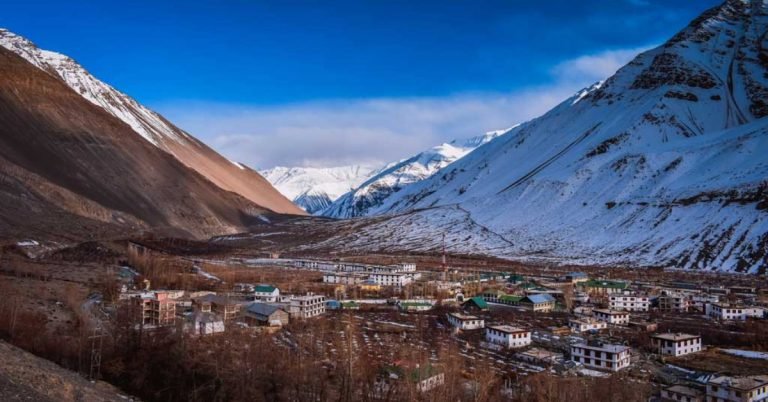
While extreme weather conditions exist in the winters of the whole of Northern India, these conditions are even harsh in the Spitian winters. This time of year, the temperatures can go as low as -20 degree Celsius. The valley is completely covered in snow, and the water is frozen. 

Roads from Manali to Kaza are closed. Link roads to Langza, Hikkim, and Komic are also closed. However, as we move towards March, some link roads start to open up. However, Kaza to Kibber is open mainly in winter. 

So, this is the best time to visit Spiti valley, if you see the valley covered entirely in snow. There is a lack of eatery facilities. Hotels are also closed, so the only way to get a stay is to be in the homestays. The facilities are fundamental. One has to use the dry pit toilets.

Beginning of a fantastic Tourism Season-April & May

Best time to visit spiti valley in going winters

This is the beginning of summer in Northern India. The white snow starts to thaw and gives a great feel. Though the Manali road is still closed, most link roads also open up by this time.

All the site seeing places also start welcoming tourists. Hotels start cleaning up and become functional by the end of May. This is best time to visit Spiti valley for folks who want to enjoy going winters. 

The respite from Indian Heat-June July

best time to visit Spiti valley is in Summers
Best time to visit spiti valley is in Summers

When extreme summers engulf the whole of India with the loo (the hot breeze), Spiti is a heavenly abode.

Calm wind in your hair and roads taking you places. The route to Manali and Kaza opens up, and so does the best part of the trip, the Chandratal Lake. Many people visit Spiti valley in this season to escape the summer heat.

A complete circuit of Spiti can be covered in this delightful season. Though snow melts, it can be spotted in bits and pieces over the mountain tops. All the roads are clean and open, and a bike trip is the best to visit.

You can plan your visit to Langza, Hikkim, Komic, Demul, Lhalung, Pin Valley – Mudh Village, Get, and Tashigang villages. Due to the snow melting, water crossings are sometimes hard to cross. June July is a pre-monsoon shower period, and some landslides might disrupt the journey.

So, be cautious of the landslides, and it’s all wonderful. Because this time, all the places like Key Monastery, Pin Valley, Kunzum, Chandrataal, and others are open to visitors. 

The Peak Season in Spiti Valley-August

best time to visit spiti valley in Monsoons
Best time to visit spiti valley

August is the peak time for monsoon in Northern India. The rains are pouring like anything, and the mountains of the Spiti become fragile. So, it is widespread to have landslides in these areas.

Both routes from Shimla to Kaza and Manali to Kaza get affected in the season. Spiti is a rain shadow area. So, If you manage to get into the Spiti, it won’t affect your trip much. Do not forget that you must return via either Manali – Kaza or Kaza – Kinnaur, which experience heavy monsoon rains.

Rohtang Pass will be a big mess, and roads to Mandi may be submerged. However, Climate change has affected the rainfall patterns in Spiti in the past few years.

This is the apple season of the valley, and the valley bears the juiciest apples in the season. One might find a lot of trucks on the way jamming the roads. I would avoid going to the top this month.

The colors of Fall in September-October in Spiti Valley

September October is when a mild winter starts settling around the corner. The temperature starts dropping, and dawns and dusks are chilly. This is the finest time to visit Spiti valley because the colors of fall start spreading in the Himalayan landscape.

The colorful skies are exciting, and the color of the water goes aqua. It is the season when natural beauty is at its best, with a fantastic, refreshing smell in the air.

It is time one should visit Spiti but with a bit more woolen. You can find delicious Spiti apples in Tabo, Haring, and even Kaza’s local house. Spiti Valley is famous for apples. Don’t miss tasting and buying if possible.

Roads are in the best conditions, and the water crossing becomes easy to pass. Sometimes there is fresh snowfall at Kunzum and Rohtang. You can complete the circuit this season too. Don’t visit at the end of October since Manali and Kaza can close anytime, and you can get stuck there. 

Traveling to Spiti in the chill of November-December

Winters have officially started in the Spiti by this season. Waters in the conduits freeze as the temperatures touch subzero. Hence, running water is a luxury at this time of the year.

It is the season when harsh dry winters start. Snowfall is less, and the winter is beyond the tolerance limit. Travel to Spiti Valley in November. You will have to endure many difficulties, such as icy roads, lack of electricity, subzero winter cold, etc. The streets are starting to pile up with black ice again.

The Kunzum Pass will be blocked for the next 6-7 months, so you will not be able to complete the tour. Though, the sightseeing is again open till December.

The landscape is again covered in snow. Life becomes hard here. As such, this route only allows one visit to Kaza. In winter, there is a heavy possibility that roads will be closed for several days due to snowfall that lasts for long periods.

So if you go on a road trip to Spiti Valley in winter, be prepared for extreme adventures and delays too!! Spiti spreads its color from edge to edge all year round. Some are easy to learn, and some are difficult.

We hope this article has helped you decide when to travel to Spiti Valley. Feel free to ask questions or share your valuable contributions during the Spiti Valley Road Trips season. We hope you are not looking for Spiti Valley Tour Packages. If so, read the guides and articles on this site before committing and spending that money.

Summing up the best time to visit spiti valley

Spiti valley best time to visit for me was in June. Weather is all good and roads are open. This is however also tiring as the tourist inflow is too much. If you love snowy mountains then the best time to go to spiti valley is during winters. Is you have any questions realted to Spiti travel please leave them in the comment box below.