
Home Blog Page 8

Things to do in Kaza village

I started my journey from Jaipur and reached Shimla and passed Rekong Peo, the serene beauty of Kaza hit my soul. The cool breeze and the heavenly rustling of the trees welcomed me. The town is nestled amid Snow-capped peaks of the Himalayas. With a population of around 2000, it is considered a remote area.

Interestingly the maximum number of tourists it can accommodate during the peak season is also the same. Kaza is, however, the largest township and commercial centre in Spiti Valley. The town is divided into old and new city blocks, Kaza Khas and Kaza Soma. Today I will tell you about the things to do in Kaza. 

Rainbow at Kaza
Rainbow at Kaza

Refuel your vehicle–Kaza Tourist Places

Yes, you read that right! Refuel your vehicle as soon as you see the fuel station, that’s one of the first things to do in Kaza. Check out all the fuel stations in Spiti valley.

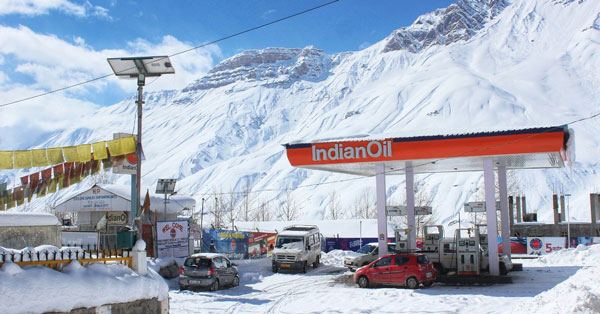
You might be thinking, how can this be a special thing to do? But the highest petrol pump in the world is here.

You will find a board that says “This is the world’s highest petrol pump” in bold letters. The petrol pump, at an altitude of 3740m, is the sole serving pump in the area.

Highest petrol pump in Kaza village

If you are a rider, this will be a cherishable memory forever. You should refuel your vehicle even if you’re not because the next refuelling station is far away. 

Things to do in Kaza-Visit the local monasteries

Monastery in Kaza -  things to do in Kaza
Monastery in Kaza

After you get your fuel talked all filled up, one of the best things to do in Kaza is to visit Monastries.

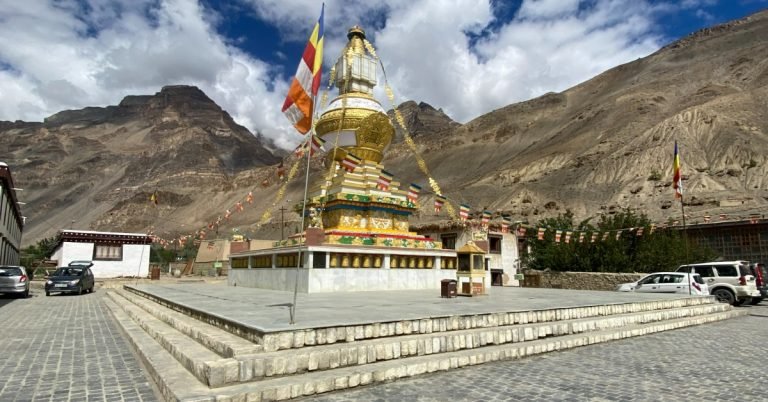
You can find a majestic Stupa and Monastery near the fueling station. The Sakya monastery is the first thing you come across when you come to Kaza. It is open for only an hour (8-9 am), so you have a narrow window to visit the beautiful place. Around 50-70 monks offer prayers here every day. The Tibetan architecture of the Stupa provides all the spiritual and wholesome looks of the site. 

Things to do in Kaza-Shopping Artefacts in Kaza

Market in Kaza
Market in Kaza

Kaza is one of the most amazing commercial centres for nearby places. The vibrant market of Kaza offers a lot of stuff to buy and keep as souvenirs. You can buy a wide range of articles from household stuff and meals to some of the best souvenirs like flaglets, Buddha statues, etc. can be purchased from here. Some unique items found at the site are human femurs and skulls decorated with gold and silver. They are used as religious materials here.

People in nearby villages like Hikkim, Chiham, etc. depend on the commercial market in Kaza.

Things to do in Kaza-Understanding the Culture and Lifestyle

The unique triangular hooded bus stand at Kaza offers bus service to Shimla. 

A village called Hikkim is situated near Kaza. One of the best places to visit in Kaza.

check out my vlog for Hikkim.

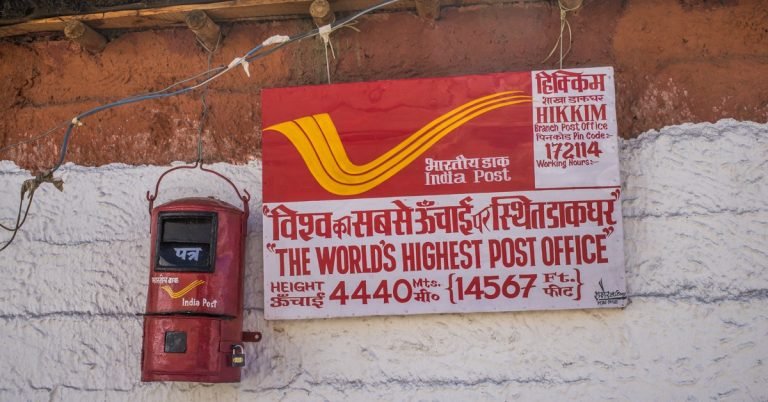
This station has the highest post office in the world. One can send letters and postcards from here to their loved ones and eat Yar and Chulti meals here.

Post office at Hikkim_Facebook
Highest post office in Hikkim

Water freezes, and people use special-style washrooms here, which offers a sustainable way to live. The highest post office in the world is the center of all letters going to and from Kaza.

Any online payment services do not work here. There is an SBI bank and atm. The importance of education can be understood from the fact that there are even in the most remote villages here. You must meet locals and talk to them; they are welcoming people.

Things to do in Kaza–Talk to the calm river Spiti

Spiti river in Kaza
Spiti river in Kaza

Walk around the market to reach the fantastic landscape. After crossing the market and sighting some mountain dogs, you can finally feel the natural landscape filling in close.

The green environment, snow-capped mountains, and dynamic weather conditions are remarkable features of river Spiti. It flows across channels, meandering through the rugged terrain. Rainfall is rare in this cold area, and precipitation is mainly in the form of snowfall. The minimum temperature here drops to -25 degrees in summer and -40 in winter. 

Kaza places to visit, don’t worry the list is long.

Things to do in Kaza–Enjoy and click amazing scenery forever

People in Kaza

Kaza offers one of the best spots to click if you are interested in photography.

Sheep, people, markets, mountains, and the Spiti river are a few notable subjects to capture. You can sight animals like Snow leopards, Himalayan Ibex, Blue sheep, and red foxes in the nearby areas.

The Night sky is magnificent here, and people can stargaze. The experience is rejuvenating and connects you to the cosmos. Check out this picture that I clicked when I was in Kaza.

Do not forget to follow me.

Things to do in Kaza–Adventurous Hill climb riding

Ride the most treacherous roads in the Spiti for an exciting adventure. Different road signs warn you to stay alert to the surroundings. So, drive the ride of your life but with care. 

Things to do in Kaza–Stacking pebbles for calm

Stacking pebbles in Kaza

One of the best activities to connect with mother nature is to stack pebbles of different shapes and sizes to balance them. It is a custom to make a wish when the activity is complete.

Things to do in Kaza–Exploring guest houses and Local food

House in Kaza
Traditional house in Kaza, Spiti, Himachal, India

While roaming around markets, you can explore lodges and other places to eat. Himachal tourism guest house at Kaza offers an enjoyable experience at an affordable price.

A lot of private homestays provide fantastic food and insight into the culture. ‘Taste of Spiti’ offers excellent meals from Tibetan cuisine.

Things to do in Kaza-Cultural Festivals

If you come here in August, November, or mid-February, you can experience the local cultural festivals. People dress up to dance and sing local songs here. 

Around Kaza

Things to do in Kaza–The Colossal Key Monastery

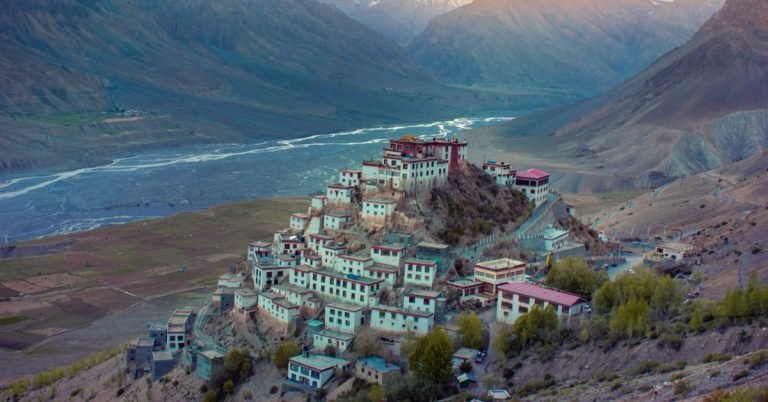
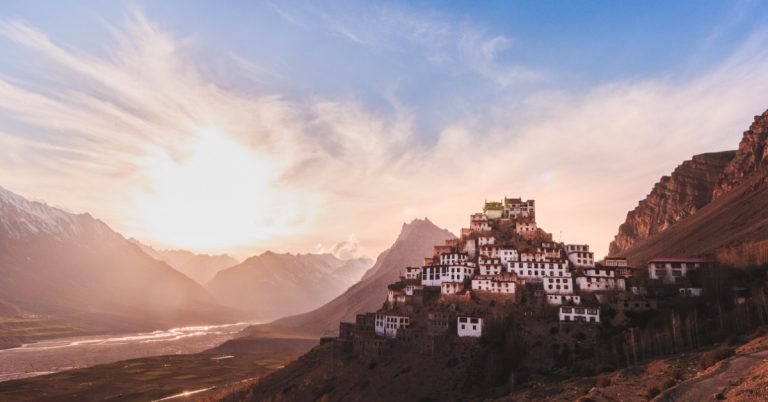
Key Monastery in Kaza

The monastery is around 14 km away from Kaza. On the way, the Spiti river makes its way through both grassland and desert topographies. The key monastery is situated at an elevation of 4115 m along the mountainside.

Key Gompa, as it is locally known, the monastery was established by Dromtone, a pupil of the great Buddhist teacher Atisha. It was attacked multiple times by Mongols, Sikhs, and others and destroyed by earthquakes. This is why it stands there in the form of various blocks. 

Key Monastery Vlog

There are three floors, 1st and 3rd, for pilgrims to offer prayers. When monks offer prayers, Cham dance depicts a pictorial view. Thangka paintings are all over the walls. 2nd floor is prohibited for commoners, and only monks can get into there. It is a must to sit in the meditation hall, and Please DO NOT miss the herbal tea they offer. 

Things to do in Kaza–Gue, the Mummy village

No need to visit Egypt to spot a mummy. In 1975, a mummy was found here during an army excavation. It is more than 500-600 years old. An enlightened lama’s mummy is believed to be present in the tomb. The mummy is dressed in a silk robe and is found in a squatted position. Teeth and hair are also preserved, and it is open for visitors to watch it.

Things to do in Kaza–Chicham Village and bridge

Chicham Bridge

Experience the raw life of Spiti in Chicham Village. A large gorge separates the village from the rest of the Kaza. Before 2017, the villagers used a manually operated cable bridge to cross it. In 2017, this bridge made the life of people easier. Chicham Bridge is the highest in Asia, with an elevation of 4145 m. One might wonder why people have set an abode in such a hard place.

Chicham Bridge Vlog

The answer is that the Gaddi tribals used to come here to graze their cattle due to the abundance of grass. They settled here, and the rest is history. 

Things to do in Kaza–Kibber Village

5km from the Chicham is the scenic Kibber Village. Tourists visit the village to sight snow leopards, Himalayan Ibex, blue sheep, and Red foxes. Trekkers come here to trek at Prangla pass in the Summer seasons. Prangla pass is at a 25 km distance from Kibber. Kanamo peak is also visible from the village. 

Things to do in Kaza–Tashigang

On the way to Tashigang, do not forget to stop and look at the unique panorama of nature. A lot of Yaks can be spotted in this area. You can also spot fossils in the soil. These are the result of the collision of the Indian and Eurasian plates from the Tethys sea. 

Tashigang is a village with a population of just four households. Life is hard here, but the vibrance of Indian democracy can be seen from here. An electoral booth is a setup here during elections. A school has also been established here to teach the three kids of the village.  After a long day, I stopped for some fabulous samosa chutney, a Tirik bread sandwich, and a barley chocolate milkshake. Barley adds taste to the shake. If wanderlust calls you, visit Spiti. It will Spitize you. If you want any other information, please comment below!

If you are still confused about what to do in Kaza, please leave a comment below and I will help you out.
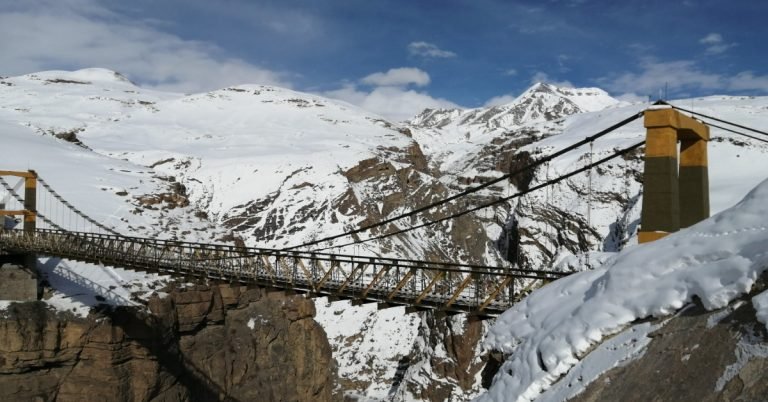
Chicham Bridge experience

My Spiti tour was incredible, I witnessed some of the finest man-made structures in the world. Amazing places like Tabo Monastery, Key Monastery, highest post office in the world. My next adventure got me to Chicham bridge.

Check out my Journey to Spiti on Instagram.

The world is a vast and expansive place that is full of surprises. There are cultures to explore, landscapes to explore, journeys to take, and lessons to be learned. It is filled with boundless generosity on one side and harsh realities on the other.

World’s highest suspension bridge – Chicham Bridge

This same excitement led me to a bridge that has etched its scenic beauty in my memory forever. For us city folks, it is hard to imagine a world where internet services do not exist. After all, our entire life is ingrained with social media. Now imagine that you are in a distant part of the world where having access to an internet network is a privilege standing in front of the world’s highest suspension bridge

You can’t even get a cellular network, let alone internet services. It is certainly hard for city folks like us to imagine but such a place does exist. But folks, this place is amazing and you really do not need to have a cellular network here. The world’s highest suspension bridge AKA Chicham bridge stands proudly in Spiti valley.

There is a road here, but it does not meet the criteria to be labelled a ‘’real road’’ for the most part.

More than four thousand meters above average sea level describes that region’s typical elevation. Precisely chicham bridge height is 13,244 feet.

Check out my vlog on Chicham Bridge! Do not forget to subscribe!

A journey that is not only breathtaking but also full of adventures. This location is cut off from the rest of the world for over three-quarters of the year because of the constant falling of snow.

It has the distinct impression of being cut off from the rest of the world due to the town’s secluded location and harsh terrain. It is a luxury to even get internet access and most cellular networks are extremely unreliable. Plus being the highest suspension bridge in the world, this is not accessible throughout the year because of heavy snow.

Introducing The Chicham Bridge

Chicham bridge picture from Canon 1200D
Chicham Bridge

My eyes were not deceiving me. This is where Spiti Valley, located in the Himachal Pradesh region of India, close to the border with Tibet, led me. There is a bridge there that is unlike any other in all of Asia, and you have to see it for yourself to believe it.

Experiences in India’s Spiti Valley are once-in-a-lifetime opportunities. Some of those attractions may be well-known to tourists, but there’s a little-known gem that’s worth seeking out nonetheless. Certainly, the city is home to the incredible Chicham Bridge, which stands as the world’s highest suspension bridge.

An hour’s journey over stunning scenery will get you to the Chicham bridge from Kaza, which is the largest town in the Spiti valley.

Details about Chicham Bridge

Chicham bridge sign board

Chicham Bridge, located in the Spiti Valley of the Himachal Pradesh region, widely recognized as one of the highest suspension bridges in all of Asia, spans a canyon between two villages in Spiti Valley. This bridge of an incredible 13,244 ft in height links the villages of Chicham and Kibber.

Creating this bridge shortened the distance travellers had to go from Kibber to Losar by 40 kilometres.

The gorge/water stream below is called Samba Lamba Nallah. In addition to making the trip faster and safer, the Chicham bridge also saves travellers half an hour. In the past, the travelling time from Kibber to the village of Chicham would often take between two and three hours.

However, the residents of the area constructed a ropeway over ten years ago, and it has never been damaged in any way. Prior to the construction of this bridge, the residents of Chicham had to traverse this region through a perilous ropeway. To go to the opposite side, you had to manually pull the rope on your own. The container that was mounted on the pulley of the ropeway was utilized in the transportation of virtually anything.

This was a self-operated manual ropeway. Imagine if something went wrong when you tried to self-operate this manual ropeway. You would find yourself hanging 1100 meters over the bottom of a gorge and even worse there is no one nearby to aid you while you were in this precarious position.

To think that the villagers had to use this dangerous ropeway every day to cross over to the other side makes me feel extremely grateful for the life of privilege that I lead. The determination of the inhabitants of Spiti, as exemplified by the Chicham Ropeway, is truly remarkable.

Construction of the Chicham Bridge

As you may imagine, constructing the bridge in such a steep grand canyon presented many challenges. Around 15 years of labour went towards its completion, which means that this brand-new bridge spent the better part of two decades getting built.

It finally opened in 2017 much to the excitement of the villagers. Villagers of Kibber and Chicham no longer had to use this pulley-driven ropeway to get from one village to the other after the opening of this bridge in 2017.

The bridge’s construction was extremely expensive, coming in at a staggering INR 485.50 lakh These villages finally got some much-needed relief as a result.

Chicham bridge has recently grown popular among tourists, who are often seen filming or photographing the event. After all, this bridge has the distinction of highest suspension bridge in the world.

Then there is Instagram, which is stuffed to the brim with breathtaking pictures taken on the bridge.

What to do at Chicham Bridge

What to do at Chicham Bridge
Food vans at Chicham Bridge for foodies

If you are hungry you will find these food vans set up by the locals. You can have breakfast and lunch at this place. The food options are limited but tasty. I always found mountain food to be very delicious so I won’t complain.

Since this bridge is recently constructed and little-known, it was not mentioned in any of the Spiti-related materials I combed through in preparation for my trip. Me and my friends, we were meant to pass via Rangrik on our way from Kaza to Chandratal Lake, but little did we know that another route awaited us.

There is a new path that may be taken to reach Chandratal, and it is a beautiful one. This new path was via the Chicham bridge.

In addition to being an impressive feat of engineering, the steel truss bridge also makes for a lovely backdrop in any number of photographs. Tibetan prayer flags of five different hues (blue, white, red, green, and yellow) adorn the bridge.

The mythical Snow Leopard that lives in the Himalayas spends the winters in the gorge where the bridge was erected, and it is a popular hangout location for the leopard.

Our Journey to Chicham village via the Chicham Bridge

Areal view of Chicham bridge

The best part about this was that I was able to see both the villages of Chicham and Kibber on the same tour.  The road from Kaza to Chicham Bridge is very easy to travel on during the warm summer months. On the other hand, the onset of winter brings with it treacherous driving conditions, since the region is prone to patches of black ice and heavy snowfall.

Since the village of Kibber was in our path en route to Chicham from Kaza, it only made sense that we spent some time there first. In the winter, Kibber is a popular destination for those hoping to get a glimpse of a snow leopard. I was really hoping to see a snow leopard but we were running out of time. After our brief stay at Kibber, we went on our way to Chicham village.

Chicham is a village in the Indian Himalayas known for its isolation. Spiti Valley is often regarded as one of the most picturesque regions on the entire planet.

This region is home to a number of breathtaking natural features, including lakes, gorges, glaciers, and snow-capped mountains. Because of this, those who are interested in experiencing new things come from all over the world to visit Spiti valley.

In addition to that, there are a lot of people that ride bicycles here to explore the area. There are a few families that have been living in the same remote village for several generations, despite the fact that the village has no infrastructure and no communication.

Nevertheless, the combination of the breathtaking scenery and the kind demeanour of the locals made this location perfect for our little getaway.

Stay at Chicham Village

In Chicham Village, there are a few homestays that visitors can book. We weren’t expecting anything particularly extraordinary here, after all, it’s a village, but the hosts of the homestay were so generous.

House in Chicham Village
Traditional house in Chicham

They did their best to ensure that we had a pleasant stay. Because Chicham is only a small village, there are only a few homestays located here. Because of the large number of tourists that visit Kibber for the majority of the year, you can expect the pricing in Chicham to be lower than those in Kibber.

The Chicham Bridge and the Chicham Valley Viewpoint are the only two tourist attractions within Chicham Village. Chicham Valley Viewpoint is a great vantage point a short distance ahead of the village that overlooks the entire valley. In today’s day and age, the Chicham bridge in Spiti valley has rightfully evolved into a popular tourist site.

On the bridge, you will find that there are almost always people taking pictures of the scenic view that this bridge offers. The view that one gets from the bridge is just breathtaking.

The drivers are aware that there are tourists on the bridge, and as a result, they travel at a more leisurely pace, providing the tourists with more opportunities to take photographs.

Tourists from India flock to the area near Kibber and the vast Spiti River valley because of the extraordinarily high one-lane road bridge, despite the fact that getting there requires travelling on bumpy dirt roads for several days.

Guests can choose from a variety of places to stay, including hotels, monasteries, cottages, and campers in the area.

Summing Up

The village of Chicham is located in the Spiti Valley and is characterized by its desolate beauty. Chicham is a tiny village, so don’t expect a long list of tourist spots. The area’s breathtaking scenery is the main draw.

Travelling between Kaza and Chicham, you will be treated to breathtaking scenery. Next in line would be the tranquillity and quiet of the setting. It’s the kind of setting that’s ideal for unwinding and getting in touch with one’s inner self.

The name “Chicham Bridge” has helped to bring it a great deal of notoriety. It is one of the most breathtaking bridges in all of India, which is precisely why so many people are familiar with it. It is an amazing place to visit, and you should visit it when you get the chance if you’re ever in the Spiti Valley area.

Any questions related to Chicham Bridge, please leave them in the comment section below.

Highest post office in the world at Hikkim

I am taking you to Hikkim today, where life ploughs on a slow pace. Here life is straight out of a postcard. Hikkim, a Spiti village, is the world’s highest post office.

Phones have become an integral part of our life, and we have almost forgotten the beautiful world outside the 6inch device. We no more enjoy the wait and joy of writing and receiving letters.

People used to write letters to loved ones, with all due respect, pasted and collected stamps. And waited for 15-20 days for the mails to travel, at least another 15-20 days for a reply.

Where is Hikkim & why it’s famous?

This place is famous for housing the world’s highest permanently structured post office. There exists a post office at Qomolangma, the mountain Everest base camp in Tibet, but that is not a permanent structure. Ohh yes and by the way, Qomolangma is the Chinese name for Mount Everest.

The government of India established the post office in Hikkim in 1983 at Rinchen Tsering’s house.

Rinchan's House and the Hikkim post office
Rinchan’s House and the Hikkim post office

I so wanted to get Rinchen pictures but could not get any because he was not there and his granddaughter was taking care of the mail.

Note: Something that I like to clarify is that before the post office was in the house of Richan Tsering but now there is a permanent structure in the shape of a post box that’s been created and is now the new post office at Hikkim village.

Welcome to the highest post office in India

Highest post office in India at Hikkim Village - The new one!
Highest post office in India at Hikkim Village – The new one!

This house-cum-Postoffice is small and houses an old-school mailbox on the outer wall. Situated between Komic and Langza, you can reach Hikkim as you go to Komic from the Komic-Langza diversion point. Check out this close-up video of the new post office and the Hikkim village. Check out my Vlog on the highest post office in the world, this would tell you everything that you need to know.

Highest post office in the world at Hikkim.

Hikkim is a comprehensive view of Komic or Langza. All three are equally peaceful and beautiful. The enchanting way to Hikkim is serene. The Spiti river winds its way through the rocks at the bottom with the breeze singing its song to impress the ever-moving clouds. The clouds leave their shadow on the hills. This place is like a timelapse of nature; time so paused yet transient. Kaza is visible from here. 

Follow me on Instagram for more travel pictures and videos.

Stay near the highest post office in the world

Hikkim features around 200 homestays. The houses looking like white shrubs from a distance are the homestays and the only options to stay in the village. The only formal ‘homestay’ in the town is Tsedup’s house.

Hikkim village in Spiti valley

They provide basic facilities with a bed, bathroom, and three full meals – everything local and Spitian style. Spend a night here, get coloured in culture. You can also try to spend the night with the villagers if they open their homes for you. 

Here you can experience the simplicity of life. Green and brown Himalayan peaks, cold wind blowing, and snow-capped cliffs guarding the Spitian fields are zen.

The unique experience of posting a picture postcard from the highest post office in the world to your loved ones. There is an eatery opposite the post office. You can get various local dishes, Maggi, tea, and beverages to keep you supplemented through the next leg of your journey. 

Hikkim Post Office Address

Hikkim is at a distance of 16 km from Kaza. Check out my article on how to reach Kaza from Jaipur.

A 45-minute drive from Kaza can take you there through dizzying roads. Enjoy your fantastic journey, and take the Komic-Langza diversion to reach Hikkim.

When to go and visit the Hikkim post office?

Summer is always a good time to have a hassle-free trip in the region.

A snow-laden Hikkim looks fantastic and enchanting in the winter, but life gets challenging in winter. People living in these high spots struggle and survive through climatic challenges. The extreme weather offers a lot of surprises – dry winters.

Winters are highly harsh here, with temperatures dipping to -35 degrees celsius. The summer months are pleasant, with bright sunshine. Solar panels are a lifesaver here so you will find many of them here.

Monsoons don’t bring rain here. But the orographic rainfalls cause landslides on the roads of Shimla and Manali. During Monsoon Spiti stays dry contrary to the popular belief.

Hikkim can be sighted from quite a distance while approaching it. A considerable board welcomes you to the world’s highest post office. Tourists often come here and click pictures for fond memories.

Hikkim Post Office

You must walk 50 meters from this point to reach the post office. The houses in the region are scattered around. People have large open fields around their homes.

Hikkim Height in feet

Pincode 172114, the post office is located at 4440m, Hikkim height in feet is 14567.

If you enjoy nature, love to take photos, and feel mesmerized in serene places where time stops, and finally, if you are a chai lover, this is just the place for you.

Stop, sit somewhere in peace, and write some postcards to friends from the world’s highest postbox. The government of India established this post office in 1983 at the house of postmaster Mr Rinchen Tsering.

This is a traditional Spitian house, and Mr Tsering lives with his family. This post office caters to Hikkim, nearby villages like Gette and the monasteries like Ki. Letters and postcards are an essential part of life here due to the absence of a mobile network in the region. Mr Tsering has an assistant who works as a postman.

The post office is closed on Sunday, but worry not, you can always get a postcard from the nearby eatery. They also post your mail for a meagre charge. The postcards are fancily printed with photographs of natural landscapes.

When does the mail reach your mentioned address?

It is difficult for letters and postcards to travel from Hikkim to the rest of the world. There are no motorable roads to commute. The postman takes the mail from Hikkim to Kaza on foot in the morning. Or if they get a vehicle the runner of the person in charge of depositing the mail takes a lift.

Nowadays you find a lot of vehicles so this is no more an issue with this post office.

From Kaza, the mail goes to Reckong Peo by bus, Shimla, and Delhi. From here, the letters are sent to their destinations. It costs 25 Rs to send the post from this post office. The post office offers savings account services to the local farmers and villagers. A postcard usually reaches the destination within 10-15 days. 

Every community in the Spiti valley has a rich culture and an organic way of living. The closeness to Tibet, the influx of Tibetan Buddhists, and the area’s isolation have contributed to the preservation of Spitian culture.

Like other Spitian villages, Hikkim features a monastery at the far end of the town. The sanctuary is simpler than Ki, Tabo, or other ancient monasteries. It is worth a visit if you are here to explore Hikkim and understand more about the people and their faith.

Hikkim is very similar to Langza concerning topography and geographical history. Hikkim is fossiliferous. However, it isn’t as popular with geologists as Langza for finding marine fossils. But you can find ammonite or a fossilized crustacean from the Jurrasic era. While owning an old marine fossil so far up in the Himalayas is thrilling. These fossils represent the rich Indian subcontinent’s archaeological legacy.

Best way to Explore

The best way to explore a place and understand its lifestyle is to walk around, sit, talk to people, and observe. If you want a never forgetting experience, speak to the villagers, and look at what the crop culture and pattern look like—how people worship and the school system. The simplicity of this place can enchant your senses.

The people are friendly, generous, and extremely helpful. They live in mud and stone houses. Whitewashed walls with red windows and blue doors are characteristic of all the Spitian villages. Buddhist flaglets disseminate pious words through the chilled wind in the dusty brown mountains. 

You can spot blue sheep leisurely grazing around, Yaks ploughing the fields. The captivating view of the ChoCho peak fills the soul with magic. Though significantly fewer people live in these regions, these villages have schools even at high altitudes. You must not miss star gazing in the clear sky.

The night sky in Spiti is mesmerizing with the past, present, and future, and God knows who else is looking at you. We seem so close to the cosmos; the moon is a giant white spotted ball. Try your hand at Astrophotography if the stars excite you. Spiti is one of the best places to do astrophotography and take time lapses. Check out this cool post that we have from the Hikkim village.

Astrophotography from Hikkim Village

At night Spiti becomes a mysterious land, totally gripping you in its charm. Spiti will leave twinkling memories in your heart if you allow it to. 

Spiti has a rich culture. People used to wear the traditional dresses of the camel hide in the old times. The conventional male dresses are called Koye, and female dresses, still in fashion, are called Rekop Surma. These work well for working at these heights. Further, Yak hides are also used in making clothes and ropes. 

Tips for a trip to Hikkim

  • Wear sunscreen and carry a water bottle. Sun can be harsh in Spitian Summers. 
  • Phone networks except BSNL do not work. 

This Spitian hamlet called Hikkim is one of the best life experiences in life. A trans-Himalayan village that is simple, serene, and offers captivating mountainous views. The excitement of being at the highest post office and sending mail to your loved ones is quite fulfilling.

Any questions please leave them in the comment section below.

Roads in Lahaul Spiti Valley

The most searched question on the internet when we talk about the Spiti Valley is about road conditions. How are the roads in Lahaul Spiti valley? Is it safe to drive or ride? What kind of vehicles can do the Spiti valley circuit and the list goes on. In this article, I would answer all your questions related to roads in Spiti valley.

This article is specifically about the road conditions in Spiti valley and not the kind of vehicles you might prefer to cover this circuit.

My avid readers who have been following me know that I started my Spiti tour from Jaipur and returned via the Manali route. I would tell you precisely the road conditions for the complete Spiti circuit from Shimla to Kaza and then return from Manali.

Jaipur to Chandigarh

Follow me on Instagram.

I started from Jaipur in the evening and we were planning to reach Ambala by night. From Jaipur, you need to get on the Jaipur Delhi highway which is national highway 48, in short NH48. It’s been called an expressway but at the time of writing this article, I would say it is more of a highway with some broken patches, not many though.

Having said that during monsoons certain patches of roads are filled with water to ride/drive carefully. But most of the highway till Gurgaon is fine with certain exceptions of traffic jams.

Now you do not have to take this highway all the way to Delhi. I don’t even recommend taking the outer peripheral. Rather I prefer to take the Kotputli Ambala expressway which is NH 152D. This is what I call an expressway. A four-lane road on each side with a perfectly built road.

The only issue is that you won’t be able to take a lot of pit stops here. The road stretches for long distances and there are no midway stops or typical roadside restaurants or Dhaba’s, unlike the national highways.

There are food and shelter complexes which are being built within the 20 to 30 KM range but those are not operational as of August 2022. The structures are there but there is no one except the national highways authority personnel. Seems like it would take time to get these rest/stay/facilities structure to get operational.

152D Expressway from Kotputli to Ambala - Roads in Spiti valley
152D Expressway

So stack some food and water and enough fuel to make it from Kotputli to Ambala. The distance between them is 320 KM. Off course, you can stop at the layover lanes of these rest/facilities structures which are not operational if you do not want to drive the distance to straighten your back and take a 10,15 minutes break.

Once you reach Ambala you need to take the Ambala Chandigarh expressway. This is a 35 KM expressway which is beautifully built and even though you might encounter traffic you won’t stop as it’s constantly in motion.

The problem before reaching Chandigarh is with the road right in front of Decathlon Zirakpur. The road is under construction and you might face slow stationary traffic as there is a traffic light as well that takes you to Panchkula road which is the way to Shimla.

Now, remember this condition is as of August 2022. I am sure once the construction is done it would be easy to pass through Zirakpur to Panchkula.

Panchkula to Shimla – Roads in Lahaul spiti valley

NOTE*: Do not enter Chandigarh, or else you will be wasting your time. Divert to Panchkula and then take the Kalka Shimla highway known as NH 22.

The road conditions are good, not excellent though but good. After crossing Panchkula, post 20 to 25KM you can see the gradual incline suggesting that the altitude is increasing and you are entering the foothills of numerous starting valleys.

I went in the month of Monsoon so we did see some tumbling stones that came on the road and there were a few diversions where a single lane was used for dual incoming traffic. The road condition is however good in most of the stretch.

From March to June which is an ideal time for new travellers to explore Spiti, you would find roads in Lahaul spiti valley ideal.

Once you reach Shimla you can stay there for a night and get acclimatized to avoid getting hit by AMS, aka acute mountain sickness.

My journey from Jaipur to Shimla, do watch this Vlog and subscribe to my YouTube channel.

Roads in Lahaul Spiti valley post-Shimla

Now the fun starts. The roads in Lahaul spiti valley actually count from Shimla for me. Ideally, they should count after crossing Kinnaur valley, but the roads in Lahaul spiti valley are nearly identical to roads from Shimla to Kinnaur.

Once you cross Shimla, you will cross small towns such as Kufri, Theog, Shilaru & Narkanda. These towns are connected by beautifully built roads by our own border road organization (BRO) and maintained by them and the ITBP together.

These roads through the mountains are fun to ride/drive on. Roads in Lahaul Spiti valley are fine and are amazingly maintained.

After crossing small towns such as Theog, and Narkanda you will enter Kinnaur valley. The roads again are built nicely. Fun to ride on. Slight dangerous though as you will find a lot of boards with warnings saying “Watch out for falling rocks”.

Even when I crossed Kinnaur valley on my way to Chitkul, I found a lot of fallen stones and rocks. However, if the road is blocked BRO comes to the rescue and clears the route ASAP.

Once you reach Karcham, till which the road condition is excellent you will have to take a detour to Chitkul village passing through Sangla. The road from Karcham to Chitkul is a single road not too wide. There are some rough patches and this 30 km stretch will take approximately 1.5 hours as you would be driving very carefully.

Watch my Vlog of Shimla to Chitkul, this would tell you the condition of roads in Lahaul spiti valley.

Roads in the Lahaul spiti route are indeed adventurous. Always have spare time on your hand. We had to stop at Bhabhanagar for 2 hours because BRO was clearing up the road. Typical stone falls!

Chitkul to Tabo – Roads in Lahaul spiti valley

While returning from Chitkul you will have to reach Karcham again taking that dangerous Sangla road. I recommend starting early. Spiti valley starts from Sumdo to be clear. Before Sumdo there is a patch of road which is broken and BRO is still working on it. This rough patch will take a considerable amount of time as it has few water crossings as well.

This Sumdo patch is the only one that I found troublesome as there are no Damar roads. It is mostly sand and stones. Something like the image below.

Roads in lahaul spiti valley-1
A patch which looks broken with no damar roads

One good thing is that from Khab Sangam bridge Satluj river no longer is with you. Now it’s the Spiti river that flows along with you. Roads in Lahaul Spiti valley now start getting more and more treacherous.

After Nako there is again a small single road till Tabo that has small patches that are sand and stones and no damar.

Most of the roads till Tabo where we stayed tho are good.

From Tabo to Kaza again most of the road is good but there are some patches and water crossings too. I would say if you are staying at Tabo start early and try to reach Kaza by afternoon. It’s just 48 KM.

Check out my Vlog from Tabo to Hikkim taking roads in Lahaul Spiti valley

Roads in Kaza are fine. We found road conditions in Spiti valley good till Losar village from Kaza. Having said that If you go to an iconic place like the highest post office in the world at Hikkim, you will find the roads broken and the same patches of sand and stones. Kind of like the image below that we clicked when we were going to Hikkim.

Roads in Lahaul Spiti valley near Hikkim

The condition of roads in Lahaul spiti valley will always surprise you as this region is prone to water crossings and water coming from the mountain with a little bit of rain always breaks the road.

Kaza to Manali – Roads in Lahaul spiti valley

For the people going for the first time, welcome to Lahaul and Spiti valley nightmare. After Kaza and just before Kunzum pass the road is excellent. You will have fun riding till Losar Khas. Everything is good the roads are awesome and the mobile network works amazingly.

Once you start climbing Kunzum pass, the networks go away. No mobile network is present. From the foothills of Kunzum pass till Gramhu which is approximately 60 KM, be ready for the adventure of a lifetime.

You won’t get a damar road will Gramphu. Broken roads, dangerous roads, brutal and risky waterfall, and no mobile network. So if you get stuck you will have to wait for someone to show up.

We got stuck at Chatru after crossing Batal.

Stuck at Chatru with dangerous water crossings. Roads in Lahaul spiti valley extension.

The worst part is that at some patches there is no sand and stones road. There are only stones on which the water flows. It is tough for new travellers to cover this route if they do not have riding/driving experience.

This is the toughest 60 KM of the roads in Lahaul spiti valley.

You will need experience navigating and riding/driving through this patch of roads.

Conditions of roads in Lahaul spiti valley will always be like this. This is because even if the roads are being built there will be water flow and heavy rain to wash the roads in the Spiti river.

Once you cover this treacherous route till Gramphu, then it’s a cloudy ride till Manali. Roads in Lahaul spiti valley are only tough in this Kunzum till Gramphu section. Rest its ease!

The addition of the Atal tunnel that takes you to Palcham without climbing the tough roads on Rohtang pass is awesome. You can check out my above Vlog to witness the Atal tunnel.

Once you are back in Manali it’s a cakewalk till Chandigarh and then till Jaipur again.

This sums up folks about the conditions of roads in Lahaul spiti valley. If you have any questions please leave them in the comment below.

Key Monastery

Being a travel enthusiast, I always feel like I am missing out on some of the most beautiful places this planet has to offer. When I planned a bike trip to Spiti Valley along with my friends in August, I was not expecting to be bowled over by the majestic Key Monastery.

The trip to Key Monastery during the Monsoon made me feel I was exactly where I needed to be.

So we woke up in the morning looking at this view as it drizzled a bit in the morning at Kaza.

Rainbow at Kaza

For the folks who want to know if travelling to Spiti during monsoons is safe, yes against popular belief Kaza does not get any significant rain. I went in August and could not find much rain after Chitkul.

The roads are dry even in August which is the leak monsoon month. Riding to Key Monastery
The roads are dry even in August which is the leak monsoon month.

But I would also recommend bikers check out this article on fuel pumps in Spiti valley for a smooth ride.

Our journey from Jaipur to Key Monastery

Key Monastery from a distance

We used the Shimla route to get to Kaza which is the most important town in the Spiti Valley. After eventually arriving in Kaza and spending at least one night there, we were able to make our way to the Key Monastery.

We rode to Key Monastery from our guest house. The distance between Kaza and the Key Monastery is 14 km.

Even though the journey was on rough roads, the vista and the landscape more than made up for it. Along this route, the icy desert of Spiti showed off all of its formidable potentials.

The high, snow-covered mountains that touched the beautiful blue sky created a setting that was just stunning. Key Monastery is an absolute must-see if you find yourself in the Spiti valley.

It is widely considered to be one of the most popular tourist spots in all of Spiti. In my opinion, the Key monastery is grossly underappreciated and ought to be on the bucket list of everybody who has a passion for travelling to well-known locations all over the world.

About Key Monastery – The Biggest Monastery in Spiti Valley

At an elevation of 4,166 m (13,668 ft), it is perched atop a hill and serves as the primary residence for several monks who receive their education here.

The majestic Key Monastery, which is also referred to as Key Gompa, is one of the most prominent sights in the Spiti Valley and attracts tourists from a wide variety of backgrounds.

The magnificent Key Monastery can be found in a remote part of India, tucked away in the Spiti Valley, which is surrounded by breathtaking mountain scenery.

View of Spiti river from Key Monastery
Way to Key Monastery

It felt like it was taken straight from a book of fairy tales.

Built-in the ‘Pasada’ style of architecture, this architectural marvel dates back to the 11th century. It is quite the attraction in its own right. If you want to believe in its existence, you need to witness it for yourself.

This is one location in the Spiti Valley that practically everyone who travels this route should make an effort to check out. Because of its proximity to Kaza town, organizing a vacation to this location is fairly straightforward.

Inside Key Monastery

Kitchen inside the Key Monastery

After we parked our bikes and entered the gate of the monastery where we saw a sign of do’s and dont’s of Key Monastery.

Timings and rules at Key Monastery

We ascended a series of steps that led us inside a dark hallway that is lined with exquisite Mani Wheels, also known as prayer wheels.

Prayer wheels at Key Monastery

There are three floors in total within the monastery. The first one was primarily subterranean and functions as a storage facility. The assembly hall and the monks’ residential quarters are located on the ground floor of the building.

On the very top floor, there is a library that is worth checking out. It is home to a multitude of historic murals and manuscripts, including depictions of Buddha, some of which date back centuries.

In addition to various places of worship and a library, the first floor is home to some temples as well. Paintings and murals adorn the interior walls of the monastery, making for a very attractive decoration.

In addition to that, there was a vast collection of weapons from past eras that are currently being shown off to the public. The monks told us that these weapons were utilized to protect the occupants and the building when the monastery was assaulted so frequently in the past. The entire structure can be summed up by winding corridors that open into low-ceilinged chambers.

The Picturesque Setting in Key Monastery

Inside of the Key Gompa

It is a calm place that is removed from the commotion of the surrounding throng and is devoted to Buddhist education. The entire structure of the monastery is carved into the side of a modest hill, giving the impression that it was made from a portrait.

As the largest monastery in all of Spiti, it serves as a religious training centre for the Buddhist monks in the region. I found Key Gompa remarkable for the fact that I got to spend the night there and participate in the rituals and traditions of the monastery, which are passed down from the blessed monks.

When I first entered the Gompa, I was greeted by several monks. On the inside, there was a sense of peace and tranquillity. After that, I was very careful as I moved across the hallway without making any noise.

Gate to the Key Monastery

It brought me to an open area on one of the Gompa’s terraces. From that vantage point, I had a breathtaking view of the valley and the river. You can descend to ground level to experience the view from a variety of vantage points.

The Weather in Key Monastery

The holy Gompa that monks reside in affords them daily opportunities to take in breathtaking vistas like these. It is hardly surprising that they have clear and tranquil thoughts.

I also learned that the temperature might drop to -40 degrees Celsius during the winter. The mountains get covered in a thick layer of snow during that time. I wonder how the monastery looks during the winter. Its scenic appeal must be at its peak during the winter.

There are tell-tale pieces of evidence of agricultural activity there, primarily the growing of peas and potatoes. This is an extremely unusual occurrence in the valley. The atmosphere at Key Monastery was calming and relaxed. It made me want to close my eyes, put my feet up, and take in a good energy that permeates the area.

At that moment, I wanted to stay there as long as I can and learn about the monastic way of life.

Stay in Key Monastery

Gompa Symbol
Gompa Symbol

There are no hotels around the Key monastery. The monastery does not have a separate guest house or any other accommodation options available for visitors. In the event that lodging is not available at the monastery, the next closest option was in the town of Kaza.

Fortunately, during our trip, lodging was available. I and my friends were given a place to stay in the Lama quarters. The fact that we got to live and dine with the lamas made it an excellent educational opportunity.

The Savory Cuisine and the Butter Tea

The fact that we could spend the night at Key Monastery at a price that is not prohibitively expensive is easily the most appealing aspect of this location. It costs 200 rupees for a one-night stay.

In addition to this, When you eat with the monks, they do not request that you pay for the meals. The best aspect about it is that the monks cook the food themselves.

This means that the food is extremely sanitary and free from contamination. For the price of two hundred rupees, you get a place to sleep for the night, lunch, dinner, and breakfast the following morning, as well as multiple cups of tea.

The cuisine was fairly simple, but it tasted amazing despite its lack of sophistication. A dish made of cubed barley flour, potatoes and Yak cheese is absolutely delicious. I do not believe that I have ever come across such an exquisite balance of refined flavour and relatively simple presentation.

One thing I learned was that kindness and helpfulness are abundant among Key Monastery’s monks. They offered us a cup of butter tea, which, in light of the chilly weather all around, had a savoury flavour to it.

We had an incredible time as we relaxed with a cup of steaming hot tea and took in the scenery all around us.

The Photogenic View

There is a place behind the monastery where we obtained a breathtaking glimpse of the sun setting behind the outline of the building. The memories of that place are still fresh in my mind. We simply headed around to the back of the monastery and found a path leading up the mountain.

Key Monastery in Kaza
View from the top

The breathtaking panorama of the Spiti River and the surrounding valley may be found just outside the walls of the monastery. The whole place is extremely photogenic

We had numerous opportunities to take some truly remarkable photographs at the monastery because it is situated in such a breathtaking position.

The photographs that we took of the sunset from the vantage point I described before were stunning. Because there is no pollution in the air, the night sky is filled with an infinite number of stars—a sight that city dwellers like us seldom get to see.

I was completely mesmerized by the night beauty of the valley as I found myself clicking some wide-angle images and star trails of the night sky in Key Monastery

Prayers and Rituals at the Key Gompa

At the Kye Gompa, the monks pray twice each day at sunrise and sunset. Visitors are welcome to participate in any of their ceremonies if they so desire.

All that is required of the visitor is to arrive promptly and maintain a state of complete silence until the conclusion of the prayers. During our trip, the monastic community gathered for prayer on two separate occasions each day.

This, too, was a wonderful experience that called for no prior understanding on the part of the participant. I simply entered the prayer hall where the monks were gathered, closed my eyes, and chanted along with them to find some inner calm. During the ceremony, I felt the good energy that emanates from the monks as they chant.

There is an incredible amount of information to take in here. It is not Buddhism per se that I am speaking about, but rather a life in general. I certainly got some insight into the wider world by conversing with the monks.

I also took note of how simple their lives were, yet how happy and fulfilled they appear to be. After only one day here, I was already beginning to doubt whether or not my life was better than those of the monks.

When to go to Key Monastery for the best experience

It is recommended that visitors pay a visit to Key Monastery during the months of May through September, as this is also the most pleasant season to explore Spiti Valley.

I was fortunate to visit Key Monastery in early August. Travel on either of the highways that lead to Spiti is not prohibited during these times of the year. The climate was extremely pleasant, with days that were delightfully warm and evenings that were only mildly chilly.

A trip plan for the Spiti valley that does not include a stop at the Key Gompa is lacking something important. You will feel better on the inside and out after visiting this site.

I found every facet of Kye Gompa, beginning with the vibrant flags that decorate the front entry and continuing through the intricate murals that adorn the interior, mesmerizing. Even though it was not a particularly lavish stay, it was nice and toasty during our time there. The trip was certainly worth it as I am going to look back on the experience with fondness and continue to talk about it for many years.

Any questions about this please, please leave them in the comment section below.

Tabo Monastery

Only legends ride to Spiti in monsoons :). You know I went to Spiti from Jaipur last month. Let me introduce you to one of the most peaceful Hamlets of the valley which is Tabo Monastery, if you are coming from the Delhi-Chandigarh route, head straight towards Shimla. After which, you will have to pass through Kinnaur, the Nako village, to finally reach the peaceful village of Tabo. In the foothills of the Himalayas is situated Tabo village in Spiti valley. In the middle of Tabo is the Tabo monastery.

To reach Tabo Monastery you need to reach Tabo village from Shimla via Kinnaur route.
To reach Tabo Monastery you need to reach Tabo village from Shimla via the Kinnaur route.

I will tell you all about the place, how to reach it and places worth visiting. So let’s begin with the interesting background and history of this place.

The historical significance of the Stunning Monastery

Tabo monastery is the oldest operating Buddhist enclave in India. It was built in 996CE by king Yeshe-Ö of Tibet. He wanted Buddhism to spread across the Himalayan region. So he sent 21 local youngsters to study tantra from the Indian masters at Vikramshila university in Bihar, which was the best centre of tantra learning at that time.

Unable to bear the harsh heat of the plains, 19 of those 21 died. One of the remaining was Rechin Tsangpo, who later on became a renowned scholar and translated many Indian works into Tibetan.

Watch the Tabo Monastery and the highest post office in the world!

He also visited many Buddhist sites like Kashmir. It is believed that Rechin Tsangpo established the monastery for King Yeshe-O. Producing a play-as-like appearance, the place seems to be the centre of Spiti, and all roads seem to come towards the Tabo monastery.

So, a traveller must come to this place to experience sheer bliss.

Visiting the amazing Tabo Monastery

Tabo village in Spiti Valley where Tabo monastery exists.
Tabo village in Spiti Valley

Though I could also take the Manali route, the Shimla route is better, and I chose the latter. You know the reason now, do you? Shimla is a gradual incline as compared to Manali, the possibility of AMS hitting you is less.

After some meaningful stops at Chitkul and Nako villages, cherishing their natural beauty, I reached my destination, Tabo village. You need 2-3 hours to experience the whole place, but it is magnificent to stay here and go stargazing.

This is how we reached Chitkul via Kinnar, check out this video on my YouTube channel.

You can either count on your vehicle or take a bus from Reckong Peo. The bus takes almost 11 hours to reach the destination, and let me tell you, the network on the phone is not very good here except for Jio.

Art and culture of the Himalayas

Star gazing at Tabo village near tabo Monastery
Star gazing at Tabo village

Also called the “Ajanta of the Himalayas”.

Tabo monastery has statues, paintings, thangka arts, Murals, and manuscripts representing the multiple strains of Buddhist culture across India, including Kashmir, Bihar, Bengal, Odisha, and Nepal. Its unique location at the crossroads connecting the Kashmir parts of India makes it an excellent centre for the meeting of scholars.

It is quite an exciting experience to witness the legacy of thousands of years and the energy of the space where monks chant to date. The temple is made of soil and has three portions.

The area has nine temples, 4 Stupas, and cave shrines. Stupas and Temples are near the monastery; the caves were built at a height, so you need to climb up a little to reach them.

Inside Tabo Monastery

The shelters are constructed in mountainous features to protect the chanting monks from the spine-chilling winds in the winter. I went to the caves. The high-rise place offers a stunning view of the whole town.

Tabo Monastery: Built and Rebuilt

Follow me on Instagram.

The stunning Tabo Monastery was built in 996CE. After 46 years of its construction, it was repaired by the grand-nephew of the nephew of Yeshe-O. The nephew also happened to be a prominent priest of Buddhism.

The original monastery got destroyed in the 1975 Kinnaur Earthquake.

It was rebuilt in 1983, following which the 14th Dalai Lama of the faith initiated a Kalchakra here from 1983-96 in Vajrayana Buddhism—protected by ASI as a national treasure. UNESCO also nominated it as a world heritage site.

Stay & Accommodation

Home stay's in Tabo village
Home stay’s in Tabo village

There are a lot of homestays available in the area. There is a homestay within the monastery where you can stay for a minimal price, but it is usually closed. I stayed at the Trogan guesthouse.

Since I was in the month of monsoon, August, when the tourist count is low. We were able to get a room with two king-size beds for just INR 800. During the summer which is the peak season, the rates are usually high.

Do’s and Don’ts

  • Stay at least one night at a guest house. I bet you will not regret the decision, especially if you seek the peace of mind.  
  • Carry woollens as the temperature drops relatively low as the day turns into night.  
  • Politely ask a monk to show you the monastery and they will tell you the history of the place.
  • Photography is prohibited in the monastery. So, respect the sacrosanct of the place and do not photograph the inside. You can, however, click the surrounding areas.
  • The best time to visit the place is between April and October.
  • ATMs are there but seldom work, and the network is not very supportive. So, carry cash with you.

If you visit the monastery between September and October, you can also observe the festival of Chakar. But always check before starting your journey, as it takes place only once every three years.

It was a rejuvenating and revitalizing place in the Spiti valley. The monastery attracts everything and everyone in the valley. The significance of this gorgeous hamlet is not just the magnificent views but also the region’s high energy.

The mornings are blessed with awesome panoramic views of the mountains.

Any questions related to the Tabo Monastery let me know in the comment section below.

How to reach Spiti valley from Jaipur

In this article, let’s take a look at how you can reach Spiti valley from Jaipur. If you are an avid reader of my travelogues you would know that I went to the Lahaul Spiti tour on my Enfield this month. In that article, I laid out 13 petrol pumps where you can get fuel for your vehicle in Spiti Valley.

The route till Chandigarh is a common one, so if you are coming from Delhi or Jaipur, you will have to reach Chandigarh.

You can do Spiti valley from Jaipur two ways. I am listing both the routes and their pros and cons.

Before jumping to the routes let me list down all the places where you can stay and spend time in peace once you cross Chandigarh. Also, listing the distance from Chandigarh to these places. Just click any place listed below to jump on the Google map.

The above-listed places are the major ones and I am sure that are many small villages that are beautiful too. Having said that travellers prefer to cover these at least when going to Spiti.

Modes of transport to reach Spiti valley from Jaipur

There are 3 ways to travel in modern times. By road, by train and by air. Let me give you a clear idea about these modes of transport and which one is the best.

By Road:

Roads in Spiti valley
Roads in Spiti

The most preferred way to reach Spiti valley from Jaipur is by road. If you have a family or if you are a biker who loves riding in the mountains this is the preferred way. The only con that I can think of is getting tired after a long drive or a ride. I did this circuit on my Enfield and it was lovely.

Although I did have some back trouble because the route was long but it was worth it. You can stop anywhere you like and create your schedule or leave and arrive at a place unlike other modes of transport.

The road conditions are excellent. We took the Narnaul Ambala expressway i.e. Highway 152 D from Jaipur, and after reaching Himanchal the roads are amazingly maintained by ITBP and BRO. Some patches are bad but hey that’s the whole idea of going to the Spiti valley. Riding on those adventurous roads.

By Train:

Kalka to Shimla Train

Firstly, there is no direct train to Shimla. You will have to reach Kalka and from there you can take a meter gauge train. There are 3-4 trains daily from Kalka to Shimla and vice-versa. Shivalik Express is a luxury Deluxe Train on this route with fewer halts and pantry facilities. Check out the train timetable here.

Once you reach Shimla you will be dependent on buses that have their schedule so you will have to align your schedule with the bus timings. I can’t do that and hence always prefer my vehicle on the valley roads.

I am not saying this mode is bad, some folks love travelling by train and I am sure I would do that as well in future but considering the tight schedule I was on, the road was a preferred medium.

By Air:

Shimla by Air

There is no airport after Chandigarh on the Shimla Spiti route. So the best you can do is to reach Chandigarh by air and then take the road transport to Shimla and then to Spiti. There is, however, an airport in Bhuntar but that comes if you go Spiti and Lahaul via the Manali route.

This mode is preferred by people who are less on time and stay far away. Let’s say e.g. down south states. On our recent trip to Spiti, there was a group from Bangalore whom we met briefly who flew from the south town till Chandigarh and then rented bikes for Spiti.

Now let’s take a look at the routes for Spiti valley from Jaipur.

Spiti Valley from Jaipur, Chandigarh, Simla, Spiti, Lahaul & return via Manali

Most riders prefer this route. Even I and my two friends took this route in August to do the Spiti circuit. The route that you can take is highlighted in the map image.

Spiti valley from Jaipur taking route from Shimla and return from Manali
Route from Shimla to Spiti valley and return from Manali

The reason why you should take this route is to avoid AMS aka acute mountain sickness. When you climb from Shimla to a higher altitude the gain in altitude is gradual unlike a sudden altitude jump when you take the Manali route.

I do not want anyone to get mountain sick so this route is preferred. This route is best for travellers going to Spiti for the first time.

I do remember way back when I visited Chandrataal from Manali one of my friends got caught in mountain sickness and we had to drive back the same day to Manali to get him to stabilize. So new riders and travellers please take this route.

Spiti Valley from Jaipur, Chandigarh, Manali, Lahaul, Spiti, & return via Shimla

The route is the same except starting point after Chandigarh is Manali. The return would be from Shimla this time. The map remains the same.

Shimla to manali spiti lahaul route map
Manali to Spiti and return from Shimla

This route is typically for experienced travellers and riders. The reason being is that Manali is at an altitude of 6730 feet above sea level. So to enter the Lahaul district, you will have to drive for around 50 Km and reach Gramphu after which you will cross Chatru and the first night you will stay most probably at Chandrataal which is at an altitude of 13,940 feet. This is almost double then Manali and in a short period.

This sudden bump leads to altitude sickness if your body is properly acclimatized. No matter if you take the Atal tunnel or Rohtang pass this altitude jump makes new travellers uneasy. AMS is bound to hit you.

Also, it’s not just about the altitudes, we all have heard about the dangerous water crossings of Spiti valley. The majority of these water crossings are within the 45 km between Ghampru and Batal.

One of the water crossings before Gramphu

The good part about coming from Shimla is that first you get acclimatized and secondly, you already have passed the smaller water crossings and have gained some experience in guiding your vehicles through these crossings. That experience will come in handy between Gramphu and Batal.

Do not ask me or anyone how many water crossings are there in this region. No one can give you a definitive answer. The fact is that water flow in the mountains changes every time. As far as local folks are concerned they would tell that Chota Darra and Bada Darra are the two notorious water crossings. Having said that to be precise I encountered at least 8 water crossings in the distance of 50 Km from Batal to Chatru.

These water crossings are made every day by nature and few are stopped either by nature or by the road construction authority. Even at Chatru, they tried constructing a bridge but in vain, the water flow along with stones and mud wiped the entire bridge. Do not underestimate the power of flowing water with stones and mud.

Summing up the topic of reaching Spiti valley from Jaipur

The choice is yours. In my view, if you take the Shimla route that’s better as it does not put too much pressure on your body to get acclimatised. If you are an experienced rider and if you visit mountains frequently you can try the Manali route. Having said that I would say keep all precautions in place as these mountains are unforgiving.

The weather is unpredictable and changes rapidly. One instant you would find cloudy and sunshine a few kilometres you can find heavy rains. This is what happened to us on our Spiti trip. We wanted to see the thrill of doing this circuit in Monsoons.

We did get stuck at times, but with patience and skills, I don’t think anything is impossible.

For AMS I would also suggest you keep Diamox tablets. This can help in extreme circumstances, however, take it only after consulting your doctor. This tablet speeds up the acclimatization process.

So this is the end of the article folks, if you have any questions please leave them in the comment box below. I would love to answer all your queries. Stay safe and happy travelling in the mountains.

Petrol pumps in Spiti valley

About Spiti Valley

What one experiences when entering the Spiti Valley is surreal. I along with two of my friends decided to do the Shimla Manali Spiti Circuit on our bikes. We thought that we might carry from fuel cans, but petrol pumps in Spiti Valley did not disappoint us and we got to the fuel stations every few hundred kilometres. Take a look at the map below for the Spiti Valley circuit from Shimla to Manali.

Petrol pumps in Spiti valley and spiti tour map
We started from Shimla and ended the circuit in Manali

The valley is home to white hills, long roads, and snow-filled deserts. These features are more than enough to make it a popular tourist destination.

Spiti Valley is a part of Himachal Pradesh and is located at an altitude of 12,500 feet above sea level. Spiti receives only a few days of sunshine. This makes it one of the coldest places in India. It is accessible only in summers while it remains covered with winter snow.

Spiti means Middle Land as it is a separating factor between India and Tibet. The major tourist attraction here includes trekking which leads to incomparable views from mountain tops. If you are looking forward to visiting Spiti, this might be the right guide!

Petrol Pumps in Spiti Valley

Let me just clear the doubts about carrying fuel cans. You do not have to, look at the petrol pumps in spiti valley, guide map. There are a lot and you will find them at each 150 to 200 km mark.

Petrol pumps at Spiti valley
Spiti valley fuel map

The longest stretch that you will go without petrol pumps in Spiti valley will be from Kaza to Manali which is about 180 KM. If you get your tank filled in Kaza you can easily reach Manali.

While travelling to a far-away place like Spiti, it is crucial to plan the journey in detail and in advance.

The pre-requites for this journey include listing out eating joints, hotels, car service stations, restrooms, and most importantly, fuelling stations. Here is a guide to the petrol pumps in Spiti valley.

Petrol Pumps in Spiti Valley from Manali

Manali

  • Ambika HP Center is a fuel station located at Bahang, 5 kms from Manali. Hindustan Petroleum Ltd owns it. One can also find car service stations and small eating joints here.

Rohtang Pass

  • After Manali, once you cross Rohtang Pass, there is only one petrol pump in Tandi village, about 10 KMs before Keylong and 110 km from Manali.  
  • Tandi petrol pump is the only place you will get fuel on Manali Leh Highway. The next petrol pump will be 365 KMs away at Karu just before Leh town.

Kaza/ Tabo

  • Indian Oil Fuel Station at the Gramphu-Batal-Kaza Road is the World’s Highest Fuel Station. Facilities like drinking water and restrooms are available here. Hence, three central petrol pumps can be found from Manali to Kaza.

Petrol Pumps in Spiti Valley From Shimla to Spiti

Shimla to Narkanda

Many petrol pumps are located on this route. From Shimla to the Kinnaur district, many fuel stations can be found along with car washes, car service, and air filling stations. Some of these are:

  • HP fuel station in Kingal is located on NH-22. The fueling station is in close vicinity to a car service station.
  • Civil Supplies Corporation Hindustan Petroleum has located only 1 km from the HP fuel station in Kingal. It is also close to a car service station.
  • Narkanda Filling Station by Indian Oil is also located on NH-22. It provides an air refilling service.
  • Narkanda Filling Station by Indian Oil is also located on NH-5. 

Kinnaur (Reckong Peo, Kalpa, Sangla, and Nako)

Like Narkanda and Shimla, petrol pumps are not an issue on this route. Many fuel stations, air filling stations, and car service stops exist.  

  • Indian Oil Petrol Pump-owned Kinfed filling station is located at Shudharang, Reckong Peo, Himachal Pradesh.
  • HP Petrol Pump is located at National Highway 22, Powari, Himachal Pradesh. Car service stations are available nearby.
  • HP Petrol Pump is located at National Highway 22, Tapri, Himachal Pradesh. Car service stations and air refill stops are available nearby.
  • HP Petrol Pump is located at Mandalli, Chirgaon, Himachal Pradesh. Facilities like car service, car rental, and air refill stops are nearby.

Tabo/Kaza

Petrol pumps in Spiti Valley
Highest petrol station in Kaza

Indian Oil Fuel Station at the Gramphu-Batal-Kaza Road is the World’s Highest Fuel Station. Facilities like drinking water and restrooms are available here.  

Last Fueling Stations in Spiti

In district Lahaul & Spiti, there are only two petrol pumps. As mentioned above, one of these is located at Tandi (Lahaul valley), which is 105 kilometres away from Manali and the second is in Kaza (Spiti valley), which is 421 kilometres away from Shimla.

In Lahaul valley, after Tandi, another petrol pump is situated at Leh (J & K), 368 kilometres away from Tandi.

Note**: There is a fuel pump at Sangla which is not on the map. Ask any local resident of Chitkul or Sangla they will tell you it’s right there on the main road connecting Sangla and Chitkul.

Additional facilities on the way to Spiti

Major stops such as Shimla, Narkanda, Manali, and Kinnaur districts have great eating joints and cafes. One can find small stalls for tea and snacks on their way from Kinnaur to Spiti.

However, it is always better to pack good snacks and water for your journey from Shimla/ Manali to Spiti valley. Hotels, homestays, and PWD restrooms can also be found at all the major stops.

Conclusion for Petrol Pumps in Spiti Valley

The way to Spiti is undoubtedly a traveller’s delight. With prior planning, one can enjoy the trip most amazingly. The most important factor while travelling to such hilly terrains is fuel storage.

While one can always note the fuel stops on the way to their destination, it should always be kept in mind that fuel stations in hills are very far away. Hence, storing fuel for an emergency should always be considered before travelling.

To avoid being stranded in the middle of nowhere, keeping a reserve of fuel is essential. You can keep jerry cans and cold bottles as your reservoirs. These cans and bottles should be air-tight and leak-proof.

Any questions related to these fuel pumps please ask in the comment section below.