
Home Blog Page 9

Benefits of Waking up at 5 AM

I always wanted to be a part of the 5 AM club. Waking up at 5 AM wasn’t as tough as I imagined. Unfortunately at first, I was not able to do it with my unhealthy lifestyle. Now that I am focused entirely on my goal of being fit, this has now become a regular practice. There are a lot of benefits of waking up at 5 AM that will change you completely. Yes, you heard me right!

Let’s do this challenge. I am going to wake up every day at 5 AM and will let you know how my day goes in my fitness journey of 60 days.

First, let me list down what happened to me when I started getting up at 5 AM every day.

  • I am a completely new person
  • I am more focused on my goals
  • I know my purpose in existence
  • I have a better health
  • Waking up early boosted my confidence

All of the above will happen with you if you start getting up early.

Now before we even get into the gains when you wake up early, let us talk about how to wake up at 5 PM? As this can be a challenging bit for most of us including me.

Waking up at 5 AM. How?

How to wake up at 5 AM?
How to wake up at 5 AM? Image Snappa

Waking up by 5 AM is easy if you make sure that you sleep early. So when I decided to wake up early this is what I did.

  • I started to go to bed sooner. I have my dinner at 8 PM and by 9 PM I am in bed to get a good sound sleep.
  • Your night addictions have to be eliminated including caffeine, alcoholic drinks, eating late light and off-course your phone.
  • I had trouble sleeping early for a few nights, but after a few days it became a habit and I was no longer exhausted in the morning.
  • I usually set an alarm for 4:45 AM every day and I make a point of keeping my phone away from my bed. That way I need to get up from the bed to stop the alarm.
  • Once you are out of bed have a glass of warm water that should get your body a single that the day has begun.
  • Once you are out of your bed go out and feel the freshness in the air.
  • When you get into a habit of waking up at 5 AM plan your day, carry a diary, and list down all the important to-do’s.
  • If you are waking up at 5 AM make sure that you plan your day and start your day by exercising. I like cycling and swimming so I start my day with these activities.
  • Boom start your day!

Waking up at 5 AM, let’s see the effects!

Effects of waking up at 5 AM

Waking up at 5 AM will result in gains that you could never imagine. I am listing 10 things that happened to me.

Time to connect with yourself

Exactly why I head towards the mountains when I feel low. I go alone and which is why I have time to connect with myself. I need to assess my higher purpose, aim, goals and vision.

This is possible even early in the morning if you get up. The world is silent and you can have time to look at your “Massively Transformative Purpose,” or (MTP).

When you connect with your MTP your life will have a purpose and an aim. This is what will keep you content!

If you do not do the above, you are just dragging your life instead of living and enjoying it. I used to do the same, there is no harm in admitting it. Having said that sooner or later you will end up miserable if you continue on the same path.

Instead, bring the CHANGE!

Personal Development

Waking up at 5 AM gave me ample time to focus on my personal growth. Working in a tech field is very competitive and there are a number of things that get launched every day. At times it is tough to keep up with the pace of the world.

Because I had time on my hands I started learning new things and also started reading. Normally an average person reads less than a book a year. This is because of hectic life and busy schedule. Now I read one book a week and that has helped me in developing many skills that I did not have.

Knowledge gain leads to more information that leads to better and more effective decision-making in personal and professional life.

When I go for exercise I listen to a number of tech podcasts and life-changing motivational speakers and authors. Check out Google Podcast for Andriod.

Peak Moments

Waking up at 5 AM will get you focused, connected, and learning-oriented and you will have a heightened state of mind. This is what I refer to as the peak state.

The more peak moments you have the more you will become a transformed person. I now have higher competitive standards that lead to better-focused life and off-course better financial gains.

These peak moments will make you feel brilliant and these should happen daily. You won’t believe the confidence boost you will get.

Moral Authority

I have seen this with the people around me. Moral authority comes with following principles like honesty, integrity, and treating people with respect.

If you were a laid-back person taking care of people and if you instruct them to do something which is better for them, they might or might not do that. Or rather do it un-willingly.

Instead, if you follow a disciplined routine the energy radiated from your naturally pulls people to you and compels them subconsciously to listen to you. This happened in my professional life as well. Folks around me started taking notice of what I was saying just because my words had tremendous energy-packed.

Simple words preach what you do! Then the world will listen to you. Your words should have emotions and logic and not just information.

Progress Increases Confidence

When I started waking up at 5 AM and started doing everything that I was supposed to do, I was making progress. This progress resulted in an increase in my confidence.

Confidence is a byproduct of a firm and positive action.

The more confident you become the more you will forget about the past which wasn’t so good. Most people fail as they always remain attached to their past.

Always start your days with a positive vibe and not negative momentum. I loved the snooze button so much, but not anymore.

Confidence comes with small wins, which leads to bigger wins and that leads to a confidence boost.

Better decision-making is directly accredited to being confident.

I feel Motivated

Waking up at 5 AM got me more confident as a result of better decision-making. Waking up at 5 AM also resulted in progress and wins. This had a direct effect on my motivational level.

I no longer have to listen to hours of motivational podcasts/videos to pump up myself. Frankly, I do not time for these things as I am truly focused on my goal and purpose.

Lack of purpose kills motivation.

You Increase Your Standard

Waking up at 5 makes you a different person altogether. This has a ripple effect on all your habits and the way you live your life. In the book Power of Habit, Charles Duhigg talks about keystone habits. One positive thing has a ripple effect on the rest of your habits.

Therefore, when you begin waking up at 5 AM, you will find that every other area of your life will improve.

Like attracts like.

  • Your identity will be more powerful.
  • You’ll care about and love yourself, so you’ll eat better.
  • You’ll want to be better in your relationships.
  • You’ll up better in your work.
  • You’ll stop being so distracted by meaningless media and entertainment.

You Sleep Better

Ever since I started getting up early I found that I am energetic even after 5 hours of sleep. Now although I try to get at least 8 hours of sleep by having a power nap in the middle of the day once you get up early in the morning you are fresh throughout the day and packed with energy.

Sleep is the best meditation

Dalai Lama

I usually go to bed by 9 PM before spending a few minutes writing my goals for the next day. This way I am making sure that there is continuous progress on my to-do list.

If you avoid the high stimulant and dopamine boosting inputs, like sugar, caffeine, and junk media around the bed.

Turn off your mobile phone and be connected with the people around you, your family.

You, Will, Make More Money

My blog income has almost doubled as it was last month. All because I started waking early and started doing the activities that mattered to me the most. Like cycling, traveling, and having time to write blogs.

Is started learning new stuff that helped me in expanding my portfolio. I was able to get more work that resulted in more money for my business.

When you have more time, you invest that time in doing things that matter to you. And when your passion is work and when you put more time into it, you make more money.

That’s it, folks! This was all about waking up at 5 AM, do let me know in the comment below as to how waking up early has helped you in reshaping your life.
Rudranath-The Best of Mountains and Spirituality

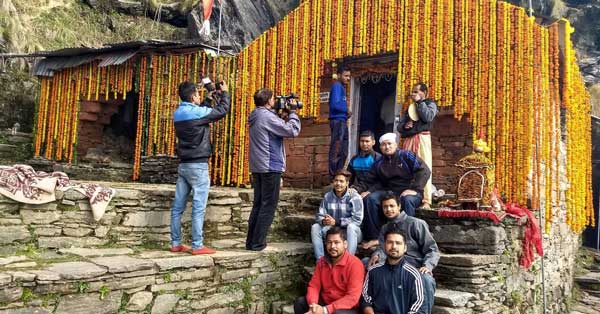
Rudranath is a place that many people aspire to visit but seldom get the chance to see because it is a far-flung temple in Garhwal, Chamoli District of Uttrakhand. To say the trek is challenging would be an understatement, as a long, arduous 22 km journey can only take them to Rudranath temple.

If I were to describe it in a word, the experience would be unique. Trekking to the Rudranath temple is an out-of-this-world trek regarding the stunning views you get along the way, thanks to the deep gorges that make this area so impressive.

Rudranath is often deemed the toughest temple to reach out of the Panch Kedar. Still, if you ask me, it is worth the pain as one can see the glorious Nanda Ghunti, Nanda Devi, Hathi Parbat, Devasthan, and Trishul peaks.

Trekking to the Rudranath temple

There is just something too mesmerizing about the experience Rudranath has to offer. The thick bushy green woodlands, the wild grassy lush alpine meadows, and the views of the Himalayas that leave you awestruck are something to marvel at for hours on end.

Panar Bugyal is one of the most beautiful spots on the trek with its lovely flower-strewn meadows. It also has a waterfall and some temples nearby.

Panar Bugyal near Rudranath
Panar Bugyal

It is best to visit this blissful spot in the summer, from April to June, with the pleasant weather since the winters remain chilly and even harder to bear. Snow often blocks the road, making the hike impossible, usually between October and February. Still, the monsoon, which begins in July and lasts till September, may also make it difficult to reach the place with its rains.

Dedicated pilgrims find a way to complete their pilgrimage this season; some even consider it the best time to visit. This is because, during the month of “Shravan” (i.e., July-August), there is an annual fair on the full moon day mainly attended by the locals.

At Nandikund, devotees worship historical swords that protrude from the rocks that are believed to be of the Pandavas. The trek to Rudranath might be tedious and intimidating at times, but it feels all the more rewarding.

Nandikund lake near Rudranath

The Journey to Rudranath Temple

The origin point of this 3rd temple in the Panch Kedar series starts from Gopeshwar.

Gopeshwar is the winter abode of Lord Mahadev, In the months of winter, from November to March, It is the seat of Mahadeva, and all the worship and rituals are offered here.

One has to start from the Sagar village, which comes from the name of an old local King of Gopeshwar and has to trek uphill. The trek from Sagar to Rudranath is around 17 km uphill and then 2 km downhill. I will include all the details and intricacies of this trek, including resting spots, foods, and best practices.

When we start from Sagar village, the path is surrounded by small stone roofed typical mountainous houses. The course has markers to guide you on the way, and you don’t lose the way. A stick is always helpful while going upwards on the trek. It saves energy and helps in moving up.

The artsy hues of the sky may enchant your soul and make you not stop while walking up, You may fall out of breath, but mountains love to hypnotize people, even though it is not always about love.

There is greenery, and you might also find mountain cows playing with their herd. Mountainous women have a hard life, like the journey you are going to. Most women work in the mountain fields and collect fodder and wood.

After 2 km from Sagar comes Chandrakoti village, the first resting point up the hill. Chandra was the name of the wife of King Sagar. Since this is a long trek, you will find that the stalls and restaurants arrange the visitors’ sleep and resting places. While in Chandrakoti, do not forget the fantastic Buransh Flower juice at the resting point.

We can quickly feel the cold climate uphill when we move up while the sun plays hide and seek with the clouds. As we move up, the climb gets more brutal, partially because the legs accumulate lactic acid and partially because of the stony path. After 4 km of the climb, we find another resting spot, Pung Bugyal.

Many people stay here for the night. We must know that the ‘Bugyal’ is a term for an alpine meadow; these are the plains situated on the top of a mountain. Wild animals surround this place, and the sounds of growling are generally there at night. It would help if you did not forget to eat Lengda or Pahadi Bhindi here.

After this comes the 4th resting point called Lwiti. Lwiti is the best place if you reach here in the evening. The sky’s colors and the mountains’ ranges look pretty. This is a better place if you want to stay up the hill than Panar Bugyal as it is not as chilly, spine-freezing as the latter. There are some trees with Red-colored flowers here.

The next stop on the way is Panar Bugyal; most of the crowd likes to spend their nights at this point, But again, Lyuti is a better way to survive at night. While moving up for the Panar Bugyal, you pass through a dense forest with leaves on the floor and small brooks producing excellent music. While going up the hills, one can surely meet some deer running and playing on the grass.

A yellow-colored flag bearing welcomes you at the Panar bugyal; this is the first point where the snow-laden mountains are visible. Since snow is there, the path is slippery, and it is advisable to tread forth the way real slow.

This windy place is a meadow with snow often frozen in some parts; due to the excellent quality grass; some Pahadis like to bring their sheep to feed here. This is where the views of Nanda Devi, Trishul, and Nanda ghunti are accessible. The combo of Toli taal and Nanda Devi produces an astonishing view from Nature’s lap.

The next stop is Pitrdhar, the highest point in the Rudranath trek. It is said that people pray here for their ancestors. The descent starts from here to reach the Rudranth Temple. Also has Panchganga, there used to be a confluence of 5 small streams here, but now the streams have vanished.

Now comes Devdarshani; it is the point from where you can see the Rudranath temple directly. This is also the place having washrooms. The final destination is 22 km from Sagar, and you reach Rudranath. Do not forget to chant Har Har Mahadev once you reach the destination; the blessings of the Lord have brought you there.

The story of Rudranath Temple

Temple of Rudranath
Temple of Rudranath

After winning the glorious battle of Mahabharata and killing their brothers, relatives (Gotra-Hatya), Gurus(Brahma-Hatya), and much more, Pandavas took up the path of penance.

Though the war was fought for righteousness, the killing is yet killing.

So, to wash their sins, Pandavas started a pilgrimage to Lord Mahadeva to wash their sins. Lord Mahadeva, incensed by the dishonesty and death caused, wanted to avoid them. So he disguised himself as Nandi, the bull, and disappeared into the ground with different body parts appearing in other places. This is among those five places where the Lord’s visage appeared.

The temple of Rudranath

The temple is built from rock-cut in a Himachal style architecture. The bliss of Aarti at eight in the morning and at 6:30 in the evening makes it unique.

Inside the temple of Rudranath

The ‘water of salvation’ of the sparkling Vairtarini (also sometimes called Baitarani or Rudraganga) and its whispers leave you spellbound. Other water bodies that bless this sacred land include Surya Kund, Chandra Kund, Tara Kund, and Manas Kund.

Panar Bugyal is one of the most beautiful spots on the trek with its lovely flower-strewn meadows. It also has a waterfall and some temples nearby.

You must take blessings of the Pujari Ji, Mr. Harish Bhat Ji. He will explain what Ekanana, Chaturanana, and Panchanana mean. Here, Lord Mahadeva’s Ekanana form is worshipped.

Do’s and Dont’s

  • Take a stick with water bottles to keep you hydrated and a portable charger.
  • Please be sure that there will be a chilled climate up there, so take your woolen clothes accordingly.
  • Do not overeat; take rests on the way. Do not eat any random fruit you see on the way.
  • Keep the mountains clean, Do not throw your plastic and other wastes to spoil the natural beauty.

Any questions? Please leave them in the comment section below.

Kalpeshwar Mahadev

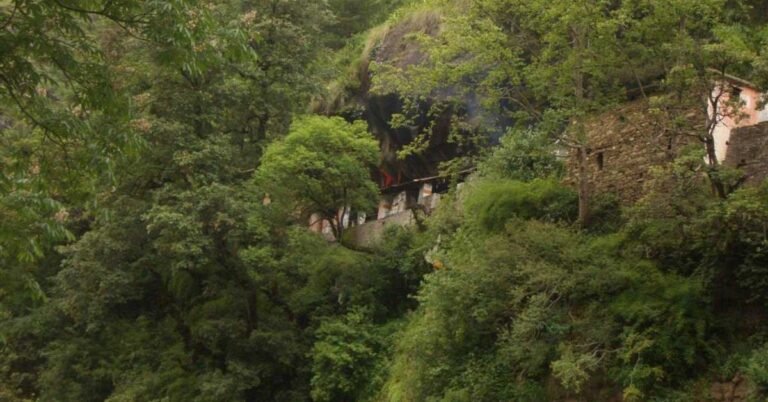
Kalpeshwar Mahadev temple is located in the Chamoli district of the state of Uttarakhand. This temple is one of the five temples on the Pancha Kedar circuit. Situated at an altitude of 2400 m, this is the only temple accessible throughout the year. Along with the spiritual vibes of the place, this place offers splendid views of the Himalayan peaks and a fantastic aura that captivates your attention as soon as you reach the place.

With cold Air gushing on your face carrying spiritual and devotional vibes, Kalpeshwar Mahadev brings various legends surrounding its origin. The Kalpeshwar Mahadev temple is the heart and soul of this town, with pilgrims and locals offering worship to Lord Mahadev.

Pilgrims from far-flung areas cover the Pancha Kedar circuit and take the blessings of Lord Mahadev. It is also believed that there is an old Kalpa Vriksha here, which grants all the wishes per the Hindu tradition.

The story behind and the Mythology of Kalpeshwar Mahadev

After the Bloodshed of the great war of Mahabharata, Pandavas realized they had indulged in the sins of Brahmahatya, Pitrahatya, and others. So they decided to go on a pilgrimage and worship lord Mahadeva.

Knowing that Pandavas were coming, Lord Mahadev chose to avoid them, so he took the form of a bull(Nandi) and appeared at different places. Bhima identified him but couldn’t do anything about it.

These five places where the Lord appeared with varying body parts are collectively known as Pancha Kedar. The place where the Hair or Jatas appeared is known as Kalpeshwara. The other parts of the Pancha Kedar circuit are, Tunganath, Rudranath, Kedarnath, and Madhyamaheshwara.

Other legends also link this place to the Durvasa Rishi and Agasthya Muni of Hindu origin. It is believed that he meditated here. One of the inscriptions here also tells that Lord Shiva gave a Patra (container) here, which produced 14 gemstones (Ratnas). At the same time, the Samudra Manthan was being performed.

How to reach Kalpeshwar Mahadev

Joshimath is the rendezvous point for three of these Kedar temples, so it is pretty preferential to reach Joshimath by any means you come to Uttarakhand. If you are coming by Air, you must reach the Jolly Grant Airport. You will need to go to Rishikesh by road, either by your vehicle or a hired one; you can reach Joshimath directly.

Joshimath provides a perfect stop to stay, food and rest, so you can sleep and enjoy the local Pohe Bhajiya here. From Joshimath, you can hire either a shared or private jeep to Kalpeshwar Mahadev. If you are coming from your vehicle, make sure you fuel up the car at Helang village, which has the only petrol pump here.

To reach Kalpeshwar Mahadev you need to come to Joshimath which is common point for all the Kedar's.
Joshimath is the commonplace for all the Kedar’s

The way and the temple of Kalpeshwar Mahadev

Joshimath to Kalpeshwar is quite a magnificent journey. It offers views of the rolling hills, lush green alpine plains, and clouds and sunshine playing hide and seek on higher altitudes. The wind plays with their hair, and enchanting brooks and endemic flowers greet them along the way. Passing through this picturesque view road, one reaches the Urgam valley, home to one of the Sapta Badri temples. Finally, the path leads to the Devagram village.

This is the nearest place to the Kalpeshwar Mahadev temple where you can have a stay. Though you can ride up to the temple in a vehicle, that way, you would miss the endemic flowers and other things.

If you take a Pagdandi through the Devgram village, you will indeed be passing through the Deva Kedar temple of the town with Nandi awaiting you to whisper your wish in his ears. People plant veggies on their farms in the region. The main harvested crops include Red chilies, Reddish, Cabbage, and Bhang herbs.

You will find Himalayan-style tiny colorful homes with roofs made of stone slabs in the hut-shaped style. Passing through this, you can rejoin the main road we left, taking you to the temple.

Passing this village, a board will show up, letting you know that the Kalpeshwar Mahadev temple is just 300 m away. Then there is a stone inscription about the temple with stories linked to the place. There is an extension bridge that you have to cross to reach the temple. Multiple sources feed the gurgling river.

The key source is a nearby waterfall, and the other is the Hiranavati river nearby. The confluence is called Kalpaganga. Indeed, Ganga has been found everywhere near the Lord Mahadeva. After a few stair steps, one can easily see the Kalpeshwar Mahadev temple. The temple has a courtyard with Yajna Vedi and various primitive old idols of other gods. The idols include those of Lord Hanuman and the Shiva family.

As we mentioned earlier, the Kalpeshwar Mahadev is where the Jatas, or hair of the Lord, got their appearance. There is a huge rock under which this temple is situated. There is an Amrit Kund from which water is filled, with which the Shivalingam is consecrated.

Since Kalpeshwar Mahadev is accessible throughout the year, you might find pilgrims singing bhajans here and enjoying the spiritual vibes and blessings of the Lord. Do Not Forget to participate with them and dance your soul out.

Since the Jatas are worshiped, there is a tradition here that the worship is offered only in a standing position. You’re not allowed to sit inside the temple. Inside the temple is a pujari Ji of the Negi family of Brahmins. They are known as Bhalla in the local language. He will tell you everything about how to worship and the temple’s origins.

Do’s and Dont’s t Kalpeshwar Mahadev

  • Coming from your vehicle, make sure you know to drive well on mountainous roads. Otherwise, go with someone who is an expert in such driving.
  • Avoid travel during monsoons. There is a good chance for the roads to be destroyed due to landslides.
  • Don’t forget water bottles if you decide to trek up, even though it is the easiest.
  • Carry your woolens as per your requirement. The climate is excellent, and you don’t want to fall ill.
  • You might also want to take your tent to stay out on the hillside.

Best time to travel to Kalpeshwar Mahadev

The best time to travel to Kalpeshwar is from April to October. During this time, the snow clears out, allowing easy access to the temple.

Food at Kalpeshwar

Do not miss the fantastic Kumaoni and Garhwali cuisines. The rich cuisine includes dishes such as Alloo ke Gutte, Gahat, Chainsoo, and Kaapa. Visiting Bhole Baba is considered one of the most virtuous acts in the Hindu religion. Kedarnath is considered to be one of the main char Dhams. To start the tour to Kedarnath, you must visit these temples on the Panch Kedar circuit.

If you have any questions please leave them in the comment section below.

Madmaheshwar Mahadev

One of the five Kedar is Madmaheshwar Mahadev. The existence of the temple is because of the below tale.

After winning the glorious battle of Mahabharata and killing their brothers, relatives (Gotra-Hatya), Gurus(Brahma-Hatya), and much more, Pandavas took up the path of penance. Though the war was fought for righteousness, the killing is yet killing. So, to wash their sins, Pandavas started a pilgrimage to Lord Mahadeva to wash their sins.

Lord Mahadeva, incensed by the dishonesty and death caused, wanted to avoid them. So he disguised himself as Nandi, the bull, and disappeared into the ground with different body parts appearing in different places.

Nandi and Shiva
Nandi and Shiva

The Lord showed himself has Kedarnath as the main central land and five other associate spots. The latter are Panchakedara, with two peripheral areas dedicated to Goddess Parvati, and the Ardhanarishwara form of Lord Mahadeva.

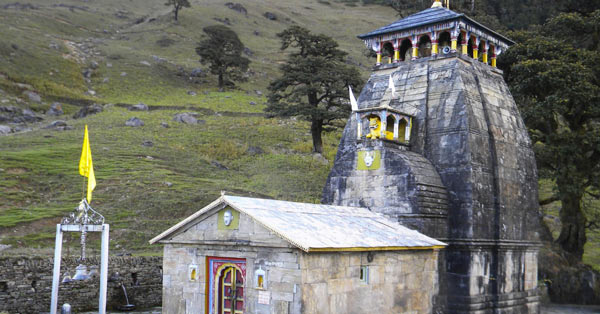
The temple Madmaheshwar or Madmaheshwar Mahadev marks the presence of Lord Shiva in the form of a bull navel. There is a navel-shaped lingam in the Madhya Maheshwara. Along with the Madmaheshwar Mahadev (literally, the drunken Lord), the other five parts are situated at Kedarnath with the hump, Tunganath with arms, face at Rudranath, Nabhi or navel at Madmaheshwar Mahadev, and Hair at the Kalpeshwar temple.

Pandavas appreciated the reappearance in 5 different forms and built temples as part of their penance and worship of Lord Mahadeva. Finally, they got free of their sins and went on to their journey to heaven called Swargarohini. 

Among the temples of the Kedara circuit, Kedarnath, Madmaheshwar, and Tunganath are built in the North Himalayan style of architecture. It is an unwritten custom to visit Lord Badrinath, the pilgrimage site of Lord Vishnu, after seeing the Kedarnath temple.

Inside the temple is a navel-shaped black rock shiva linga enshrined inside it. There are two associative shrines, one for the Goddess Parvati, Lord Shiva’s consort, and the other in a half-man, half-woman form dedicated to the Ardhanarishwara form of the God.

There is another temple on the right of the main temple dedicated to Goddess Saraswati. The temple priests are brought from South India, known as Jangamas. They belong to the Lingayat sect of the Mysore from the Karnataka state.

Since it is cold here, the temple remains open for some period in a year. The temple is open to the public at the beginning of summer, typically in May, and stays open till October/November, when the winter season begins. During harsh winters, the symbolic idol of the Lord Mahadeva is shifted to the Ukhimath with religious formalities to continue the worship.

Reaching Madmaheshwar Mahadev

Garhwal Himalayas pilgrimage sites are accessible from Rishikesh. It is connected by train to the rest of the country. One can reach Rishikesh from Delhi via road or railway easily. The nearest airport to Rishikesh is Jolly Grant airport in Dehradun.

After Rishikesh, one must reach Guptakashi, situated on a state highway through Devprayag, Rudraprayag, and Kund. Madmaheshwar Mahadev is accessible after a 21 km trek and a 6 km journey by road. The shrine can also be accessed from Uniyana via Ukhimath.

Trekking to Madmaheshwar Mahadev

The base camp Uniyana is located 18km away from the Ukhimath. The region is blessed with rich biodiversity, including flora and fauna, Himalayan monal, various endemic flowers, Himalayan Musk deer, etc.

The trekking route starts from Uniyana and goes to Ransi village, Gaundhar, and further via Bartoli, Katara, Nanu, and Madmaheshwar Mahadev.

Kalimath and Gaundhar are two scenic sites along the way to the temple. Kalimath is called a Siddhapeetha, and many pilgrims come to this shrine of Goddess Mahakali.

Visitors find peace and spiritual comfort here with temples of Mahakali and Mahalakshmi and Lord Mahadeva himself. Kalimath is famous for the Bhairava temple.

Gaundhar is famous for the confluence of Marakanga Ganga and Mahdyamaheshwara Ganga rives, which offer captivating views and pure chilled holy water.

Madmaheshwar Mahadev and the stay

Madhmaheshwar is a small sacred town with mysteries hidden at its core. The whole village gathers to pray to Lord Mahadeva in the evenings. The city has small huts; the town has a culture of its own and unique traditions.

The city has some anachronic culture of an old-world still scenting the atmosphere. With the snow-capped Himalayas, the temple looks as if it was put here only to enhance the beauty of the landscape.

The thick deodar forests add on a pinch of magic among everything else. Situated at 3265 m above sea level, one should not expect 5-star or even 3-star stays here. Life is primary and original. People are welcoming, and you could opt to remain in a staycation homestay. Smiling and helpful visages replying with their eyes as if they knew already that you were to visit and the Lord told it to them himself.

Madmaheshwar Mahadev For Bikers and wanderers

Coming from Rishikesh, you must not forget to stop at this place called Teen Dhaara, famous for its Pahadi food. Rich in the handmade spices used for the food, this might be one of the best things on your journey. It would help if you felt high while swimming through these exhilarating views of Garhwal.

This is the feeling of permanence in existence, connecting with a spiritual being. Whatever we may feel the power of our capacities is, roaming around this world feels like a sand particle lost in the vast expanse of this universe. You will also meet Brooks, rivers, and some endemic flowers on the way uphill. Don’t forget to relax and talk to them for a while.

If you bring your vehicle, do not forget to stop at Srinagar to rest. The last village on the way before the trek starts is Ransi. After crossing Ransi, on your vehicle, The walk to Madhamaheshwar starts. If you want to check whether your 20s body has not turned into a 50s one, this trek is perfect for you.

It would help if you climbed up to challenge your limits. This 18km trek takes around 8-9 hours to climb up. Ascent followed by a descent, this trek will take you to a meditative state while you go up the mountain. If you start early in the morning, you can reach the temple during arti. Food and water during the climb shall not be an issue as there are small hamlets you’ll find every 3-4 km.

Do not expect 5-star level food. You will indeed find excellent Uttaranchal cuisine home meals here. People are welcoming, and the warmth can be felt in their behavior and smiles. On the way are many taps which pour out the soul of water and you’ll feel refreshed after drinking it.

Choose to stay in tents and blankets to sleep under the stars or homestays on the top. The choice is yours. After resting for the night, you can go for the Budha Madhmeshwar, a 2 km-long trek from the main temple. Though the climb is challenging, as they say,

“Best views come from the hardest climbs.”

This saying is realized when you reach the Madmaheshwar Mahadev. From Chaukhamba peaks, you can enjoy breathtaking views. It’s the beauty in its purest form, untouched and unbiased. A unique, serene experience awaits you.

Chaukhamba peaks near Madmaheshwar Mahadev
Chaukhamba peaks

Things to do in Madhyamaheshwar temple

The main thing to do is to pray and offer arti in the Madmaheshwar Mahadev. One must not forget to sit in the temple and meditate for some time. This fills your soul with blessings. The spiritual aura of the temple produces healing vibrations. One of the oldest religious places in India, the temple comprises North Himalayan architecture with a rock-cut sanctum.

There is a lake called Kanchani Taal situated 16 km from the Madmaheshwar Mahadev. It can be reached by climbing a trek, but this trek can be pretty tricky.

To experience the Himalayas and the captivating view of the surroundings, you must never forget to visit the Budha Madhmaheshwar. This temple-shrine structure is a holy spot made of a cluster of rocks.

The journey to this place can be pretty wondrous as the famous peaks like Kedarnath, Neelkanth, Trishul, Kamet, etc., are visible from here. Lush green meadows offer you a quiet, still place to sit in, with a dynamically changing environment.

It is the summit of experience one can get. The clouds changing shapes every minute while you sit through them can take you to another universe for some moments.

Ukhimath, or the Madmaheshwar Mahadev, is an integral part of the Pancha Kedar system. This is a must-visit place while going for the Pancha Kedar visit. In the winter months, the winters get spine freezing.

The idols of Madhmaheshwar and Kedarnath are brought down to this place to continue worship for the frozen six months of yeat. Whatever is wished here gets filled, and no one from here is believed to have left empty-handed. The temples of Kedarnath and Madhmaheshwar are closed during this time. The water inside the temple is considered holy and said to remove all sins and purify the soul.

Tips for visiting Madmaheshwar Mahadev It is a must to carry woolen clothes. Moreover, it would help if you took boots that are non-slippery and comfortable enough to support you during the climb. Carry water and a stick to prevent falling while you track; you might also get water from the villages on the way but never keep your bottle empty.

DO NOT forget to keep a charged portable charging unit. You might face issues with the network support, and you might not be able to call anyone; you can still click pictures. Do not want to forget to bring a speaker to listen to some chill Indi pop music.

Any questions related to Madmaheshwar Mahadev, please leave them in the comments below.

Everything You Need to Know About Kedarnath

Kedarnath is among the most spiritual pilgrimages in India. Thousands of devotees come here within a span of 6 months when it remains open for visitors. Kedarnath Temple is one of the Char Dhams and part of the Panch Kedar’s. This blog will tell you about our experience of our visit to Kedarnath. This is a complete guide for Kedarnath which includes trek details, timings, and the registration link.

Note*: Since the number of devotees has poured in in large amounts more than Kedarnath can handle, it is important to register for the pooja and entrance to Kedarnath.

Read to know more about the Kedarnath trek, how to reach there, where to stay, and other important information.

Registration

The reason why I got this registration section first is that every devotee is now allowed entry only if he/she has registered for the visit and pooja from the government portal. Portal Link.

Do not worry if you do not get the slots, you can head to Tunganath too and try for a later slot. Slots are getting filled quickly because of the huge downpour of tourists. If you decide to go to Tunganath do visit Chandrashila Peak as well.

When to visit Kedarnath?

The Temple opens on Akshay Tritiya Day, which falls in April or May, and it remains open till the day of Bhai Dooj, which lies in October or November. The opening day is formally announced on Mahashivratri.

The Temple only remains open for 6 or 7 months for the entire year. For the rest of the year, the temple’s Kapats is closed and you won’t find a lot of tourists there. Check the image below when the Kapats are closed.

Closed Kapat at Kedarnath

How to Reach?

  • Kedarnath is in the Rudraprayag district of the Garhwal region in the state of Uttarakhand in India. The temple is situated in the Kedar Valley.
  • The nearest airport to reach is The Jolly Grant Airport near Dehradun. It is located 235 km from Kedarnath. You can then get a cab from the airport as they are easily available. We also reached the Holly Grant Airport and from there took a taxi to Sonprayag.
  • You can also travel by train. The nearest railway stations are the Haridwar or Rishikesh railway stations. From Haridwar and Rishikesh, you can get direct buses to Guptkashi and Sonprayag. The availability of busses is low, so it is better to keep a check on the time at which busses arrive or to book your bus seats prior.
  • You can also travel by road. You can travel by bus to Guptikashi, Gopeshwar, or Karnaprayag. You can also hire a cab to reach Sonprayag or Guptikashi. It is best to book a cab that gives a complete tour package.
How to reach Kedarnath
How to reach Kedarnath?

We hired a car after reaching Sonprayag to visit Kedarnath and Badrinath, which cost us around 12000 rupees. We had also asked to stop at Tungnath and Chopta on the way

If you want to travel by your own car, you can follow this route after reaching Haridwar

  • Haridwar
  • Rishikesh 
  • Pipalkoti
  • Devprayag
  • Srinagar
  • Rudraprayag
  • Agastamuni
  • Guptkashi
  • Sonprayag

At Sonprayag, there are huge parking spaces where you can park your car for the night.

Trekking Route:

  • Gaurikund to Jungle Chatti (4 km)
  • Jungle Chatti to Bheembali (3 km)
  • Bheembali to Lincholi (4 km)
  • Lincholi to Kedarnath base camp (4 km)
  • Base camp to Kedarnath temple (1 km)

You can cover the entire trail in a single day on foot or can also choose to stay a night in between the trek. There are accommodation facilities available in the middle. In total from Gaurikund, this is a 16 Km trek.

Trek on foot

Kedarnath has one of the most beautiful trekking routes

The trek from Gaurikund to the temple is a 16-17 km trek.

Kedarnath trek by Mules, Horses, and Pitthus

Pitthu's at Kedarnath
Pitthu’s at Kedarnath

Horses, mules, palkis, and Pitthus are available from Gaurikund to Kedarnath. You will find a booking office at the starting point of the trek from where you can book them. You can either get them at Gaurikund, or you can also get them on the trek.

By Helicopter

Kedarnath Helicopter Booking

You also have an option to go to Kedarnath by helicopter. The helipad is located at Phata between Guptkashi and Sonprayag. There are a few different operators available who provide helicopter services to Kedarnath.

Helicopter booking link

There are other helipads at Sitapur and Sersi. The helicopter would land you at the Kedarnath Base Camp, which is about 1 km from the Kedarnath Temple. This 1 km distance has to be covered on foot. Horses and mules are also not allowed after this point.

Important things about the Helicopter ride to Kedarnath

  • The helipads are available only at Phata, Sersi, and Sitapur.
  • Additional charges will be levied if you are more than 80 kg in weight, and if you are above 120 kg, then two seats will be booked because of the weight.
  • The price of helicopter tickets varies for different helipads. It depends on the helipad you are flying from. A round trip will cost you approximately Rs 5000 to Rs7000.
  • It takes approximately 10 minutes to fly to Kedarnath Base Helipad, and after that, you have an easy trek of fewer than 20 minutes to reach the Kedarnath Temple.
  • You can only carry 2 kgs of luggage per person.
  • If you want the round trip on the same day, then you will get 2 hours to go and visit the Temple and then come back to the helipad on time.

The trek – day 1

We had decided to go on foot all the way from Gaurikund which is the base point, to Kedarnath Yatra. We had first reached Sonprayag by car we had hired. We passed through the windy mountain roads and saw the meeting of the rivers Mandakini and Alaknanda at Rudraprayag. What a sight it was!

Do not forget to follow me on Instagram.

The Mandakini river was a constant beauty along our way to Sonprayag. We had decided to stay the night at Sonprayag. There are many places where you can stay at night even if you reach late. You could also stay the night at Guptkashi, which comes before Sonprayag if the night starts falling on your journey. Guptkashi also has a number of hotels for you to stay in.

The next morning, we got up early to start our Kedarnath trek. Earlier, you had to start the trek from Sonprayag itself. But now, a road has been built which covers a 5 km distance from Sonprayag to Gaurikund. The distance can be traveled by a shared jeep.

Before leaving for Gaurikund, you need to go to Yatra Registration Counter and buy an e-pass. The cost of an e-pass is Rs 50. You can get it from there or also get yours online and show it at the Counter. Remember to also book online for Kedarnath.

After getting our passes, we went to the shared jeeps that took yatris from Sonprayag to Gaurikund. The jeep fare is Rs 30 per person. Gaurikund is known for its Gauri Temple and the Uma Maheswar Temple. You will also find many shops which have essentials for the travelers.

After reaching Gaurikund, we started the trek around 7 am. The trek from there to Kedarnath is a 16 km trek. You could also see and hear the Mandakini river flowing there. We all started the trek with full enthusiasm.

After only a few hundred meters, you will see a booking office that provides horses, mules, pitthus, and palkis. You can book them from here. You will keep finding mules almost through the whole journey and book them at any time.

We had decided to walk and had walked a few kilometers when our legs started getting tired. I had started thinking, why didn’t I get a mule. Anyway, I continued the trek. The next step we took was at Chhoti Lincholi. The time was almost 12.30 pm, and we decided to take a break there and have lunch. This place is kind of a midpoint of the trek.

After having lunch, we continued the trek and reached Lincholi. You can find a few accommodation options here where you stay for the night. Kedarnath is about 6 km more from Lincholi. We decided not to stay and continued to trek all the way to Kedarnath.

After some time, we had reached Kedarnath Base Camp. There are cottages and a GMVN Guest house available at the Kedarnath base Camp. Kedarnath temple is stil 500 m from here. We finally reached the Kedarnath shrine at around 4 pm. After we reached Kedarnath, we looked for a place to stay. There are various options available for you to stay near the shrine. We decided on a place to stay, which was just behind the Kedarnath Temple.

We had made it in time for the evening Aarti at the Temple. The Aarti had started at 5.30 pm. After attending the Aarti, we went to our guest house, had our dinner, and slept.

The trek – Day 2

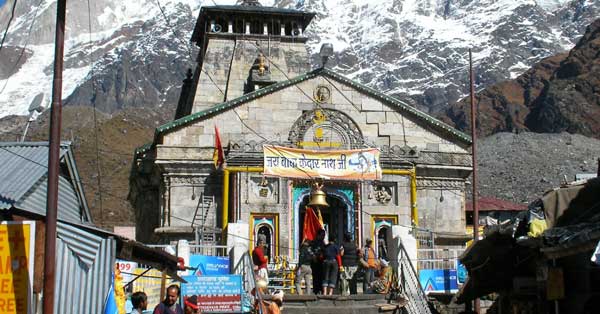
We woke up early the next morning and went to the Kedarnath Temple. We saw the Temple and the statues of the five Pandava brothers and Draupadi. Then in the main hall, You will see a conical-shaped stone which is believed to be the bull(hump of the bull) that Lord Shiva transformed into. There are also statues of Lord Shiva and other deities in the main hall.

There is a statue of ‘Nandi’ outside of the Temple. There is the Shri Divya Bheem Shila just behind the Temple. The whole Temple looks extremely beautiful with the snow-covered peaks surrounding the Temple on three sides.

After we offered our prayers in the Temple, we started our return journey towards Gaurikund. We reached Gaurikund by 12 pm. Our car was waiting there. We took the car and decided to travel back to Guptkashi and stay the night there before continuing our journey towards Badrinath. 

Check out the image gallery of Kedarnath.

Temple Timings

The Temple stays open every day

 from 4 am to 9 pm.

Where to stay?

There are a number of places like hotels and guest houses available at Sonprayag and Gaurikund. You can book a hotel at any of these two places.

GMNV houses are also available, which you can book online. There are many guest houses and dormitories also available near the Temple. The prices of the accommodations vary, so it’s best to book your stay online and prior to your arrival. We stayed at a place where it cost us Rs 2000 for a double bedroom.

Other important questions

  • Are medical facilities available on the Kedarnath Trek?

Yes, medical centers and medical help are available throughout the trek. You can also find medical facilities at Jungle Chatti, Lincoln, and Bheemabali.

  • Are there Toilet Facilities on the Trek?

There are make-shift toilet tents available at various places on the trek.

  • Are there food, restaurants, and shops available on Trek

Yes, there are shops and restaurants available. Many hotels provide food also at very reasonable prices. Vegetarian food is available. You will find many shops through the trek that sell snacks, Maggi, parathas, and hot beverages.

  • Are there Mobile Services available?

You will get mobile reception at Gaurikund till Lincholi.

After that, the signals do get lost, and it is difficult to get mobile service at Kedarnath.

Places to see around the Kedarnath Temple:

  • Bhairon Nath Temple
  • Shankaracharya Samadhi
  • Gandhi Sarovar
  • Vasuki Tal
  • Rudra Meditation Cave

Some interesting facts about the Temple:

  • It is said that the Temple was buried under ice for 400 years.
  • Kedarnath is among the 12 Jyotirlings of Lord Shiva. It is the highest Jyotirling of all the Jyotirlings in India.
  • It is said that the Kedarnath Temple can never be harmed as it is eternally protected.
  • The main deity is brought down from the Temple after it closes on Bhai Dooj.
  • The puja is done in the Kannada language.

In the end, Kedarnath is one of the most wonderful experiences and a perfect vacation or travel to experience an exceptional combination of Divinity and Beauty. Thousands of people experience this famous pilgrimage every year. If you’re planning to travel to Kedarnath, it does require elaborate planning and prior reservations, and this Kedarnath travel blog will definitely help you.

Chandrashila: The Heaven of Trekkers 

Have you ever imagined how it feels standing atop a mountain after an hours-long trek? The breath of relief after a long day in an office and being constantly surrounded by air conditioning? Imagine the calmness and satisfaction that would run through your body when you reach the summit. This is the feeling that a trek to Chandrashila would give you. So, pack your bags, and let’s dive into the details of this famous trek. 

The Chandrashila trek is the same as the Chopta Tunganath trek.

Once you reach Tunganath there is an additional 1.5 KM trek to Chandrashila. You can read all about how to get to Chopta for this trek to Tunganath here.

About the Chandrashila Trek

“When life gives you mountains, put on your boots and hike.”

Chandrashila Peak is 4,000_metres_(13,000_ft) above sea level above Tungnath

Chandrashila is also known as Trekker’s Heaven.

Chandrashila means “MOONROCK” in Sanskrit. Chandrashila comes from popular mythology that says Lord Chandra worshiped Lord Shiva on this mountain’s summit.

At 3,690 meters above sea level, Chandrashila is a popular tourist destination.

The trek is beginner-friendly and took around a 5-hour journey.

Chandrashila attracts many travelers during the summer months of April to June, despite its reputation as a winter or snow trip. The first 4 hours of the walk were made much easier by the concrete and railed trail.

Tunganath is a place we arrived at after 4 hours. Here, we got to witness the highest Shiva temple in the world. Following this point, you will have to embark on a one-hour trip that will require you to travel over a narrower, non-cemented trail.

Upon reaching the summit, The Himalayas, including Nandadevi, Trisul, Kedar Peak, Bandarpunch, and Chaukhamba peaks, become clearly visible from this vantage point.

Mountain range visible from Chandrashila

This place also has several legends associated with it. 

How to reach Chandrashila

Chopta is the trek’s starting point. The national capital, Delhi, is 420 kilometers away from Chopta. There are many forms of transportation available; besides, you will be compelled to take a cab or bus at the end of all options. There are many choices for getting to the trek’s beginning site after arriving in Chopta. 

Personal Transportation

I near Ukhimath in a personal car

Driving your own car or vehicle to Chopta is the best way to get there from your home.

The roads between Haridwar and Rishikesh are well-maintained, ensuring safe travel.

A personal automobile also saves us time and effort by eliminating the need to change trains and buses and quickly transports us to Chopta. I stay in Jaipur so I prefer to drive all the way to Chopta. Check out these options of commute to Rishikesh.

Train Transportation

Train to Kotdwar to reach Tunganath and Chandrashila

The nearest railway station to Chopta is Kotdwara, approximately 188 kilometers away. From hereon, you can take a bus or hire a taxi to Chopta. Check out the trains available here.

Transportation by Bus to Chandrashila

Chopta has a lot of buses running to and fro from Rishikesh and Haridwar to Chopta. Rishikesh’s bus station had the most buses departing for Chopta.

Yet, there is a scarcity of late-night buses (post 9 PM). Before making any reservations, check the Uttarakhand bus timetable online.

Flight to Chopta

Well, there are no flights directly to Chopta or Ukhimath. The nearest airport to Chopta is Dehradun Airport, 200 kilometers away. From the airport, take a taxi or bus to Chopta.

Stay Options for Chandrashila

Chnadrashila Peak

At the Chandrashila summit, there were no available shelters.

The locals at Chopta informed about the same as well. Upon enquiring the officials, it was brought to light that overnight camping was also not permitted at the site.

Some covers are provided at the Tungnath temple, about an hour’s trekking distance from Chandrashila. Still, the quantity was really restricted, and no pre-booking is possible. However, there was an option to camp at Tungnath.

Most travelers prefer to descend to Chopta and spend the night there because there are several lodgings and house stays but this was really overwhelming for us to climb and descend 5 hours the same day.

But again when staying at Chopta make sure that you make the prior reservation as during the peak time it is tough to find accommodation. Check out my experience at Chopta’s stay.

Climatic Conditions at Chandrashila

Climate at Chandrashila

Chandrashila was decorated with excellent air and subtle temperatures due to its elevation of 4000 meters. The average temperature is around 25 degrees in the month of May. Better than the scorching heat of Jaipur.

From October through January, the entire mountain range was said to be blanketed in snow. The trek’s beauty was enhanced by the hues of white fog sparsely accented with black-colored deodar and pine trees. 

Places to see nearby

A visit to Chandrashila includes not only the walk but also magnificent sites and a diverse range of waterfalls. The following are some of my favorite tourist attractions:

Chopta

Yes, Chopta. That’s correct. The base camp is a popular tourist destination in and of itself. Chopta has a stunning panoramic beauty and many waterfalls within a 10-minute drive. 

Deoria Tal

Deoria Tal has to be it if there has to be only one heavenly put-up camping place. Deoria Tal-, looked exactly like something out of a Hollywood film. since there were a lot of people camping around the area, the place seemed to be a popular camping site.

Sari Gaon

Sari Village, at an elevation of 2000 meters, seemed like a picturesque hamlet, around 20 kilometers from Chopta hill station. The settlement was surrounded by oak and rhododendron trees and sat peacefully in the Himalayan foothills.

Sari hamlet, also known as Saari Gaon, was also the starting point for a 2.5-kilometer hike to Deoria Tal, a stunningly gorgeous lake where we went camping.

Tourists were usually told to stay in Sari when all the hotels in Chopta are closed due to snowfall or fully occupied. In Sari, there are a few lodges and homestays to choose from. 

Kalindi Pass

Kalindi pass, also known as Kalindi Khal, connects Gangotri and Ghastoli at a high altitude. It is also one of the most famous trekking passes in the Garhwal Himalaya, at 5,942 meters (19,495 feet).

The key is heavily glaciated, making it challenging yet breathtakingly gorgeous. Since it required a separate day altogether to visit and explore the pass, the area seemed suitable for longer vacations only.

Kartik Swami temple

The Kartik Swami temple was covered by the cottony clouds that lazily drift above the temple. Located amid the wonderlands of the Garhwal Himalayas, the sacred temple is dedicated to Lord Shiva’s oldest son, Kartikeya. It was situated at the end of a small ridge surrounded by a deep valley.

Bisurital

Bisurital is a high-altitude lake in the Mandakini valley, perched 4000 meters above sea level. It is one of Uttarakhand’s best-kept trekking secrets.

Sagar Village

The Himalayan village of Sagar was one of the most beautiful places we had come across. It is surrounded by dense alpine woods and dwarf Rhododendrons. It is a village that serves as a gateway to some of Uttarakhand’s most critical holy temples and Hindu culture.

Enjoy exploring the unexplored parts of India and keep celebrating life, one destination at a time. Traveling opens up horizons with respect to life and culture. Make the most of it.

If you have any questions related to Chandrshila please leave them in the comment section below.

Tungnath: One of the highest Shiva temple

After the trip to Neelkanth Mahadev, I was aiming to trek Tungnath. Tungnath is one of the highest Shiva temples in Uttrakhand among the 5 Prayag.

Timelapse at Tungnath Mahadev! Jai Bhole!

The first leg of our Journey was from Jaipur to Rishikesh by road. From Rishikesh, after staying at the Palm Valley resort for a night we headed towards Chopta Tunganath. Ohh and do not get confused as Tungnath is the temple that you need to reach from Chopta which is a small market. The trek of 4.5 KM to Tungnath starts from Chopta.

As everyone says, spontaneous travels are the most incredible trips. We started early morning from Rishikesh and headed towards Chopta. It is advisable to start early in the morning from Rishikesh as the traffic in the mountains is unpredictable.

We started from Rishikesh early in the morning.

We decided to trek this weekend after hearing about the wonders of the friends’ group enjoying the Tungnath-Chandrashila trip. So here there’s the story and all the details about my Tungnath trip.

Important: If you are going in the summer months i.e. April to July, please make sure that you make the advance booking for your stay. We literally had to return from Chopta as there was no accommodation available. We got a shady bad looking room for which we had to pay INR 3000 for a night.

If you are an adventurer like me I would prefer that you pitch your own camp and pitch at Chopta near any of the eateries/Dhaba’s.

Journey Begins to Tungnath

Tungnath, located in Rudraprayag, is one of the highest Shiva temples in the world. It attracts many tourists all year round due to its religious significance. It lies at an elevation of 3700 meters above sea level.

The base camp for this trek is Chopta. To go to Chopta, you can take a bus/shared taxi from Rishikesh to Rudraprayag. We had our own car so we started the journey on our own. Note*: Bus only takes you to Ukhimath and then you will have to take a shared taxi.

Looking at the picturesque vistas on the tiny roads made us excited.

Nestled amongst deodar and rhododendron trees was the small settlement of Chopta.

As I mentioned before make sure to book in advance if you are visiting Tungnath in the peak season. We, fortunately, got one room that we had to share. We were 7 in total and had to spend a night in one room which was shady and not in good shape.

Trek to Tungnath from Chopta

The locals recommended starting the expedition the next day. This helped us avoid the overhead sun at the shrine during peak hours. Few rooms are available at the temple shelter.

Waking up with a lot of anticipation the next day, we started the walk to Tungnath. With a clear sky above us, we set off on our journey with a group of people of all ages.

The hike begins from Chopta. What started as a walk through a hamlet side quickly escalated into a railed and paved route to the shrine.

The entire pathway was surrounded by Conifers, with few waterbodies intensifying the beauty.

The hike appeared to be very beginner-friendly, as even children and the elderly could climb it easily. Coming from the plains, I genuinely mean it when I say the journey was simple. Also, having learned from my mistakes, I would advise you to bring a lighter bag while hiking.

Trek to Tungnath is a mix of cobbled & broken pathways

This voyage also required water bottles, caps, arm coverings, and comfy shoes.

We decided to take a short break when we reached the halfway point. Although we had some food with us, some people were selling processed foods such as Lays and Kurkure along the way, but their prices were significantly more than the MRP.

Some of the kids had brought their pots and Maggi packages. They started a fire and cooked right away. As we sat there, enjoying the calm wind and relaxing, a group of devotees passed by, singing “Har Har Mahadev.” We resumed our hike, inspired by their enthusiasm.

Himalayan range visible from Tungnath

The entire journey took almost 2.5 hours to accomplish. The incline is a bit tough if you are not in great shape.

Tungnath Temple

Tungnath Temple

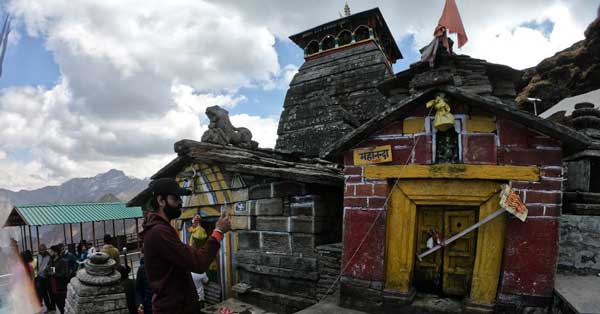
Upon reaching the shrine, the exhilaration of completing the walk was much more gratifying than the mild ache my feet were suffering. The number of people at the shrine was significantly more significant than anticipated.

After hearing so much about its surreal beauty during snowfall from locals, I could think of how it would feel to witness this granite edifice covered in snow.

There were many small shelters and secondary shrines around the temple. As a part of a rite, people erected stone cottages near the temple.

It was accomplished by placing an odd number of stones on top of one another. According to the local priest, one can quickly obtain what he desires after properly completing this task. The contrary leads to an indicator of failure or difficulty in achieving a wish.

There were plenty of excellent sites to pitch a tent for camping. A forest rest house at Dugalibitta, close opposite the Kedarnath range of hills, also stood at the temple’s summit.

We reserved rooms after reaching the shrine, and the number was somewhat limited. The Garhwal University also has a high-altitude botanical station here.

Because the temple is built at such a high elevation, there were few sanitary facilities.

We decided to head back to Rishikesh after the trek and aimed to reach Rishikesh before nightfall. and tour some neighboring sights the next day before leaving.

Locals recommended that we visit Atri muni waterfall or Wildlife sanctuary for bird- and animal watching. Because the Atri Muni waterfalls require another climb, we chose to head back to Rishikesh leaving this for another time.

A separate area of the Kedarnath Wild Life Sanctuary is dedicated to preserving musk deer. Considerable diversity of bird species, the names of most were alien to me, made the site even more lovely.

We decided to pack it in and return to our regular lives after a day full of memories and fresh air. Our short trip did not allow us to explore Teheri Dam, Deoria Tal Lake, local villages, waterfalls, and many more sites. When visiting Tungnath, stay at least 4-5 days to explore its hidden gems, routes, and waterfalls.

Once a year, go to a place you haven’t been before because travel is the best investment you can make in yourself.

Devprayag-Your in-budget Cold Paradise for this summer

A bright and high sun yet calm and soothing sun gives the green leaves and mountains a luscious shade of freshness. Imagining such a landscape, the foothills of the Himalayas is the perfect picture. Bollywood movies have got us raving about the bright green forests that become grey and black when covered in the evening fog. To get a soothing touch to our expectations, we have found a place that would serve the perfect exotic yet spiritual blend. 

As an avid Shiv devotee, I go to Shiva temples across India. Check out my last trip to Neel Kanth Manahdev. On my recent trip to Tunganath, I had the chance to pass via the majestic town of Devprayag.

Beautiful Sangam at Devprayag! Do not forget to follow me on Instagram!

As far as the existence of Instagram, Wanderers, and Social media bloggers goes, the presence of the famously cringe quote “Mountains are calling, and I must go.” 

What might have seemed an overhyped statement before this would transform into a lifetime experience once you step into Devprayag? If you are married and well aware of the havoc young kids can cause while on a trip, this place covers that. Since the site is inhabited by simple villagers and is also a pilgrimage, it is relatively safer for kids and group travel. Somewhat a tiny town; your kids won’t have much area to run around. 

Devprayag in Uttrakhand
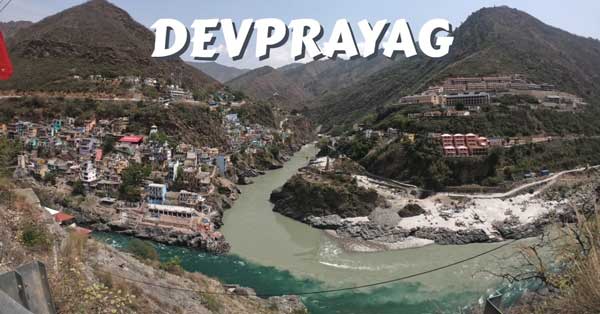
According to Hindu scriptures, Devprayag is the sacred place of merging of two visible heavenly rivers, Alakananda and Bhagirathi, to form the holy Ganga.

In a roll call for extreme events this year, let’s count the scorching heat of April and May into the list as well. With beaches being too hot to handle and Cold Paradise being just a LITTLE out of budget for the entire summer, the mountains of north India are the best destination. 

Here’s an overview of the city, Devprayag, and adjoining areas that we can visit for all who want to escape into the mountains this summer.

Devprayag: The city of River Ganga and our Mini-Cold Paradise. 

Watching the two rivers meet to form Ganga, Jai Ganga Maiyaa

Devprayag is located in the state of Uttarakhand, at an elevation of around 828 feet from sea level. One of the 5 Prayags, Devprayag is actively famous for its neutral summer and importance as a pilgrimage site. 

The city is distributed into three parts: Bah Bazar, Beech Bazar, and Shanti Bazaar. It is covered with mountains and peaks on all sides and has heavy rivers flowing through the city. The average day temperature of the city is 32 degrees, making it ideal for a respite from loo struck towns and cities of the plains.

Modus-Operandi 

One can reach by flights, trains, or buses/cars. However, if you are traveling by flight or train, you will have to cover the last 90 or 70 kilometers by bus. If you are from a nearby state, the bus/car route would be the best option as you would also get to witness the surreal mountain roadways.

Way Back in time: The history of Devprayag

The town of Devprayag is known to be the abode of Badri Pandits, accredited initially with the title of being the ones who led to the rise of River Ganga.

It is believed to be the abode of astrologists and astronomers. Devprayag features two well-equipped laboratories, telescopes, libraries filled with ancient texts, astronomical tools (like Dhruv Ghati), manuscripts, research of ancient scholars, etc. Other than this, it is also believed to be the meditational ground of Lord Rama. The town was destructed in the earthquake of 1803 and was reconstructed later. 

Suppose you are one of the members of any religious group or carry a holy heart. In that case, Devprayag is the place to offer you pilgrimage and beauty at once.

The Hindu Pilgrim: Religious Importance of Devprayag

Devprayag is the fifth and the last Prayag. It is the place from where the confluence of Alaknanda and Bhagirathi is known as Ganga. It is surrounded by numerous holy places like Raghunath temple, Nagaraj temple, Bhuvneshwari temple, Brahm Kund, Surya Kund, Varah Tirth, etc. The famous “Char Dham” route also passes through this place.

In terms of Mythology, it is believed that when river Ganga had to step on Earth, she (along with her 39 deities) chose Devprayag as her abode.  

Apart from the religious significance, the fog-covered mountains and the picturesque small waterfalls add to the surreal beauty of the area.  

The place of central attraction: Raghunathji Temple

People visit the town of Devprayag for the famous Raghunathji temple. The temple is a 10,000 years old structure dedicated to Lord Vishnu. Raghunathji is believed to have performed penance at this place to relieve himself of the curse committed by killing Ravana.  

A Natural Air Conditioner: The Foothills of Himalayas

Situated in the foothills of the Himalayas, the state of Uttarakhand would never be HOT enough for you to avoid visiting it (Unless you are really hot for the town ?). It’s just like your summer air conditioner but just wholly natural.

The nighttime temperature falls to around 12–14-degree Celsius, while the average day temperature is 32 degrees even on the hottest days. 

The mountain ranges of Devprayag witness fog and cold breeze, both in the early morning and after sunset. Water bodies in the main town keep the temperature cooler. At the same time, the mountains will take over the responsibility of maintaining ideal temperatures for you in the city’s outskirts. 

Your Options to sleep in

Being a developing tourist attraction, the number of hotels providing all the amenities is quite limited. However, plenty of house stays, tents, guest houses, and shelters are available. All the basic amenities are readily available, but you might have to make a few compromises here and there.

The city is adjoined by various tourist spots famous for their beauty and adventure sports. Thus, you can also resort to staying in a nearby town and traveling to Devprayag.

Recreational Activities at Devprayag

“We live in a beautiful world full of beauty, charm, and adventure. There is no end to the adventures we can have if we seek them with our eyes open.” 

Pandit Jawahar Lal Nehru

Abiding by the words of Pandit Nehru, keep your eyes open for all the adventures the city of Devprayag has to offer you. Key landscape elements, the town has some VERY COOOOL adventure options.

Devprayag offers a lot of water sports. The vast stretch of Ganga River allows for safe and yet adventurous water sports like river rafting, zip-lining, and river diving.

The town offers several camping options, trekking to the Dashrathachal, Giddhanchal, and Narsinghanchal peaks, kayaking, yoga and meditation centers, and local handicraft markets.

A never-ending affair: Us and Food

Uttarakhand is surrounded by states that offer great cuisines. The state has kept its traditional food taste, variety of dishes, and fantastic roadside food stalls. Taste amazing food like Aras, Guthiya, Khadi, kafuli, etc.

Most of the food is slow-cooked on a ‘chulha’ fire. Any food enthusiast among us would definitely know the delicious taste of smoke and fire in food. Excuse me if your mouth has started watering already as well.

“A journey of a thousand miles begins with a single step.”

The list of places you could visit near Devprayag is definitely longer than this blog has been so far. However, if we have to talk only about selected and famous areas near Devprayag, here’s a smaller list.

  • Tehri Lake and Dam: Tehri Dam is the highest water dam in India and one of the highest in the world. Generating over a thousand megawatts of electricity, the water stored from the dam forms the Tehri Lake. Located in the middle of a mountain range, this place is a scenic beauty found at a 2-hour drive from Devprayag. As we know what they say about water,

“Live by the water, Love by the moon.”

A visit to this place during a soothing sunset and the vivid and summery shade of orange over water would be enough to make you fall in love right there.

  • Shivpuri: Located at a distance of 53 kilometers from Devprayag is the town of Shivpuri. The place has one of the most expansive stretches of river Ganga and hence is also the most famous place for all water sports. Remember your friend’s Instagram post about water rafting near a waterfall? THIS PLACE RIGHT HERE is your location to go and enjoy. 
  • Rishikesh: None the less is a famous place in Rishikesh. It takes two hours to reach Rishikesh from Devprayag. The area is renowned for river rafting, pilgrimage, meditation and yoga centers, decadent cuisine, and riverside camping. The recreational experience of yoga and meditation at the Ghats of Ganga waits for you while going to Devprayag.
  • Haridwar: One of the safest places for female solo and group travelers is the city of Haridwar, located a 3-hour drive from Devprayag. The place offers a lifetime experience of witnessing the spectacular Ganga Puja.   

Devprayag offers a rich array of local cuisines and handicrafts and its famous temples and religious significance.

The ideal stay duration in Devprayag is one day unless you want to go camping. In terms of only sightseeing, the place doesn’t qualify as one of the first priorities.

The place is a holy grail for anyone seeking a spiritual experience or pilgrimage with some sightseeing. Compared to the main town on Devprayag, the nearby cities of Srinagar, Shivpuri, Tehri, etc., are more commonly preferred locations for wandering around as tourists. However, Neel Dhara and Dashrathachal (places in Devprayag) are places of spectacular beauty as well.   

The ideal route would be through Devprayag via Rishikesh and Srinagar or Tehri to enjoy a holistic experience on your female group’s travel, solo trip, or a family vacation.